

Global supply chains are more interconnected – and more fragile – than ever. For enterprises managing thousands of suppliers across categories and regions, risk management isn’t absolutely essential.
Why? Because regulatory pressure is rising fast, with ESG disclosures, data privacy laws, and sanctions now tied directly to procurement decisions. Add in geopolitical volatility and economic uncertainty, and the margin for error has disappeared.
Too often, risk management has been reactive, as teams scramble to act following a disruption, supplier failure, or compliance breach.
But this approach is expensive, slow, and damaging to both brand and bottom line. Instead, you need proactive, technology-enabled strategies that embed risk monitoring and controls into everyday procurement activities.
As the function closest to suppliers and upstream data, procurement is positioned to identify early warning signs, escalate issues quickly, and enforce corrective action. With a modern procurement platform, risk management is about building a resilient, competitive supply chain.
This blog explores the key best practices and technologies that procurement teams need to stay ahead of risk.
Key Takeaways
- Procurement risk management must evolve from one-time checks to continuous monitoring, predictive analytics, and embedded controls across the P2P cycle.
- AI amplifies procurement’s ability to detect, assess, and mitigate risks proactively by operationalizing static frameworks like ISO and COSO so they can safeguard your organization in real-time.
- A unified procurement platform that integrates risk with performance, compliance, and spend management is essential for building resilient, future-ready supply chains.
What Most Organizations Get Wrong About Procurement Risk Management
Most organizations run basic risk checks during onboarding or contract signing. But this is just checking the boxes to satisfy minimal compliance requirements, and it rarely protects the business in practice.
True enterprise-level procurement risk management combines continuous monitoring, predictive procurement analytics, and integrated workflows to catch issues before they escalate into disruptions or compliance failures.
In sourcing and supplier governance terms, procurement risk management refers to the systematic process of identifying, assessing, and mitigating risks tied directly to supplier performance metrics and contractual obligations.
Unlike broader supply chain risk management, which focuses on logistics, demand variability, or geopolitical events, procurement risk zeroes in on vendor insolvency, sub-tier supplier failures, and breaches of ESG or data privacy regulations.
To better understand how organizations evolve in their approach, it is helpful to contrast the characteristics of low- and high-maturity procurement risk management.
Low Maturity vs High Maturity Procurement Risk Management
The difference between “low maturity” and “high maturity” procurement risk management is significant, as detailed in the table below.
| Low Maturity | High Maturity |
| One-time vendor surveys during onboarding | Ongoing risk monitoring tied to external data and alerts |
| Manual spreadsheets for tracking | Integrated, system-driven dashboards with predictive risk scoring |
| Reactive remediation after an incident | Proactive escalation workflows based on thresholds and triggers |
| Static governance policies applied equally to all | Tiered governance based on supplier criticality and exposure |
At low maturity, fragmented systems and spreadsheet-based processes make it nearly impossible to see beyond surface-level risks.
In contrast, risk-aware (high-maturity) procurement teams embed dynamic monitoring, escalation paths, and governance controls directly into sourcing, contracting, and supplier management workflows.
Now let’s examine the various procurement risks that require tracking.
Where Procurement Risks Arise in the P2P Cycle – and How to Track Them
Enterprise procurement teams can’t manage risk in the abstract. Rather, they need to evaluate it by type, tie each to a stage of the Procure-to-Pay (P2P) cycle, and assign clear owners and controls.
These categories are often distributed across functions such as procurement, finance, compliance, and operations, which makes visibility and coordination crucial.
Risk also varies across spend types. For example, direct materials carry exposure to sub-tier supply chain failures, while indirect spend (IT, legal, facilities) may suffer from poor tail spend risk visibility.
The six core categories of procurement risk include:
- Supplier risk: Performance failures, financial instability, or sub-tier supply chain risk that jeopardizes continuity of supply.
- Contract risk: Ambiguous terms, renewal gaps, or non-compliant clauses that weaken enforceability and governance.
- Operational risk: Internal delays, approval bottlenecks, or fragmented systems that slow execution and erode control.
- Financial risk: Budget overruns, payment delays, or currency exposure that create fiscal instability across categories.
- Compliance risk: Local regulation gaps, ESG violations (e.g., modern slavery, CO₂ thresholds), or audit failures that damage reputation and lead to penalties.
- Market risk: Pricing volatility, geopolitical changes, or sudden demand shifts that undermine sourcing strategies.
When mapped to the P2P process, risks align to control points where they can be detected, escalated, and mitigated, as shown in the table below.
| P2P Stage | Risk Category | Control Examples |
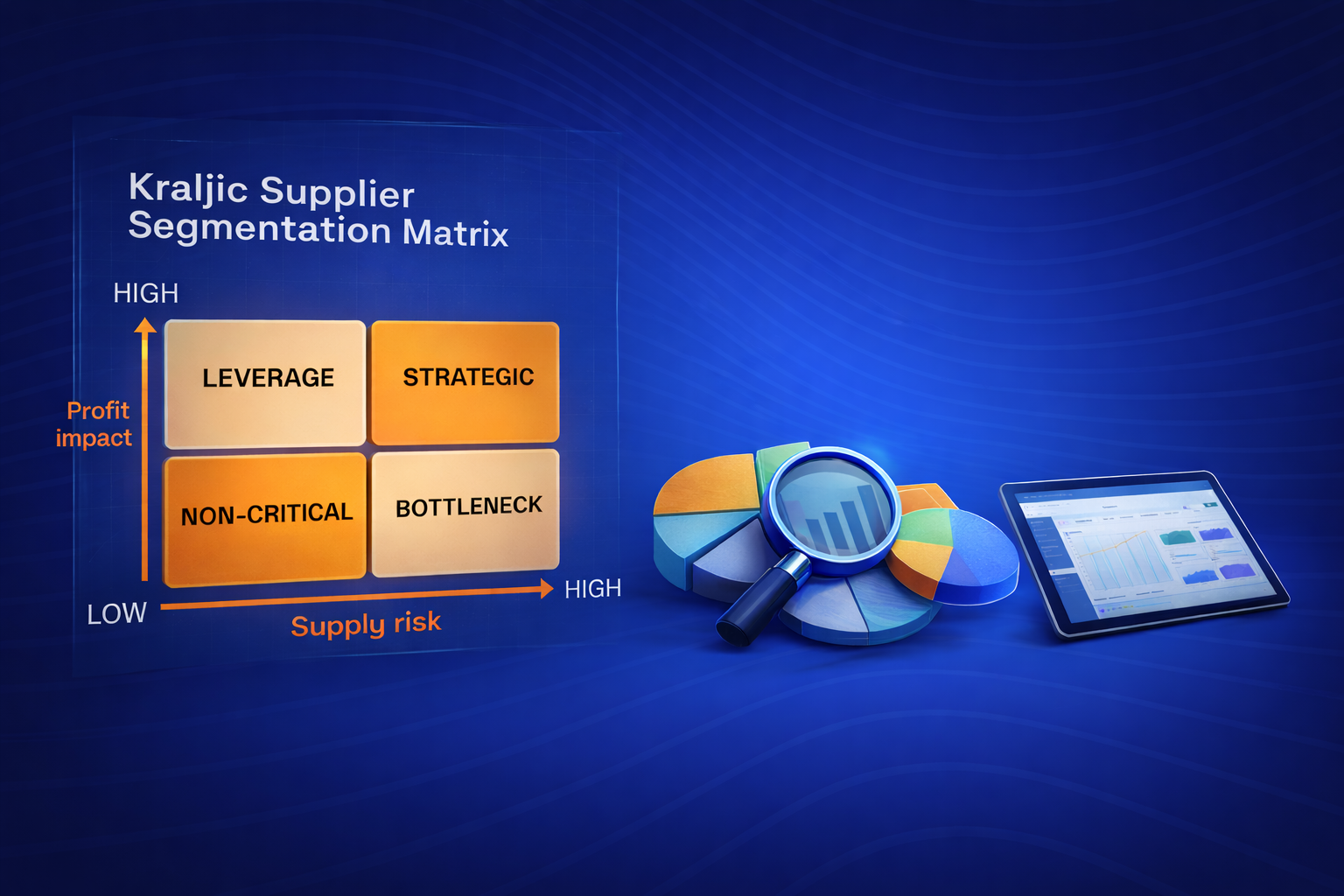
| Intake | Supplier risk | Risk-based supplier segmentation, due diligence checks, onboarding attestations |
| Sourcing | Market risk | Competitive bidding thresholds, price benchmarks, geopolitical monitoring |
| Contracting | Contract risk | Clause libraries, approval workflows, renewal alerts |
| Ordering | Operational risk | Automated routing, catalog controls, exception handling |
| Invoicing | Financial risk | 3-way matching, tolerance thresholds, duplicate invoice detection |
| Payment/Reconciliation | Compliance risk | AML checks, ESG declarations, audit trail validation |
Think of this as a diagnostic checklist: if you’re building a procurement risk register, each category should be explicitly mapped to where it enters the P2P process, which controls apply, and who owns escalation.
Why Embedding Controls In Sourcing, Contracting, and Onboarding Is The Only Way To Scale
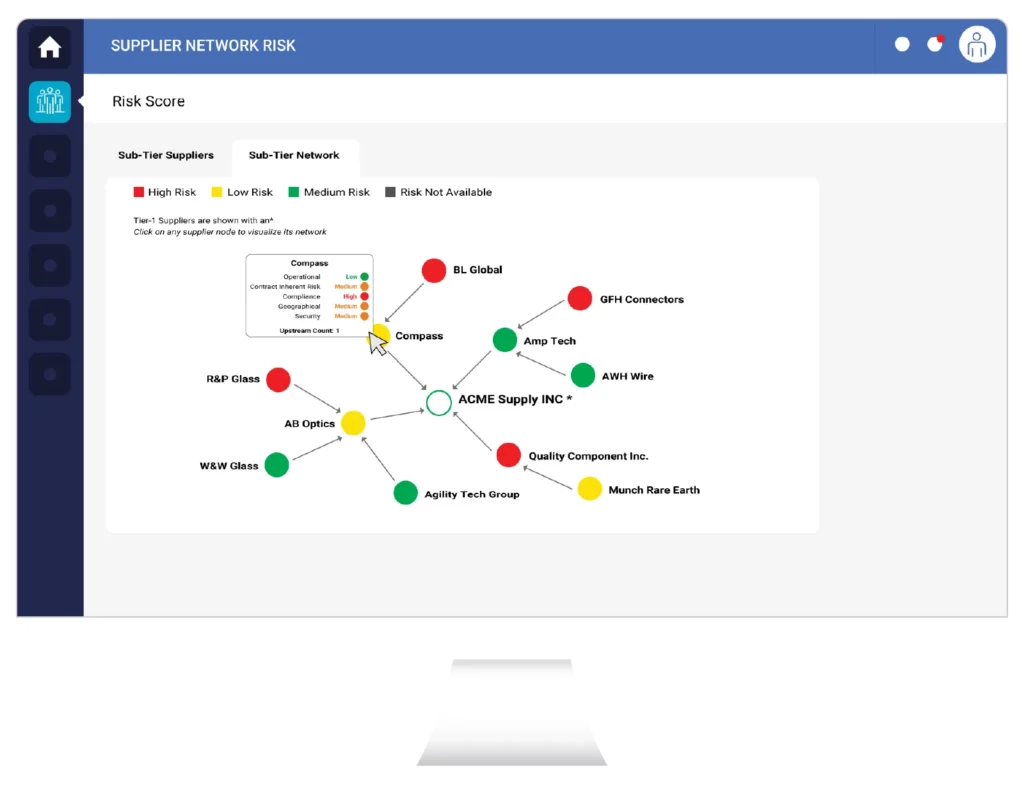
A proactive procurement risk strategy embeds checks within the procure-to-pay (P2P) lifecycle. This is the only scalable way to manage rising supplier complexity, regulatory compliance requirements, and data volumes.
Here’s a stage-by-stage roadmap of how to embed risk management at every step in the process:
- Intake: Apply supplier scoring models before issuing an RFP to route high-risk requests through stricter governance. AI-enhanced intake systems can classify requests and raise real-time alerts for sensitive categories like IT, consulting, or cross-border services.
- Sourcing: Use bid anomaly detection to flag unusual pricing, geographic risks, or supplier concentration issues. Modern source-to-pay tools like Ivalua integrate this logic directly into sourcing workflows.
- Contracting: Enforce compliance with clause libraries and conditional approvals based on risk tiers. AI can be used to flag deviations from standard language or identify missing ESG commitments.
- Onboarding: Strengthen supplier onboarding by requiring sanctions screening, financial checks, and ESG attestations prior to activation, then automate re-evaluation when external risk triggers such as new sanctions or credit downgrades occur.
- Performance: Conduct reviews at milestones for delivery quality, service levels, and sustainability metrics, using AI to surface trends in supplier performance management across regions or categories in real time.
- Renewal/Exit: Trigger automated compliance reassessments at the time of renewal, and ensure that you have structured offboarding procedures to avoid any financial or data security risk.
Embedding controls at each stage is what transforms procurement risk management from reactive to predictive. AI amplifies this by providing anomaly detection, early warning signals, and cross-category insights.
Let’s take a closer look at the role AI plays in these embedded risk management practices.
AI Won’t Replace Risk Teams — But It Will Catch What They Miss
AI is not a replacement for procurement expertise. Rather, it’s a force-multiplier that increases visibility and accelerates risk analysis. Tools like Ivalua embed AI into everyday workflows so procurement teams can identify risks earlier and more reliably, scale risk management and governance, without adding headcount.
AI Use Cases for Proactive Procurement Risk Management
- Dynamic risk scoring: AI monitors supplier news, certifications, and geopolitical events, adjusting risk profiles in real time.
- Predictive analytics: Machine learning models anticipate pricing volatility or delivery delays, providing early warnings to sourcing teams.
- Automated flagging: Continuous checks identify compliance gaps, missing ESG attestations, or expired documentation before they escalate into audit issues.
Today, innovative capabilities powered by AI in sourcing and procurement are already a reality with Ivalua. These include real-time risk monitoring dashboards, ML-based pattern detection, and anomaly monitoring.
GenAI-assisted workflows, such as contract clause review or contextual recommendations in negotiations, build on predictive systems to make risk management smarter and faster.
The table below illustrates how AI maturity unfolds across the procurement risk management process at each stage..
| Stage | Example Practices |
| Manual | Spreadsheet-based supplier surveys, annual risk reviews |
| Rule-based | Threshold-driven alerts (e.g., spend over $X triggers compliance check) |
| Predictive | ML-driven forecasts of supplier insolvency or pricing volatility |
| GenAI-assisted | Clause-level contract review, contextual risk recommendations in real time |
AI amplifies procurement’s role in governance, giving leaders the ability to move beyond periodic checks into continuous, proactive oversight.
Combined with procurement analytics, it provides the structured insights required to not only track risks but to act on them decisively.
In the next section, we’ll look at why ISO and COSO frameworks set the standards for the procurement risk management process and how the right tools can turn those principles into daily, enforceable controls.

Pro Tip
Strengthen compliance and reduce supplier uncertainty with AI-powered risk management. Read the full guide on supplier risk assessments.
ISO and COSO Don’t Operationalize Themselves — Your Tools Have To
ISO 31000 and COSO ERM provide risk management frameworks that are recognized around the globe – but they’re not turnkey solutions.
They define the principles of risk identification, assessment, treatment, and monitoring, but it’s up to individual procurement teams to operationalize those processes using technology and automated workflows.
A modern supplier management solution translates ISO and COSO principles into daily practice by embedding controls into sourcing, contract risk management, and supplier governance.
Risk monitoring dashboards can be aligned with COSO components, while automated workflows help organizations maintain ongoing risk monitoring in line with ISO 31000 principles.
Common risk management artifacts only deliver real value when they’re connected to live supplier, contract, and spend analysis data. Examples include:
- Risk register: A catalog of identified threats, their potential impact, and assigned owners.
- Risk heat map: A visual representation of risks plotted by likelihood and impact.
- Risk scoring matrix: A quantitative method to prioritize risks and guide mitigation strategies.
When these artifacts are integrated into procurement workflows, they evolve from static, audit-ready documents into a dynamic procurement risk management software solution.
For teams preparing to justify their program to internal audit or compliance, the message is: risk management frameworks establish the “what,” but your procurement tools must deliver the “how.”
Don’t Underestimate Due Diligence and Contract Exposure
You can’t rely on one-time supplier onboarding questionnaires to safeguard compliance. Why? Because things can change: ownership structures shift, sanction lists get updated, and ESG or cybersecurity exposures happen. That’s why due diligence must be continuous, not static.
To ensure comprehensive compliance, it’s important to distinguish between third-party due diligence that happens before a contract is signed, and the ongoing contract controls that apply post-award:
- Third-party due diligence involves validating critical supplier data such as ownership details, sanctions checks, ESG disclosures, and cybersecurity certifications.
- Ongoing contract controls ensure those risk signals are monitored throughout the supplier lifecycle.
To implement ongoing controls, automation is essential. Contract controls such as automatic flagging of missing or non-standard clauses, alerting stakeholders to expiring certifications or milestones, and tracking renewal timelines reduce the chance of risk slipping through unnoticed.
Instead of adding manual review burdens, these capabilities embed compliance into your day-to-day operations. Building this continuous feedback loop is often only possible with modern platforms.
Strong procurement technology adoption ensures that vendor due diligence and contract management are part of an integrated and continuous cycle of risk prevention.
Next, discover how Hiscox, a global specialist insurer, has implemented effective risk management and reduced their risk exposure significantly using Ivalua.
How Hiscox Cut Risk Exposure And Lifted Compliance In A Single Platform
Hiscox set out to transform its procurement operations into a fully connected, data-driven supply chain ecosystem.
Before adopting Ivalua, procurement lacked a unified platform, leaving only about 20% of spend under management and making it difficult to govern processes, track supplier data, or ensure compliance in a highly regulated environment.
Manual processes were unsustainable, particularly with increasing demands around third-party risk, sustainability, and regulatory frameworks.
With Ivalua, Hiscox rapidly expanded spend under management to 60% within two years, targeting 80% and beyond in the near term. The platform now anchors Source-to-Contract and Procure-to-Pay processes, automating vendor due diligence, supplier risk scoring, and compliance workflows through integration with the Financial Services Qualification Scheme (FSQS).
They also leverage Ivalua to stay ahead of emerging regulations such as Europe’s Digital Operational Resilience Act (DORA), embedding automated reporting and audit readiness into daily operations.
“Our key metric is all about bringing spend under management. When we started this journey, it was about 20%, at the end of last year it was pushing 60. So in two and a bit years, we’ve made very considerable progress.” – Karl Poulsen, Chief Procurement Officer, Hiscox
To Manage Risk At Scale, Unify It With Performance, Compliance, And Spend
Risk in procurement can never be eliminated, but it can be systematically managed when controls are embedded at every stage of the P2P cycle. The real danger lies in fragmented tools and spreadsheets, which create blind spots and make it impossible to respond consistently.
A practical first step is to assess your current maturity: which stages of your procurement process already have risk controls in place, and where are the gaps? From there, the path forward is to invest in a unified procurement platform that brings together risk, performance, and spend management.
The most resilient procurement risk management processes combine human expertise with AI-driven insights and intelligent automation to elevate efficiency, foresight, and decision-making.
Reduce Supplier, Financial, and Compliance Risks With One Platform
FAQs Procurement risk management
Procurement risk management is the process of identifying, assessing, and mitigating risks across the procure-to-pay cycle. It spans supplier risk management, contract exposure, compliance gaps, and market volatility.
AI enhances procurement risk management by detecting anomalies, triggering real-time alerts, and enriching supplier profiles with external risk signals. It enables proactive action rather than reactive response.
The six major categories are supplier, contract, operational, financial, compliance, and market risk, each requiring a tailored procurement risk mitigation plan across sourcing and contracting.
Common tools include risk registers, heat maps, scoring models, and due diligence checklists. Leading platforms automate and unify these into risk monitoring dashboards for ongoing monitoring.
Static spreadsheets can’t capture dynamic risks or trigger alerts in real time. They create silos, limit traceability, and fall short of audit-ready or enterprise-scale needs.