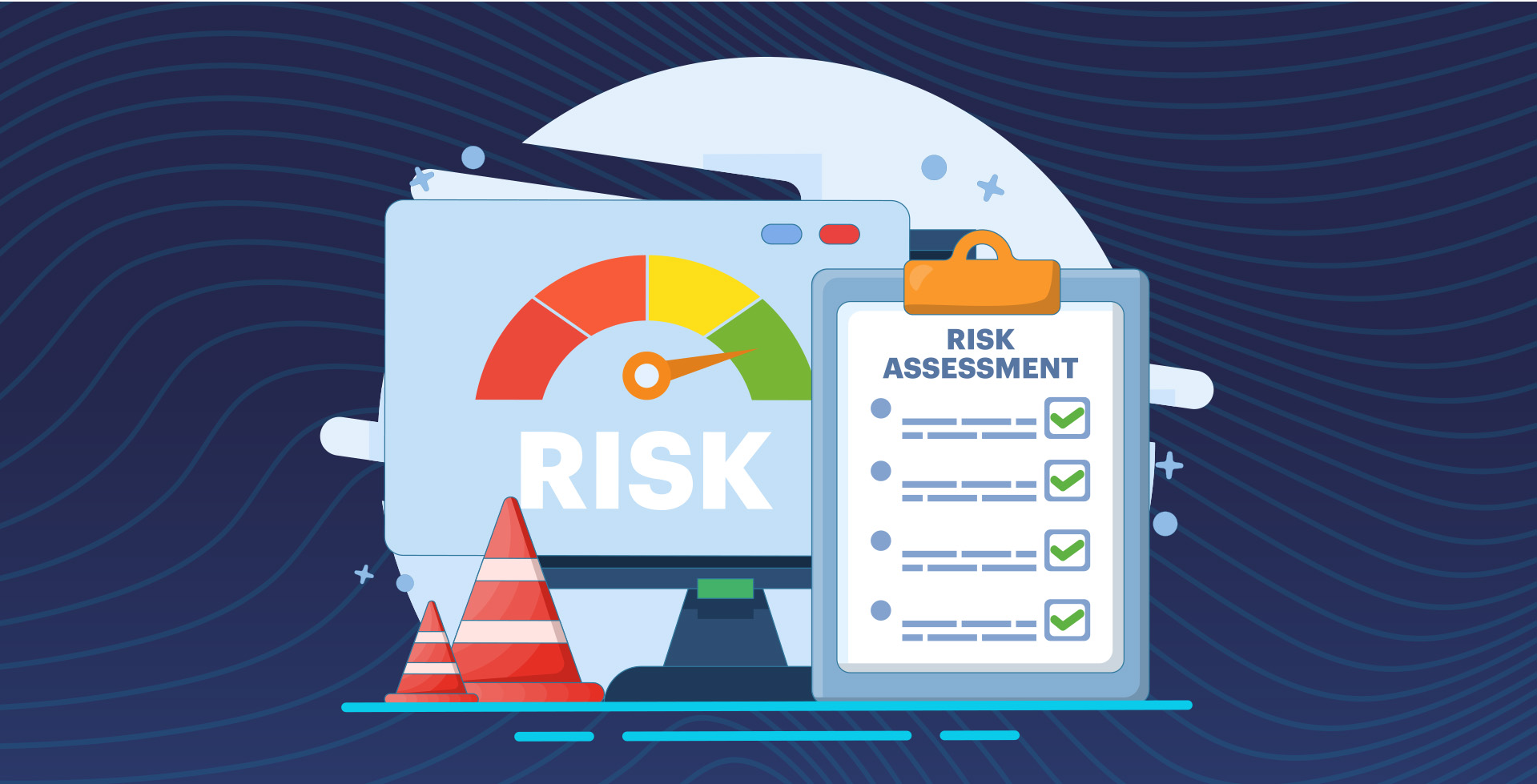


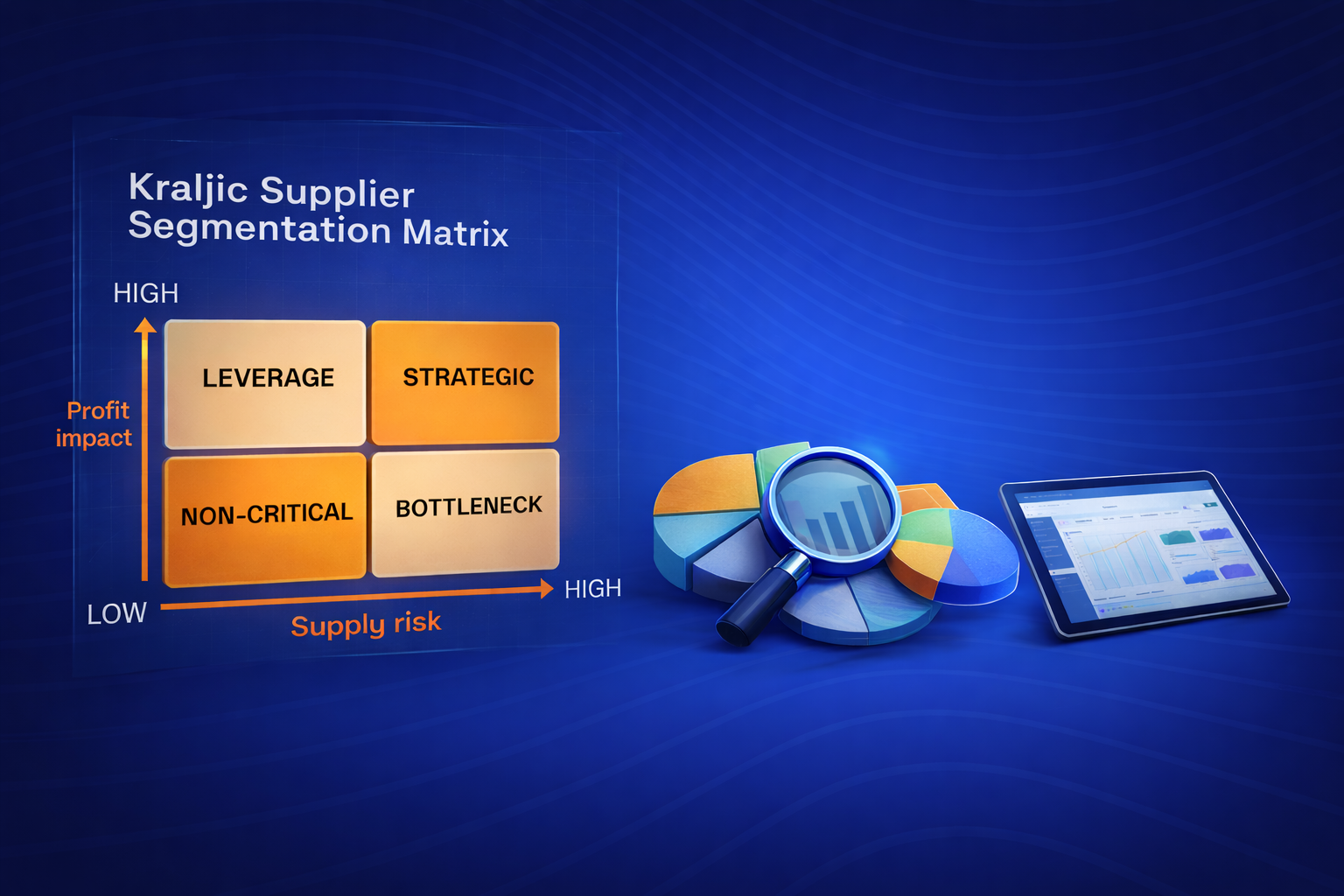
Supplier segmentation is the process of grouping suppliers based on their strategic importance, risk profile, and impact on business performance.
Leading procurement teams use segmentation to focus their time and resources where they matter most. It also helps to strengthen critical relationships, manage risk exposure, and drive better outcomes across supply cost, quality, and continuity.
However, there are multiple segmentation models, and choosing the right one for your organization can be challenging.
This guide breaks down the major segmentation models, the criteria used to classify suppliers, and the practical steps required to implement a segmentation approach that is structured, scalable, and aligned to business priorities. It also addresses the real challenges procurement teams face today – data complexity, inconsistent governance, and limited visibility into supplier risk and performance.
Key Takeaways
- Understand the definition of supplier segmentation and how it can help you focus resources where they’re needed most.
- Learn how segmentation can improve risk visibility, performance, and stakeholder alignment.
- Explore major segmentation models and when each one is best to use.
- Build an actionable roadmap for implementing segmentation effectively according to your Vendor Selection Process criteria and data requirements.
What Is Supplier Segmentation
Let’s start with a definition. Supplier segmentation is the structured, data-driven process of grouping suppliers based on shared characteristics so procurement can apply differentiated performance management, risk controls, relationship strategies, and governance.
In other words, it’s the operating mechanism that determines which suppliers receive strategic attention, which require closer monitoring, and which can run efficiently through standardized processes.
A strong supplier segmentation supports all of the critical supplier management workflows, including SPM, SRM, risk evaluation, innovation programs, and broader procurement orchestration. But a unified supplier data foundation is required for segmentation to offer a strategic advantage.
According to a November 2025 ScienceDirect study, effective segmentation is a dynamic system that guides how suppliers are managed, grown, and invested in over time – and it depends on consistent, high-quality data.
Platforms such as Ivalua provide a single source of truth that allows your global teams to categorize suppliers consistently and apply governance at scale, so they can operationalize segmentation across strategic sourcing, contracting, risk, and performance.
Supplier Segmentation as a Strategic Procurement Lever
A strong supplier segmentation strategy guides how procurement allocates time, attention, and resources across a complex supply base. By distinguishing strategic suppliers from high risk partners and those suited for standardized management, segmentation prevents over-investing in low-value suppliers and under-investing in those that matter most.
Segmentation reveals hidden risk concentrations while performance variability, and helps ensure that every supplier receives the right level of oversight.
Segmentation also enables meaningful automation and agentic AI: classification determines which suppliers receive automated assessments, deeper document reviews, or generative-AI-driven performance and risk analysis. When embedded into workflows, these intelligent controls switch on automatically.
Ardent Partners’ 2025 report – which names Ivalua a Market Leader in supplier management – says segmentation is the operational core of advanced supplier governance. A unified Source-to-Pay platform like Ivalua provides a single supplier record, workflow automation, and consistent governance over supplier management.
The Core Supplier Segmentation Models
Below is a comparison of the most widely used supplier segmentation models, where they excel, and when procurement teams should apply them.
| Model | What It Measures | Strengths | Limitations | Best Used For |
| Kraljic Matrix | Profit impact × supply risk | Simple, widely known, good starting point | Static; ignores capability, innovation, and collaboration potential | High-level portfolio mapping and basic risk prioritization |
| Supplier Pyramid | Strategic criticality × management intensity | Helps calibrate SRM workload; easy to communicate | Tendency to overfill “strategic” tier | Defining engagement effort and SRM governance |
| Risk-Based Segmentation | Operational, financial, compliance, geopolitical risk | Strong for resilience and control; aligns with risk teams | Risk-only view becomes overly defensive | Strengthening supply chain resilience and compliance |
| Capability-Based Segmentation | Operational performance, quality, innovation, digital maturity | Identifies high-potential suppliers; future-focused | Requires richer data and cross-team input | Innovation programs, supplier development, long-term value creation |
| Engagement × Capability Matrix | Supplier willingness to collaborate × ability to execute | Captures relational and strategic dynamics; modern replacement for Kraljic | Newer model; requires behavior/engagement data | Identifying “visionary” partners and strategic co-development |
| Network-Based Segmentation | Multi-tier influence, systemic importance, ecosystem role | Supports resilience and scenario planning | Harder to measure without multi-tier visibility | Managing systemic risks, bottlenecks, and multi-tier dependencies |
Together, these models give procurement a flexible toolkit for matching segmentation to business goals like reducing risk, driving innovation, and increasing long-term supplier value.
The following sections cover each model in greater detail.
The Kraljic Matrix
The Kraljic Matrix is one of the most widely recognized components of a supplier segmentation framework, grouping suppliers according to two variables: profit impact and supply risk. It provides a clear, high-level portfolio view that helps teams quickly distinguish between routine, leverage, bottleneck, and strategic suppliers.
Because of its simplicity, Kraljic remains a useful starting point, especially for organizations building foundational segmentation discipline. However, the model is static, reducing complex supplier relationships into just two factors and overlooking critical dimensions such as capability, collaboration maturity, innovation potential, and ESG performance.
According to Procurement Leaders (2025), many organizations are already evolving beyond traditional quadrants toward more nuanced tiers like transactional, essential, visionary, and strategic. They understand that modern supply ecosystems demand more dynamic evaluation.
The Supplier Pyramid
The Supplier Pyramid is a tiered supplier classification model that’s designed to ensure that only a small, high-value subset of suppliers sits at the top in the strategic tier. In this model, the majority of suppliers fall into managed or transactional tiers.
The model is operational because it helps procurement calibrate their SRM workload and allocate time and resources according to actual strategic value.
However, when using the Supplier Pyramid, organizations frequently overfill the strategic tier. This happens when internal politics, stakeholder preferences, or lack of segmentation discipline inflate the number of “strategic” suppliers beyond what the business can realistically support.
A unified S2P platform helps prevent this from happening by helping to enforce governance rules such as risk controls and collaboration levels that are tied to each tier. This helps keep classification consistent and ensures that engagement models match supplier importance.
Risk-Based Segmentation
Risk-based segmentation groups suppliers according to their exposure to operational, compliance, financial, geopolitical, or cyber risk. This creates a structured way to prioritize controls and tailor mitigation strategies.
WIth this model, procurement teams can focus their attention on key suppliers – the ones whose failure would create significant disruption.
However, a risk-only segmentation model is inherently reactive and can cause procurement to be defensive, making innovation, collaboration, and long-term value lower priority. As a result, this model can lead to focusing too much on short-term threats and not enough on long-term growth opportunities.
When connected to real-time risk monitoring workflows within a unified S2P platform like Ivalua, continuous updates inform tiering decisions. This means the system can automatically trigger actions such as enhanced due diligence, document requests, or alerts within supplier risk management to help ensure risk controls are aligned with suppliers’ risk profiles.
Capability-Based Segmentation
Capability-based segmentation groups suppliers according to their operational maturity, quality consistency, innovation capability, and technological strength.
Instead of focusing on just spend or risk, this model evaluates what a supplier is capable of delivering today, as well as their delivery potential. It’s especially valuable if you’re looking to align supplier performance, innovation programs, and long-term partnership strategies.
This approach is gaining traction because capability signals are often more predictive of future value than traditional metrics. According to ScienceDirect’s 2025 research, “Capability, innovation, and relational strength are underused despite higher predictive value.”
That insight highlights why capability-based segmentation is becoming a core method for modern supplier management teams seeking competitive advantage.
Ivalu strengthens this model further by capturing the performance, quality, ESG, digital maturity, and innovation indicators needed to assess capabilities accurately. With consistent data flowing into one environment, you can segment suppliers objectively and direct development efforts where they will have the greatest impact.
Engagement × Capability Matrix
The Engagement × Capability model is a modern supplier segmentation matrix that evaluates two dimensions traditional frameworks tend to overlook: the supplier’s willingness to collaborate and their ability to execute.
Popularized by researchers Rezaei & Ortt (ResearchGate), this 2025 model fills a critical gap left by Kraljic because it incorporates relational dynamics as well as cost and risk.
By plotting suppliers on these two axes, you can distinguish between high engagement, high capability “visionary partners” and high capability, lower engagement “essential operators.” This creates a more nuanced view of the supply base, and makes it easier to focus co-innovation efforts on partners who are competent and committed.
Ivalua strengthens this approach by capturing engagement signals such as responsiveness, data completeness, on-time assessment participation, and collaboration activity alongside operational capability metrics, and integrates them into a single system. This way, you can build a dynamic segmentation model that reflects real supplier behavior.
Network-Based Segmentation
Finally, network-based segmentation prioritizes suppliers based on multitier influence, systemic dependencies, and their centrality within the broader supplier portfolio.
Rather than focusing only on direct spend or tier-1 performance, the network-based model highlights which suppliers hold disproportionate power over continuity, capacity, or compliance.
Ivalua makes network-based segmentation possible by consolidating multi-tier supplier data, mapping ecosystem relationships, and integrating real-time risk and performance insights into a single source of truth. This way, you can see how suppliers interact across the network.
Ultimately, segmentation models deliver value only when fed with the right criteria, and network-based segmentation provides the lens needed to build true resilience into the supplier portfolio.
The Criteria Used To Segment Suppliers
Effective supplier segmentation depends on a clear, consistent set of criteria that reflect cost impact, risk exposure, performance maturity, and strategic potential. Let’s take a look at those criteria.
Profit Impact
Profit impact measures how much a supplier influences cost structure, margin, or revenue exposure. It’s a foundational criteria used in the Kraljic model and is essential for portfolio-level decisions.
You can use spend analysis to quantify financial dependency and determine which suppliers carry the greatest commercial weight. A unified platform like Ivalua links spend analysis directly to segmentation, ensuring financial data drives prioritization.
Supply Risk
Supply risk gauges exposure to shortages, geopolitical shifts, compliance failures, cyber incidents, or any operational disruption that could affect continuity. Strong supplier risk assessment practices ensure that risk scores automatically inform segmentation tiers, so that mitigation is proactive, not reactive.
Performance
Performance criteria include delivery reliability, quality, responsiveness, cost adherence, and long-term scorecard trends that point to stability and execution capability. Through integrated supplier performance management (SPM) workflows, you can automate supplier scorecards, capture corrective actions, and feed real-time results into your segmentation model.
Innovation
Innovation assesses a supplier’s ability to co-develop new solutions and contribute to product improvements. This is the foundation of supplier development efforts and helps identify partners that will help innovate rather than just sticking with the status quo.
ESG
ESG maturity includes a supplier’s environmental impact, labor standards, ethical practices, and compliance posture. It also encompasses initiatives such as supplier diversity and ESG scoring, which are increasingly important for meeting regulatory, investor, and consumer expectations.
Digital Maturity
Digital maturity evaluates how effectively a supplier uses technology (e.g. electronic transactions, automated workflows, APIs for exchanging data, or S2P integration). Strong digital partners make end-to-end supplier enablement processes faster, more cost-effective, and more accurate.
Network Dependencies
This criterion measures how important a supplier is within supplier networks, including multitier influence, bottlenecks, and ecosystem centrality. Network-aware segmentation is critical for resilience and avoiding disruptions that can potentially cascade through your organization.
Supplier’s View of You
Relational dynamics refer to a supplier’s willingness to collaborate, respond, and engage with you. Strong supplier relationship management (SRM) depends on understanding whether a supplier views you as strategic, transactional, or somewhere in between.
A segmentation strategy becomes actionable only when these criteria are operationalized through a structured implementation roadmap that ensures consistent governance, provides richer insights, and automates workflows across the supplier lifecycle. In the next section, we’ll walk you through how to implement segmentation in practice.
How To Implement Supplier Segmentation
The following steps outline how your teams can make segmentation operational and use it to drive SRM, risk mitigation, performance management, and automation.
Step 1: Data Quality and Stakeholder Alignment
No segmentation model can function without clean, reliable inputs. As a first step, assess supplier records for gaps, inconsistencies, duplicates, and missing risk or performance fields. Procurement, risk, finance, and key business stakeholders must agree on the criteria, weighting, and scoring rules used across the supplier base.
This early alignment helps to ensure everyone is operating from the same supplier management foundation. Ivalua’s Supplier Information Management (SIM) provides the unified, accurate supplier data needed to make this possible, enabling consistent segmentation across global teams.
Step 2: Data Collection And Cleansing
The next step is to gather the core inputs needed for supplier evaluation, including performance metrics, risk data, spend history, ESG information, and indicators of innovation or digital maturity. Standardize these data points into a consistent format and fix any issues such as missing fields or mismatched identifiers.
Step 3: Segmentation Workshop
Once data is prepared, run a segmentation workshop with category managers, SRM leads, risk owners, and other key stakeholders, to calibrate how each criterion should be interpreted. For instance, what does “high risk” or “strategic” mean and how should innovation be weighted?
Workshop discussions can shed light on assumptions, reduce evaluator bias, and create a shared understanding so that everyone scores suppliers the same way. Ivalua’s guided workflows support this process by enabling structured evaluations, embedded scoring guidance, and repeatable decision-making across teams.
Step 4: Pilot Segmentation
Before rolling out segmentation, be sure to pilot the model with a small, representative supplier group. A controlled pilot validates whether the criteria, weightings, and scoring logic work as intended. It also reveals gaps, inconsistencies, or unexpected outcomes early, enabling you to refine the model, adjust thresholds, and confirm that segmentation reflects real-world supplier dynamics before scaling it across the full supply base.
Step 5: Full-Base Segmentation
Next, apply the model across the entire supplier base to ensure every vendor is segmented using consistent criteria and weightings. Rolling out the model globally creates a unified baseline that aligns categories, regions, and stakeholder groups on the same tiering structure.
This enterprise-wide segmentation map becomes your foundation for SRM plans, risk workflows, resource allocation, and ongoing supplier management.
Step 6: Tier-Specific Strategies
Once segmentation is complete, procurement must translate tiers into actionable management strategies:
- Strategic suppliers should receive formal supplier collaboration plans, co-development roadmaps, and executive-level engagement.
- Managed suppliers require scheduled performance reviews and targeted improvement activities
- Transactional suppliers should operate through standardized processes and automated oversight to minimize manual effort.
Ivalua operationalizes these tier-specific strategies by triggering action plans, reviews, and workflow rules based on the supplier’s assigned tier to help ensure every supplier is managed with the right level of focus and governance.
Step 7: Communication
Don’t forget to communicate your results across procurement, business stakeholders, and suppliers (when appropriate). Transparent communication ensures that everyone understands why suppliers are placed in specific tiers, what expectations apply, and how engagement will differ going forward.
Step 8: Resourcing
Assign ownership to category managers, SRM leads, and risk teams based on their designated supplier tiers to help ensure that each segment receives the appropriate level of attention and oversight. Clear accountability prevents gaps and accelerates follow-through, while ensuring the segmentation model you implement is driving meaningful action across the supply base.
Step 9: Dynamic Reviews
Segmentation isn’t a one-time exercise; it evolves as supplier performance changes and risks emerge. Be sure to conduct regular reviews to ensure your suppliers are assigned to tiers that accurately reflect their current impact, risk exposure, and strategic value.
According to the 2025 Agentic AI Whitepaper, “automation now spans supplier document evaluation, assessment reviews, and summary generation.” This makes continuous updates more viable.
Ivalua’s agentic AI capabilities support this dynamic cycle by automatically generating supplier summaries, drafting assessments, triggering risk alerts, and evaluating documentation, enabling your segmentation model to continuously adapt.
Now let’s take a look at how one Ivalua customer strengthened supplier management through segmentation.
How Crédit Agricole Transformed Supplier Management
Crédit Agricole’s decentralized procurement model is spread across 66 global entities with uneven maturity. This made it difficult to see spend patterns, compare supplier performance, or understand policies “by supplier or product.” Because supplier and product information wasn’t structured or shared, visibility into activity and risk was limited.
With Ivalua Crédit Agricole was able to centralize supplier data, harmonize evaluation criteria, and give every entity a consistent way to assess performance and risk. As a result of this unified vendor management, the company achieved €3B spend under management, €80M in savings in the first years, and 100% digitization of procurement processes. They also onboarded more than 59,000 suppliers.
Crédit Agricole now operates with stronger governance and smoother buyer–supplier collaboration, supported by improved spend visibility and tighter regulatory and contractual oversight. A 70% increase in invoice-processing efficiency has also enabled consistent segmentation, ensuring every supplier is evaluated the same way across the enterprise.
“We have a strong partnership with Ivalua and continue to generate value. With Ivalua we have achieved 100% digitization across all procurement processes and have been able capture a tremendous amount of savings.” – Sylvie Robin Romet, Chief Procurement Officer Crédit Agricole SA
Building A Modern Supplier Segmentation Strategy
A strong supplier segmentation strategy is the foundation of effective supplier management and risk governance. However, modern segmentation is complex and tightly connected to performance, ESG progress, innovation potential, and resilience. A unified data model is necessary for enabling automation and emerging agentic capabilities.
To get started with segmentation, begin by evaluating whether your current practices are fragmented, static, or disconnected from real performance signals. Move toward an integrated supplier data foundation and a supplier portal that supports continuous updates, so your segmentation efforts become consistent, scalable, and automation-ready. Ivalua provides the unified S2P environment needed to activate this modern approach.
Optimize Supplier Segmentation at Scale with Ivalua.<br>
FAQs
Supplier segmentation helps procurement focus effort where it drives the most value, improving supplier performance and overall procurement strategy. It enables tailored supplier relationship management by aligning engagement levels to each supplier’s importance and risk.
Key supplier segmentation criteria include performance data, financial and operational stability, innovation capability, and supply risk assessment. These inputs create a consistent supplier evaluation foundation for effective supplier performance management.
Supplier segmentation uses a structured framework to drive differentiated management strategies, while supplier classification simply groups suppliers descriptively. Segmentation is strategic and action-oriented; classification is static.
Segmentation identifies high-risk, high-dependency suppliers, enabling stronger supplier risk management and targeted third-party risk management controls. This structured view helps organizations strengthen overall supply chain resilience.
Segmentation should be updated at least annually or whenever major changes in supplier performance or risk emerge. Regular refreshes keep the supplier segmentation process aligned with procurement strategy.
Segmentation brings structure and visibility to large vendor networks, helping allocate resources efficiently. It also improves coordination across category management by clarifying priorities and oversight levels.
Further Reading
- Vendor Scorecards: Complete Guide For Procurement Teams
- Supplier Onboarding 101: Essential Tips for a Smooth Process
- How Supply Base Segmentation can help you Manage Risk
- Ultimate Guide to Supplier Management: Strategies & Best Practices for 2026
- Vendor Selection Process Explained: From RFP to Final Decision
- How Supplier Portals Are Transforming Vendor Management