


Historically, supplier relationship management (SRM) has been characterized by static scorecards, periodic reviews, and manual governance practices. But that’s changing – fast. By 2026, it will evolve into a continuously orchestrated system in which human judgment and AI-driven execution work together to manage supplier performance, risk, and collaboration in real time.
As a result, SRM will be the operational backbone for broader procurement transformation, connecting strategy with execution across the supply base.
While many organizations have established SRM programs, few are operationalized using a scalable supplier relationship framework that can keep pace with today’s market volatility and regulatory pressure. In fact, we have seen a growing disconnect between the ambition of procurement teams to transform and their ability to execute on those transformation goals.
In other words, although SRM objectives exist, outcomes are inconsistent. Closing this gap requires a modern operating model that’s supported by intelligent supplier management software. This software should be able to unify data, embed governance into workflows, and apply AI to take action.
In this guide, we present a practical framework for evolving SRM today, alongside a forward-looking model for how AI orchestration will redefine supplier relationships in the years ahead.
Key Takeaways
- SRM is evolving into an AI-orchestrated discipline that continuously coordinates supplier performance, risk, and collaboration across the full Source-to-Pay lifecycle.
- The primary barrier to SRM maturity is execution – with fragmented data, misaligned KPIs, and inconsistent governance preventing supplier relationship optimization.
- AI in procurement enables predictive risk management, automated execution, and scalable supplier innovation partnerships built on unified supplier data.
Supplier Relationship Management Process Explained
SRM is the practice of managing supplier performance, collaboration, and risk across the full Source-to-Pay lifecycle. It provides a structured way for procurement teams to evaluate, engage with and develop suppliers over time.
While early SRM efforts often focus on administrative tasks such as the supplier onboarding process, compliance checks, or periodic reviews, mature SRM programs operate as an integrated supplier relationship framework that aligns supplier activity with business priorities.
When executed properly, SRM can be used to create substantial value through systematic performance and supplier risk management, and by supporting effective collaboration that drives innovation.
A 2023 study published in Sage Journals found that supplier collaboration has a statistically significant positive effect on competitive advantage (β = 0.482, p < 0.01) – a statistic that underscores the ability of SRM to lead to measurable business outcomes. However, modern supplier collaboration tools and analytics are essential stepping stones for making this happen.
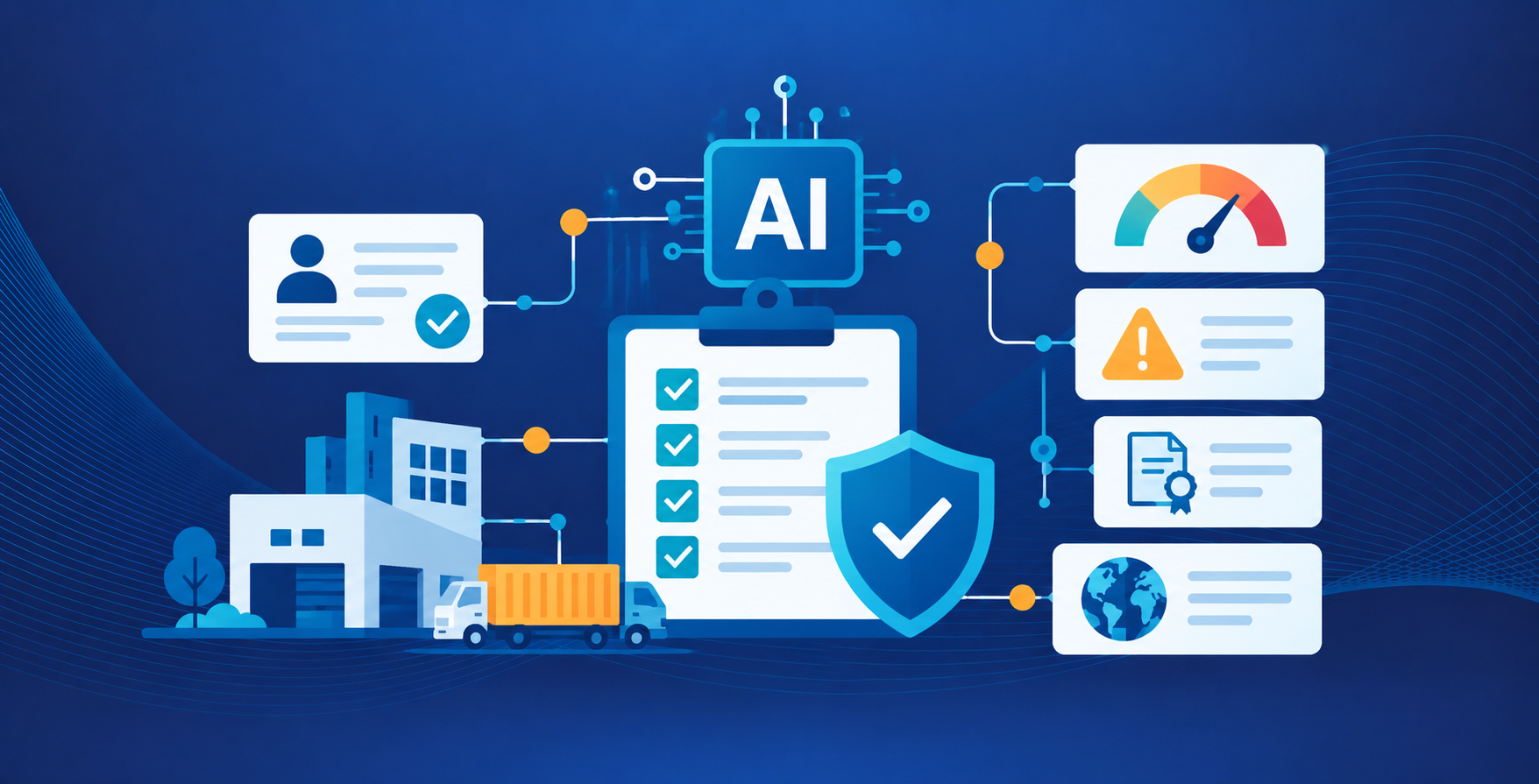
In 2026, SRM will continue to evolve, leveraging AI-assisted orchestration models that continuously monitor suppliers, trigger actions, and adapt governance in real time. In this model, SRM functions as a performance engine that coordinates humans and automation across the supply base.
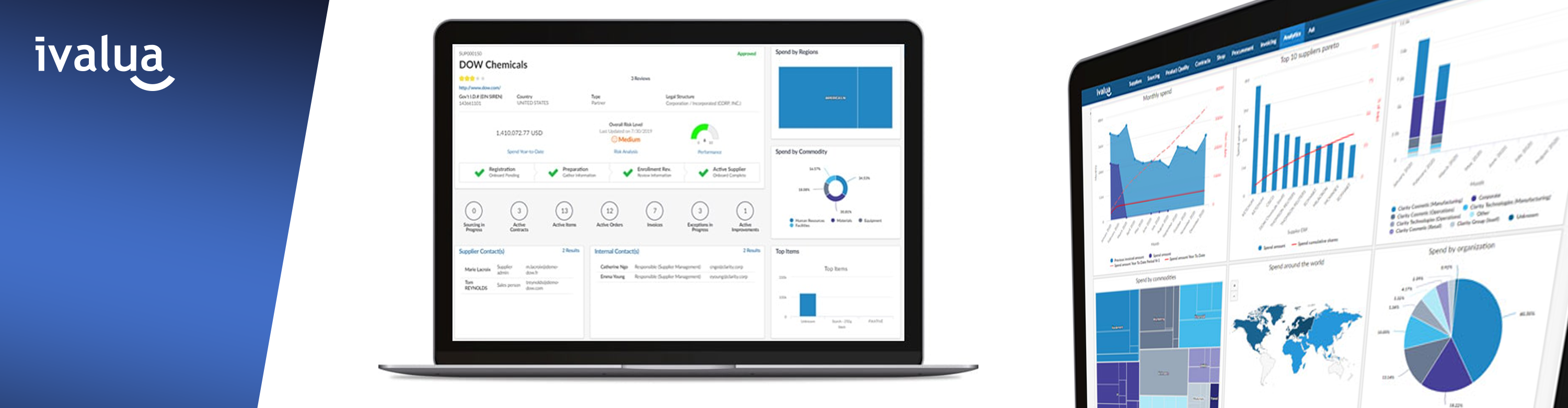
Platforms like Ivalua will be essential, providing a unified data foundation that connects supplier records, risk signals, and performance metrics across the entire Source-to-Pay cycle; however, closing the gap between theory and reality will require eliminating structural and operational barriers that are holding SRM back.
In the next section, we explore where – and why – many SRM programs fail.
The Maturity Gap in Supplier Relationship Management
You may understand what SRM is supposed to do, but can you explain why your programs fail to deliver agility, resilience, or sustained value?
Most of the time, the challenge with SRM is operational – supplier management is still mainly reactive, fragmented, and difficult to scale. According to Forrester Consulting, only 13% of organizations qualify as “Leaders” in vendor management maturity, while the majority operate with limited coordination across supplier performance management and supplier risk management.
The same research found that 58% of firms report fragmented Source-to-Pay applications that limit visibility into supplier risk, making it nearly impossible to anticipate disruptions, enforce ESG accountability, or engage suppliers consistently.
At the root of most supplier relationship challenges are the same patterns:
- Supplier data is scattered across ERP, sourcing, risk, and finance systems
- Siloed tools are owned by different teams
- Inconsistent KPIs are used to measure cost in one place and risk or performance in another
- Governance models are difficult to understand or trust
When value, risk, and collaboration are measured differently across functions, supplier portfolio management is difficult to do well. You may end up spending more time reconciling data than using it to support decision-making.
When this happens, it erodes confidence in the supplier relationship strategy. Your organization loses agility and is unable to respond rapidly to supplier issues. Inconsistent data can also weaken ESG and compliance oversight and undermine collaboration.
Modern SRM requires a fundamentally different approach: unifying supplier performance, risk, and engagement under a single framework and augmenting human judgment with continuous, AI-driven insight.
Platforms like Ivalua are designed specifically to eliminate the issues with data fragmentation by bringing all supplier and spend data into one consistent model across the full Source-to-Pay lifecycle.
In the next section, we explore the core pillars and supplier relationship best practices that will help you improve SRM in your organization.
Core Pillars and Best Practices of Modern SRM
Modern supplier relationship management models rest on a few core pillars that separate leaders from laggards.
Modern supplier relationship management is built on several foundational pillars, including clear segmentation, disciplined performance management, proactive risk oversight, and structured collaboration. High-performing procurement teams have been able to operationalize those into a single operating model that begins immediately following the vendor selection process.
Here’s a closer look at the core pillars:
- Supply base segmentation: Mature organizations apply a clear supplier segmentation strategy that groups suppliers by their strategic importance, risk exposure, and potential to create value. A best practice is to review these segmentation tiers every quarter, to ensure they are aligned with your changing business priorities and market conditions.
Segmentation helps to ensure that you are investing in your most strategic suppliers and managing lower-risk suppliers efficiently through standardized processes. - Performance Management: Standardized vendor scorecards and structured quarterly business reviews enable you to track quality, delivery, innovation, and sustainability performance metrics. These KPIs should be linked directly to contractual incentives, so that performance discussions produce tangible outcomes.
Platforms like Ivalua offer performance management capabilities that offer a shared, auditable view of supplier results across sourcing, contracting, and payment cycles. This helps to reduce disputes over data and keep performance conversations focused on supplier enablement. - Third-party risk management: Leading organizations centralize operational, financial, compliance, and ESG risk data into a single view and automate alerts when thresholds are breached. It’s important to group ESG and operational risks rather than treating them as separate programs, because supply-chain resilience and responsibility are increasingly intertwined.
Ivalua’s Risk Center illustrates how third-party risk management can be embedded directly into SRM workflows, enabling faster response without overwhelming teams with manual monitoring. - Collaboration and supplier innovation: Mature organizations establish joint improvement plans, innovation pipelines, and structured feedback loops with their key suppliers. They also formalize collaboration through governance models that help measure cost avoidance, speed, sustainability gains, new revenue opportunities and other business outcomes.
Supplier collaboration tools and enablement frameworks make this process scalable by standardizing how suppliers engage, share data, and participate in development initiatives.
Research reinforces this integrated approach. According to a 2023 study in RMCI Journal report, “communication, digitalization, and risk categorization are the strongest enablers of resilience through supplier collaboration.” In other words, SRM effectiveness depends on both digital maturity and organizational intent.
With these best practices in place, the next evolution becomes clear. The question is no longer whether you should segment, measure, manage risk, and collaborate – it’s about how to orchestrate these activities across thousands of suppliers.
The SRM AI Orchestration Framework — The 5 Layers of Intelligent Supplier Management
Leading procurement teams are embedding AI directly into SRM practices. However, they’re not just automating everything indiscriminately. It’s critical to determine which decisions should be human-led, which should be AI-supported, and which can be executed autonomously with AI.
Below, we explain how you can use AI to operationalize modern SRM, while embedding KPIs directly into day-to-day workflows and keeping humans in the loop.
1) Decision Tier Mapping
What changes: SRM decisions are deliberately split between human-led, AI-supported, and AI-executed tiers. AI can take on repeatable, low-risk SRM decisions while augmenting human judgment for more strategic ones.
In practice: Ivalua’s sourcing agent can automatically identify unmanaged tail-spend categories and launch sourcing events for review. The Risk Center flags suppliers based on real-time disruption signals and initiates corrective workflows, while AI-driven supplier re-segmentation analyzes spend and performance quarterly to recommend tier changes. This approach reflects a broader supplier relationship trend: automation guided by intent, not volume.
How to measure: Percentage of SRM decisions automated without escalation.
2) Copilot Layer for Predictive Insight
What changes: AI surfaces insights before you ask for them and explains why they matter.
In practice: Ivalua’s “Ask IVA” conversational assistant enables you to request supplier summaries, contract insights, or regional ESG exposure using natural language prompts. Contract Data Capture (CDC) then parses legal documents to flag compliance gaps before signature, while the Category Intelligence Assistant (CIA) builds market and supplier intelligence reports using internal performance data and external benchmarks. This predictive layer enables supplier relationship optimization with scenario-driven decision-making.
How to measure: Accuracy of risk or performance predictions versus outcomes.
3) Autonomous Execution Band
What changes: AI in procurement enables low-risk operational SRM tasks to execute end-to-end without human intervention.
In practice: A 2023 RMCI Journal study found that “AI-driven risk categorization improves forecasting and early risk detection in supplier networks,” reinforcing the value of autonomous execution for scalable SRM. Ivalua’s Supplier Onboarding Agent executes multi-step registration autonomously, validating tax IDs, pulling ESG certifications, and assigning internal IDs. The Improvement Plan Assistant converts scorecard data into structured corrective actions, while the Contract Renewal Agent detects expiring contracts and drafts renewal workflows with updated terms.
How to measure: Cycle-time reduction per SRM task category.
4) Feedback & Explainability Layer
What changes: Every AI-driven recommendation is transparent, traceable, and controllable.
In practice: Ivalua’s Risk Center shows which AI agent flagged a supplier, what data triggered the alert, and how risk scores were calculated. Supplier Performance Dashboards link recommendations directly to scorecard metrics, ESG disclosures, or third-party data. IVA cites external data sources such as EcoVadis or Dun & Bradstreet within the interface, reinforcing explainability. By providing this transparency, AI helps to strengthen supplier collaboration and long-term supplier innovation partnerships.
How to measure: User adoption rates and override frequency.
5) Continuous Learning & Disruption Adaptation
What changes: SRM systems improve automatically as supplier behavior and market conditions evolve.
AI-enabled SRM is adaptive by design. Agents continuously retrain using supplier performance, market signals, and disruption data. In Ivalua, AI cross-checks supplier risk events against spend exposure to reprioritize watchlists in real time, while the Environmental Impact Center updates ESG scores as new disclosures emerge. Risk models self-optimize by comparing predicted disruptions with actual outcomes.
How to measure: Reduction in disruption response time and improvement in ESG compliance scores.
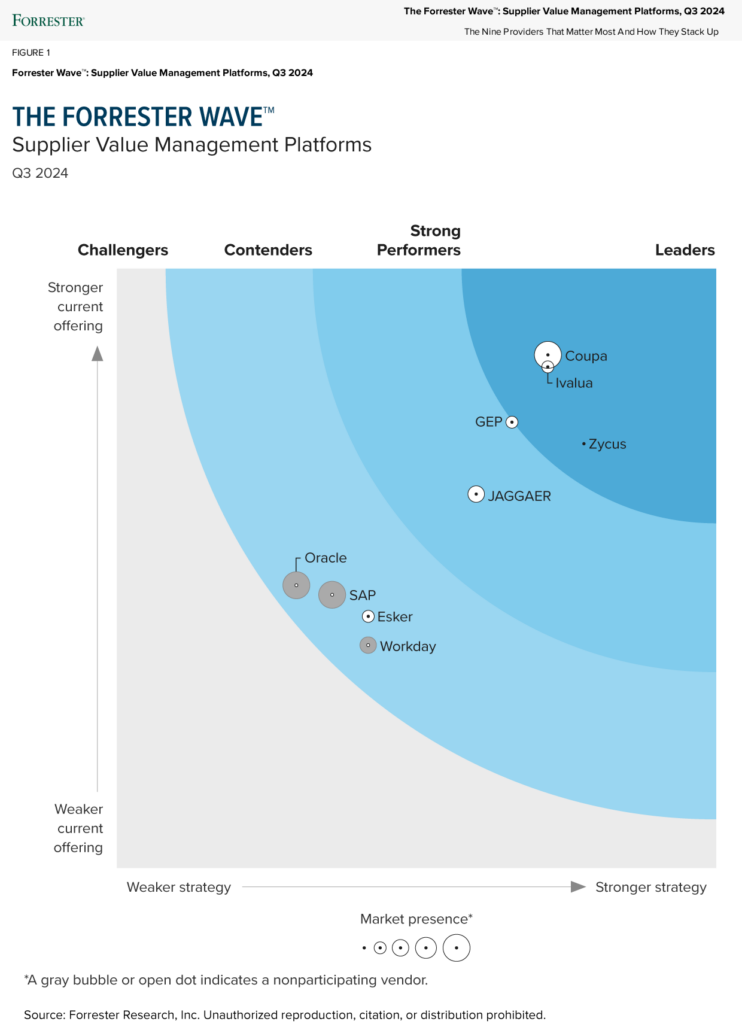
Supplier Value Management Platforms, Q3 2024 research from Forrester has validated this approach to operationalizing SRM and recognizes Ivalua as a leader in embedding AI across Source-to-Pay processes. Now let’s look at a real-world example of effective SMR at Ivalua’s customer, Elkem.

Pro Tip
Download our Supplier Management Datasheet to learn how effective supplier management can power procurement processes, establish resiliency, and drive innovation.
Elkem’s Journey to Unified Supplier Relationship Management with Ivalua
Supplier relationship management examples show what mature SRM looks like in practice, and Elkem’s journey is a strong one.
Elkem’s SRM transformation shows how AI-orchestrated Supplier Relationship Management works in a real enterprise environment. Operating across global business units with diverse supplier bases, Elkem faced a common challenge: supplier data existed across regions and systems, but visibility, consistency, and governance were lacking. This fragmentation limited the organization’s ability to manage supplier performance and risk in a standardized, proactive way.
By centralizing 100% of supplier data on a single, governed platform, Elkem established the foundation for mature SRM. This directly enabled the Decision Tier Mapping layer of the framework, allowing the organization to define which supplier decisions required human oversight, which could be AI-supported, and which could eventually be automated. Supplier classification, performance tracking, and risk monitoring shifted from local judgment to globally consistent processes.
That same foundation activated continuous learning and adaptation. With unified supplier records and standardized metrics, Elkem created the conditions for AI-driven risk scoring, contract compliance management, and performance optimization. Instead of reacting to issues after they surfaced, teams could continuously reassess supplier exposure and performance as conditions evolved.
The outcome was measurable and meaningful: full global supplier visibility, standardized performance management, and stronger risk control.
“I am very proud to say that 100% of our suppliers are now in one system! I’m proud of implementing Ivalua, and having a system that is global that tries to unify and break the silos in our company.”
– Emilie Genin, Elkem
How to Evolve Your Supplier Relationship Management Strategy for 2026 and Beyond
Supplier relationship management is entering a new phase – one defined by AI-assisted decision-making and transparent governance. To that end, we used this guide to help you understand supplier relationship management and the maturity gap that holds most programs back, and outline modern best practices for implementing SRM successfully.
For procurement leaders, the next step is pragmatic: you must evaluate where your organization sits today across data unification, supplier visibility, performance governance, and risk responsiveness. Gaps in any of these areas will limit strategic supplier collaboration and make supplier relationship optimization difficult to sustain.
Closing those gaps requires a connected operating model where people, process, and technology reinforce each other.
Unified, AI-ready supplier management platforms will be foundational to the success of that model. When supplier data, performance metrics, contracts, and risk signals live in a single system of record, AI can augment human judgment responsibly to support better decision-making and faster responses.
Invest now in modernizing your SRM strategy, and you’ll be positioned to compete, collaborate, and adapt through 2026 and beyond.
Modernize Supplier Relationships with AI Orchestration
FAQs About Supplier Relationship Management
Supplier Relationship Management (SRM) is the structured, ongoing management of supplier performance, risk, and collaboration as part of an overall procurement strategy. It is important because effective SRM improves supplier performance, strengthens supplier collaboration, and turns suppliers into contributors to business value rather than transactional vendors.
AI in procurement enables supplier relationship software to move from manual oversight to intelligent orchestration using agentic AI. SRM automation improves supplier risk management by continuously analyzing data, surfacing insights, and triggering actions faster and more accurately than human-only processes.
Organizations measure SRM success through supplier performance evaluation metrics such as vendor scorecards, risk reduction, and improvement plan completion. Strong SRM KPIs are supported by supplier relationship governance and procurement analytics that track performance and supplier relationship trends over time.
Best practices include structured supplier collaboration, regular supplier feedback loops, and formal supplier development programs tied to measurable goals. Continuous improvement initiatives ensure supplier relationship optimization remains aligned with evolving business priorities.
Supplier relationship management supports ESG compliance and supplier risk management by centralizing sustainability data, monitoring third-party risk, and enforcing supplier relationship governance. This strengthens procurement and supply chain resilience while enabling sustainable procurement at scale.