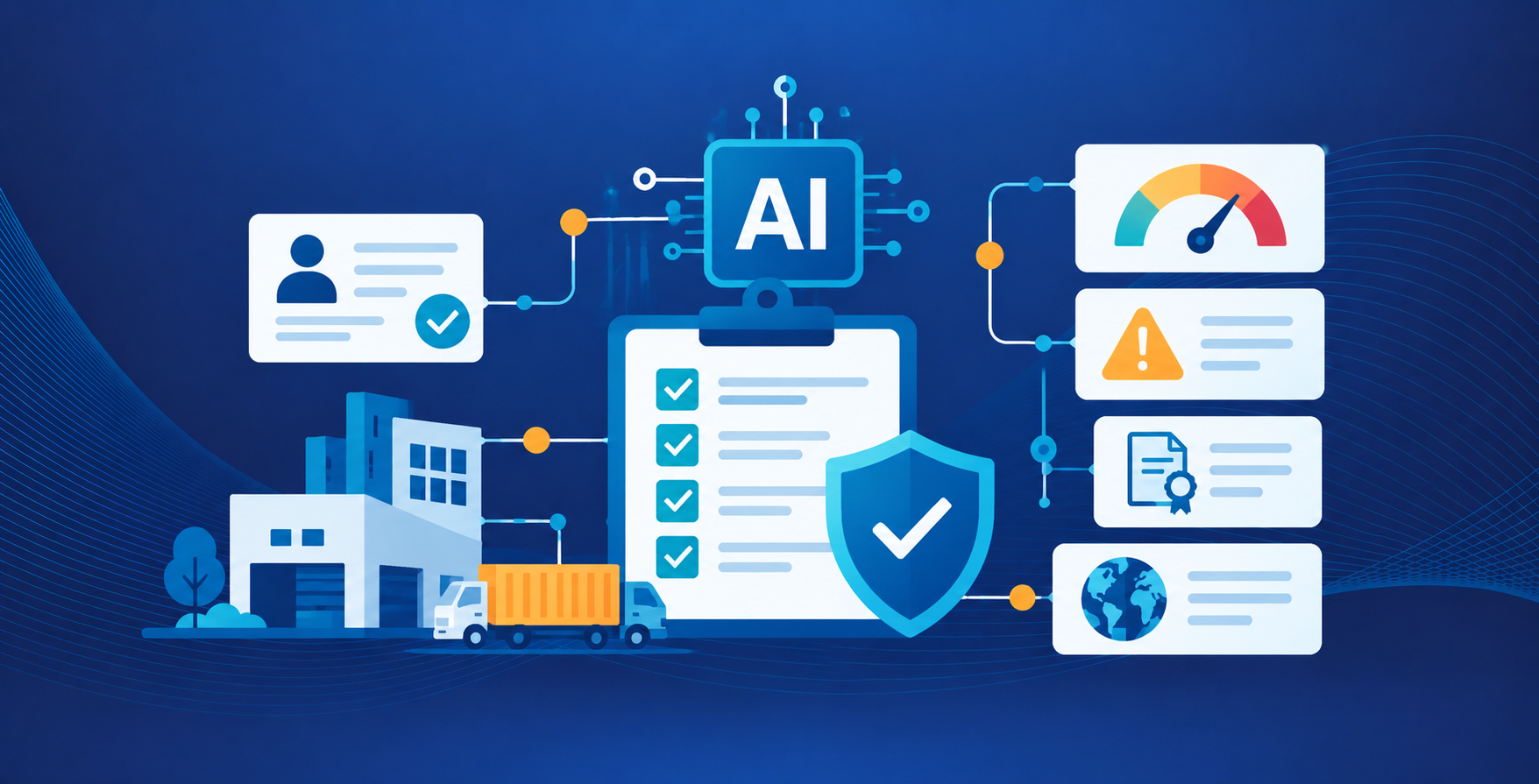




Procurement teams are under growing pressure to move beyond inconsistent supplier evaluations and adopt structured approaches, such as vendor scorecards, that deliver actionable insights.
Without these vendor scorecards, performance is too often judged through casual feedback, scattered emails, or quick conversations—leaving critical issues overlooked until they surface in QBRs or contract renewals, when it’s already too late.
Vendor scorecards add structure and consistency to the vendor evaluation process, and strategic procurement teams use them to assess supplier performance across key performance indicators (KPIs) such as cost, quality, delivery, contract compliance, and innovation.
Scorecards transform subjective input into measurable, comparable data – whether you’re managing 50 or 5,000 vendors.
However, most organizations are still using manually created scorecards or spreadsheets that are disconnected from sourcing or P2P platforms and inconsistently applied across categories.
Without automation or shared governance, visibility is lacking and your business may remain exposed to unnecessary risk.
Our guide goes beyond definitions to demonstrate how to embed supplier management scorecards directly into the procurement lifecycle, automate workflows, and share results transparently with suppliers to drive collaboration.
Learn how performance data can be embedded directly into supplier workflows.
Key Takeaways
- Vendor scorecards give procurement teams a consistent way to evaluate supplier performance across quality, delivery, cost, and compliance metrics.
- Performance management is not just about fixing issues after they occur but building a proactive framework to prevent them through continuous, measurable feedback.
- Organizations can leverage an integrated platform like Ivalua to standardize, digitize, and integrate vendor scorecards with the rest of their procurement workflows.
What Is a Vendor Scorecard?
A vendor scorecard,also referred to as a supplier scorecard, vendor performance scorecard, or provider scorecard, is a structured, recurring evaluation tool used by procurement teams to measure supplier performance.
Unlike informal stakeholder feedback or one-off reviews, a scorecard provides a standardized supplier performance evaluation framework that makes performance visible, measurable, and comparable across the supply base.
Scorecards help assess suppliers against clearly defined KPIs such as quality, delivery timeliness, cost competitiveness, risk mitigation, ESG compliance, and innovation.
This helps you to identify top-performing suppliers or address underperformance issues, and supports strategic decisions about renewals and negotiations. In practice, vendor scorecards can take several forms.
Many organizations still rely on Excel-based templates, which offer a low barrier to entry but require manual updates and lack real-time visibility.
More advanced teams embed scorecards into integrated digital platforms such as P2P or source-to-pay suites.
This approach connects performance data directly to procurement workflows, automates updates, and enables dashboards that can be shared with stakeholders and suppliers alike.
Vendor Scorecards Standardize Supplier Evaluation Across Categories And Teams
In large enterprises, supplier performance can easily become fragmented, with different teams applying their own supplier evaluation criteria or relying on anecdotal feedback. Vendor scorecards solve this problem by standardizing evaluation across categories, business units, and geographies.
Vendor scorecards capture the key dimensions of supplier performance, and, depending on industry priorities, additional supplier performance metrics such as innovation, ESG commitments, or risk resilience may also be included.
Each KPI can be weighted to reflect strategic importance, ensuring that critical factors such as on-time delivery in manufacturing or compliance in regulated industries carry more influence in the overall supplier risk assessment.
Unlike one-off audits or reactive assessments, scorecards apply recurring logic, thresholds, and weighting to track supplier performance over time. With this level of visibility into supplier trends, you can spot risk early and track improvement against agreed-upon targets.
Because scorecards are objective, they are powerful tools for effectively managing suppliers. Scorecard results carry a lot of weight in executive discussions and can be shared with suppliers to drive meaningful improvements.
Let’s take a step back and explore why informal supplier reviews are risky.
Informal Supplier Reviews Create Risk And Weaken Sourcing Leverage
When supplier performance management happens informally through scattered feedback, ad hoc reviews, or disconnected spreadsheets, you lose visibility and leverage. Plus, performance data is often late, disputed, or entirely unavailable during critical moments such as contract renewals.
This lack of structure forces you to rely on anecdotes rather than evidence, and it also weakens your ability to hold suppliers accountable for their performance.
Inconsistency is another issue. One business unit may rate a supplier highly based on service responsiveness, while another complains about delivery delays.
Without a shared methodology or scorecard, it’s challenging to talk to suppliers intelligently about how they can improve. Supplier relationships may suffer as a result of mixed messages from different parts of the business.
Disconnected manual processes are also inefficient, leading to time-consuming audits and delayed sourcing decisions, diminishing procurement’s ability to drive strategic value.
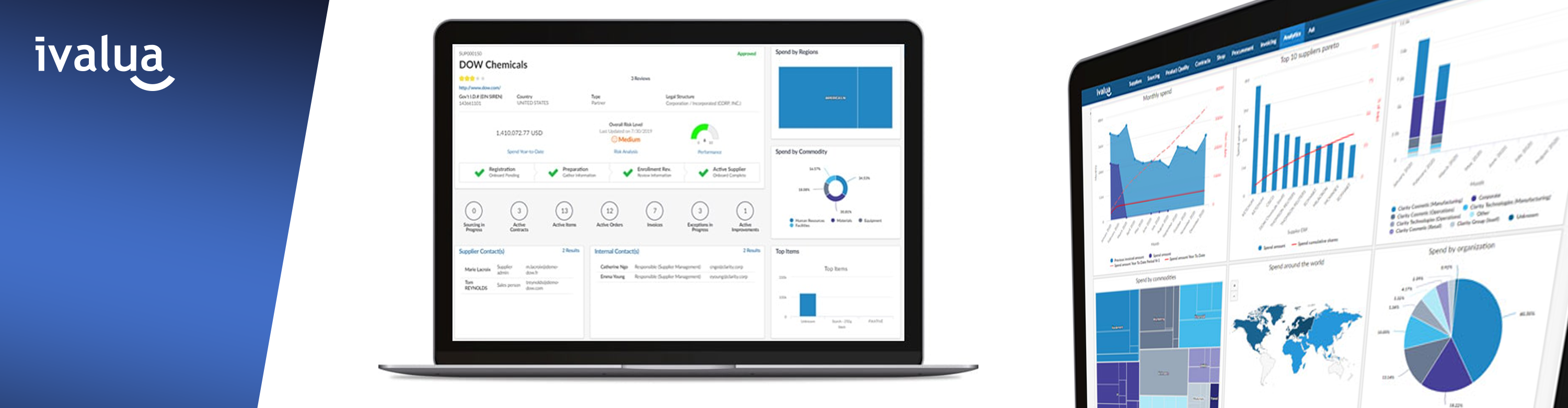
Modern platforms like Ivalua tackle this issue by embedding vendor performance data into procurement workflows.
A supplier scorecard history panel that shows composite score trends by quarter provides objective evidence for negotiations, renewals, and continuous improvement.
Essential KPIs For Enterprise Vendor Scorecards
To drive consistency and accountability across the supply base, enterprise vendor performance scorecards must be built on clear KPIs that help you translate supplier performance into measurable, comparable data. The most common KPIs for vendor performance include:
- On-time delivery (%): Reliability in meeting committed dates.
- Invoice match accuracy (%): Percentage of invoices that reconcile correctly with POs and receipts.
- Product defect rate (%): Share of units failing quality checks.
- Service level agreement compliance (incidents): Number of contractual service level breaches.
- Issue resolution time (days): Average time to close a ticket or service request.
These KPIs should be scored on a standardized scale with threshold bands to drive objectivity.
For example, on-time delivery at 95%+ is “green,” 90–94% is “yellow,” and below 90% is “red.” The thresholds eliminate debate and allow you to easily share results with suppliers.
Weighting ensures the scorecard reflects business priorities. Delivery, for example, might account for 40% of the composite score in direct materials, but only 10% in SaaS or professional services categories.
It’s important to assign weights according to the category procurement strategy to ensure the most critical metrics drive the overall supplier risk assessment.
Finally, best-in-class programs use composite scoring with auto-calculation and conditional formatting. A weighted average across key performance indicators creates a single performance score that you can track every quarter. You can also use automated formatting to highlight problem areas in real time.
These features help you gain actionable insights that drive value and reduce risk.
In the table below, the sample of supplier analytics show that the supplier scores highly for delivery timeliness, invoice accuracy, and service level agreement (SLA) compliance, but lower on defect rate and resolution time.
The weighting ensures that delivery carries the most influence in the overall score, consistent with its importance in direct materials categories.
The composite score of 4.15 out of 5 reflects solid overall performance but highlights specific areas for improvement.
| KPI | Weight (%) | Supplier Result | Target Threshold | Weighted Score |
| On-time delivery (%) | 40% | 96 | ≥95% = Green | 2.0 |
| Invoice match accuracy (%) | 20% | 92 | ≥95% = Green | 0.8 |
| Product defect rate (%) | 15% | 3 | ≤2% = Green | 0.45 |
| SLA compliance (incidents) | 15% | 1 | 0 = Green | 0.6 |
| Issue resolution time (days) | 10% | 5 | ≤3 days = Green | 0.3 |
| Composite Score | 100% | — | — | 4.15 / 5 |
By using standardized thresholds (green, yellow, red) and automated calculations, you can quickly see where a supplier is excelling and where corrective action may be needed.
A Scalable Vendor Scorecard Process
Building a vendor performance scorecard in Excel is a valuable first step, but the real power comes from embedding the process into your procurement platform.
While a spreadsheet can help standardize KPIs and establish consistency, it requires manual upkeep and lacks real-time visibility. Ivalua’s supplier management capabilities offer automation, AI-driven insights, and centralization across the procurement lifecycle.
With Ivalua, supplier data flows directly from POs, invoices, audits, and sourcing events into live dashboard visualizations. The platform triggers reviews automatically and tracks performance trends over time.
That said, a structured scorecard template is still a practical starting point, because it gives you a consistent framework to capture and analyze supplier performance before scaling into a platform environment.
Below, we outline the repeatable process to set up vendor performance scorecards at scale. We also provide a walkthrough of the downloadable template included with this guide.
Step-by-step Process to Deploy Scorecards at Scale
- Define supplier tiers: Segment vendors into strategic, preferred, and transactional categories.
- Assign KPIs and weightings: Select metrics relevant to each category and apply different weights for each tier.
- Set scoring thresholds: Base green/yellow/red bands on historical data such as 12-month PO performance.
- Configure review cadence: Align review frequency with risk level (e.g., monthly for strategic, quarterly for preferred).
- Automate routing in Ivalua: Assign review workflows by category owner, risk profile, or compliance requirements.
- Link scorecards to workflows: Embed performance evaluation into onboarding, sourcing, contract renewals, and invoice approvals.
Vendor Scorecards Must Be Embedded Into The Full Procurement Lifecycle
Vendor scorecards create the most value when they are not treated as stand-alone reports, but as active inputs throughout the source to pay process.
Instead of sitting in a spreadsheet, scores become connected data points that influence sourcing, contracting, and invoicing decisions. This creates a continuous supplier evaluation loop that ensures performance insights are available whenever you or your team engages with a supplier.
Through Source-to-Contract alignment, scorecards can inform multiple stages of the lifecycle:
- Onboarding: Scorecards provide structured assessments of supplier capabilities, risk management, compliance, and quality indicators.
- Competitive Events: historical scores can be factored into bid weighting, ensuring that past performance impacts future awards.
- Contract Fulfillment: Once contracts are executed, key performance indicators such as SLA compliance and defect rates can be monitored in real time, with underperformance automatically triggering alerts or escalation workflows.
- Renewal: Procurement teams can make evidence-based decisions to extend, renegotiate, or rationalize suppliers.
In Ivalua, scorecards are embedded directly into supplier profiles, sourcing events, and contract records, ensuring every decision is guided by current performance data.
For example, if invoice accuracy drops below a predefined threshold, Ivalua can trigger a follow-up review or link corrective actions to the contract, eliminating manual reporting.
Examples of automation triggers in Ivalua include:
- Delivery rate <90% = notify category owner and flag supplier for review
- Invoice match accuracy <95% = auto-create corrective action workflow
- Repeated SLA breaches = link issue log directly to active contract for enforcement
- Composite score drops 1 point quarter-over-quarter = trigger QBR agenda item with supplier
- Sustained top scores = highlight supplier as candidate for strategic partnership expansion
With scorecards linked into every stage of the Source-to-Pay process, you can move from reactive supplier management to proactive, performance-driven governance.
Dashboards Make Scorecards Actionable And Audit-Ready In Real Time
Traditional scorecards built in spreadsheets provide structure, but they quickly become static and outdated. By contrast, sourcing analytics delivered through role-based dashboard visualizations keep performance data current and accessible.
Moving from files to dashboards transforms supplier performance scorecards from periodic reports into living tools for real-time supplier performance monitoring.
With a performance tracking dashboard, procurement teams can instantly see composite scores by quarter, highlight suppliers trending downward, and prepare for QBRs in minutes rather than days.
Filters allow users to segment results by supplier tier, category, geography, or risk status, giving stakeholders the exact view they need without compiling data manually.
Executives can zoom out to compare average scores across categories, while category managers can drill into KPIs for specific suppliers.
Dashboards also strengthen governance. Built-in audit trails record when you modify KPIs or adjust thresholds. It can track when you complete supplier reviews, as well. This makes it easier to demonstrate compliance during audits and strengthens your credibility with suppliers.
Ivalua offers embedded supplier scorecards along with procurement intelligence and workflows across sourcing, contracting, and invoicing. It also offers AI-driven alerts that flag anomalies before they become serious problems.
For example, if on-time delivery dips below target, the dashboard highlights the issue, logs it against the contract, and routes an alert to the category owner.
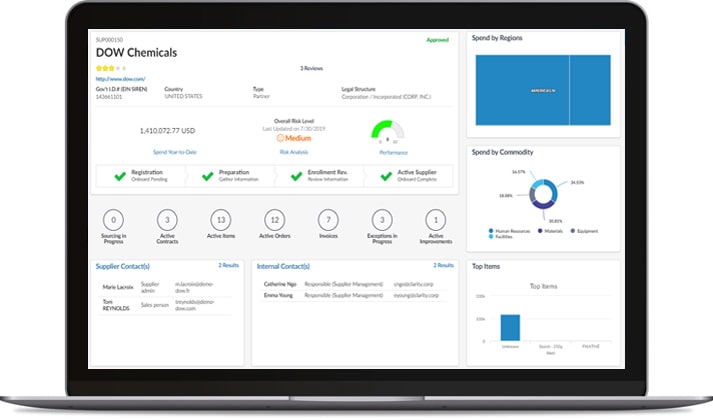
With Ivalua’s dashboards, you can maintain continuous visibility and the intelligence you need to manage suppliers proactively. Importantly, they lead to supplier improvement and accountability, which we cover in the next section.
Shared Scorecards Enable Supplier Accountability And Structured Improvement
Scorecards deliver the most impact when they are part of a collaborative vendor relationship management strategy. By sharing performance results directly with suppliers, you can transparency and encourage accountability.
In Ivalua, shared supplier performance scorecards are embedded directly into the supplier portal, complete with comment threads tied to specific KPIs and automated workflows for corrective actions.
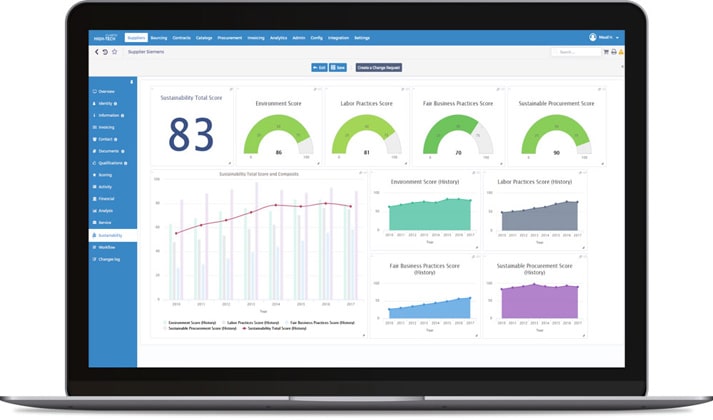
With visibility into their scorecards, suppliers can offer context and share their plans for improvement easily, within the same platform. This level of transparency reduces disputes over data accuracy and helps suppliers see exactly where they stand.
Instead of defensive debates about supplier performance metrics, quarterly reviews can focus on joint problem-solving, since everyone is working from a single version of truth.
Despite the many benefits of scorecards, things can go wrong. Next we explore some common pitfalls of scorecards and how to avoid them.
Vendor Scorecard Pitfalls to Avoid
Even well-designed scorecards can lose impact if certain missteps creep in. Here are the most common pitfalls and how they affect program success:
- Over-weighting Low-impact Metrics: If you place too much emphasis on minor KPIs such as email responsiveness or formatting compliance, the overall score no longer reflects true supplier value. Strategic supplier performance metrics such as delivery timeliness, quality, and compliance should carry the most weight.
- Scorecard Sprawl: Creating too many versions of the scorecard across categories, business units, or regions dilutes consistency and makes results hard to compare. A core standardized template with minimal category-specific adjustments is easier to manage.
- Excluding Business Stakeholders: Procurement often owns the scorecard, but frontline teams such as manufacturing, IT, or operations can provide critical input. Without their involvement, reviews lack credibility and miss insights that affect day-to-day supplier performance.
- Not Sharing Results with Vendors: A supplier performance scorecard locked inside vendor management system is just an internal report. Sharing results with suppliers and enabling them to acknowledge, comment, or upload corrective actions enables collaboration and meaningful improvements.
By steering clear of these pitfalls, you can keep supplier management scorecards actionable and trusted across the business and supplier base.
UPL Centralized Supplier Performance And Scaled Sourcing
UPL, a global leader in agricultural solutions, needed to address fragmented procurement processes across regions and limited visibility into supplier data and direct spend.
The company selected Ivalua for its flexibility, seamless SAP integration, and ability to centralize supplier relationship management, sourcing, and spend analysis in a single platform.
This created a unified procurement hub where supplier risk management and performance could be tracked consistently worldwide.
The impact was immediate. In India, UPL achieved 100% PR-to-PO adoption, combining purchase requests into unified sourcing events for greater efficiency.
Automated pricing compliance on direct materials improved margins and negotiation leverage, while real-time budget checks through SAP ensured centralized spend control.
By consolidating procurement into one platform, UPL gained the governance, visibility, and efficiency to scale sourcing globally, while maintaining consistent supplier evaluation and performance management.
“The biggest benefit is having a single source of truth in one centralized platform. With strategic sourcing and transactional procurement on one platform globally, we benefitted from scale and efficiency.” – Sylesh Gopan Global ERP Head, APL
Scorecards Move Supplier Management From Reactive To Strategic
Vendor scorecards are a powerful tool for ensuring consistency, transparency and alignment between procurement teams and suppliers.
When they’re embedded into procurement workflows, you create a common framework for your team, various business units, and suppliers to share ownership of performance outcomes.
The value of supplier management scorecards extends beyond measuring KPIs – they provide visibility into potential risks and the structure to hold suppliers accountable.
Scorecards also provide the evidence you need to strengthen negotiations and support renewal decisions.
All of these benefits are enhanced when scorecards are integrated into sourcing, contracting, and invoicing workflows because they help to ensure supplier performance data drives every stage of the procurement lifecycle.
Turn Vendor Scorecards Into Smarter Supplier Decisions With Ivalua
Frequently Asked Questions About Vendor Scorecards
A vendor scorecard is a structured scoring mechanism used during reviews to evaluate a supplier against defined KPIs and thresholds. A performance dashboard, on the other hand, provides a real-time, visual view of procurement performance trends across many suppliers, categories, or regions at once. Together, they provide both detailed evaluation at the supplier level and broader procurement intelligence across the supply base.
The frequency of reviews depends on supplier criticality and risk. Quarterly reviews are standard for strategic suppliers, while high-risk or complex vendors may require monthly oversight. Align the cadence with contract value, business impact, and the historical frequency of issues to ensure resources are focused where they matter most.
Not every supplier should be measured with the same lens. Strategic vs. transactional vendors, direct vs. indirect categories, and goods vs. services providers all require different KPIs and weighting logic. Tailoring supplier management scorecards by segment ensures evaluations are relevant, fair, and actionable.
While supplier performance metrics vary by category, there are some essentials every scorecard should include. At a minimum, procurement teams should track delivery reliability, invoice match accuracy, product or service defect rates, SLA adherence, and time-to-resolution for issues. These provide a baseline view of cost, product quality, and service performance across the supply base.
Ivalua offers a robust set of capabilities to make vendor scorecards scalable and effective. These include supplier collaboration portals, automated data capture from P2P processes, configurable scorecard workflows, version control for audit readiness, and integrated performance dashboards. The result is a seamless, end-to-end framework for supplier performance management that goes far beyond manual templates.