


Supplier scorecards are essential for evaluating suppliers and maintaining a reliable, efficient supply chain that meets your customers’ needs. However, most companies still treat them like static spreadsheets – backward looking reporting that may highlight metrics that are underperforming, but often miss clear signals of increased risk or bad performance.
With scorecards living in silos, Procurement Managers and Supplier Relationship Managers will likely struggle to know how vendors are performing at any given moment, which makes it difficult to act before risks escalate.
This blog will help your team evolve outdated scorecards using a Signal-to-Action model: a connected approach that enables supplier KPI dashboards to support collaboration, accountability, and ongoing improvement.
In the blog, we cover the supplier scorecard metrics that matter and explore examples of real-world supplier scorecards that have been successful in various industries. Plus, you’ll learn how to leverage a supplier scorecard template to create a unified, data-driven supplier risk assessment scorecard.
Key Takeaways
- Supplier scorecards built using the Signal-to-Action approach improve supplier performance, reduce risk, and increase supplier accountability.
- The most effective supplier scorecard metrics balance cost and delivery with risk, compliance, and continuous improvement using transparent supplier KPI weighting and normalization to ensure fairness.
- Using modern supplier scorecards, you can achieve up to 20–30% fewer late deliveries and 15% higher contract compliance.
Supplier Scorecards as a Signal-To-Action System
Traditional supplier scorecard programs are static. They collect performance data, but theft rarely changes the outcomes.
You may spend hours on vendor KPI monitoring, compiling delivery, cost, and quality metrics into reports that are reviewed quarterly, at best. But this only results in slow reaction times and missed risk signals.
A Signal-to-Action (S2A) system changes that by connecting supplier management scorecard metrics directly to operational decisions via supplier scorecard dashboards that update dynamically to drive continuous improvement across four key stages:
- Signal: Capture real-time data across cost, delivery, risk, and compliance metrics to detect early performance shifts.
- Score: Apply weighted scoring models to translate data into supplier performance ratings aligned with strategic priorities.
- Surface: Deliver actionable insights through dashboards that highlight exceptions, trends, and potential risks before they escalate.
- Solve: Trigger workflows for issue resolution, supplier collaboration, or corrective action, ensuring accountability and measurable improvement.
Each stage maps to different procurement and risk priorities. For example, Signal supports monitoring, Score supports benchmarking, Surface strengthens transparency, and Solve drives performance and resilience.
Used within a unified supplier management platform, this S2A model helps you actively monitor and control supplier performance, risk, and compliance.
Signal: Capturing Data Beyond Basic Supplier Scorecard Metrics
Modern supplier scorecard platforms gather data from multiple sources and consolidate it into a complete, real-time view of supplier performance and risk.
Instead of relying on siloed reports, you can integrate operational KPIs such as on-time delivery rate, product quality defects, or invoice accuracy rate with your compliance data and external supplier risk indicators. Having a unified view makes continuous supplier performance monitoring much easier, and enables you to take a more proactive stance.
According to the IADC Global Supply Chain Committee, leading organizations combine internal operational data with third-party risk sources such as credit ratings or sanctions lists, to strengthen the accuracy of their supplier risk scorecards.
Adding ESG and supplier diversity metrics help to align vendor risk scorecards with corporate sustainability and inclusion goals. Knowing this information is key to making smart contract decisions.
When made accessible by Ivalua’s procurement platform, these supplier risk management insights enable teams to quickly identify which suppliers pose compliance or continuity risks, and which deliver consistent, high-value partnerships.
Score: Weighting, Normalization, And Supplier Scorecard Template Design
Vendor scorecards are only usable if the raw data and feedback are normalized into a consistent, weighted structure. How do you do that? Start by defining KPI categories:
- Quality
- Delivery
- Cost
- Compliance
- Innovation
Determine which ones are strategically more important and weigh them accordingly.
For example, quality and on-time delivery may be more important than cost for your most critical suppliers, while compliance and innovation may be more important for others.
Next, rate each KPI on a standardized scale (for example, 1–5 or 0–100), so that scoring is uniform across your diverse supplier base and your business units. What you end up with is a supplier rating system, where the weighted average determines the overall performance score of a given supplier. It’s a fair process that helps you identify areas for improvement across categories.
Advanced platforms like Ivalua enable you to link scorecards to the contract lifecycle management process, so that any poor performance metrics trigger reviews and corrective actions in your active contracts.
Surface: Turning Supplier Scorecards Into Alerts And Review Cadences
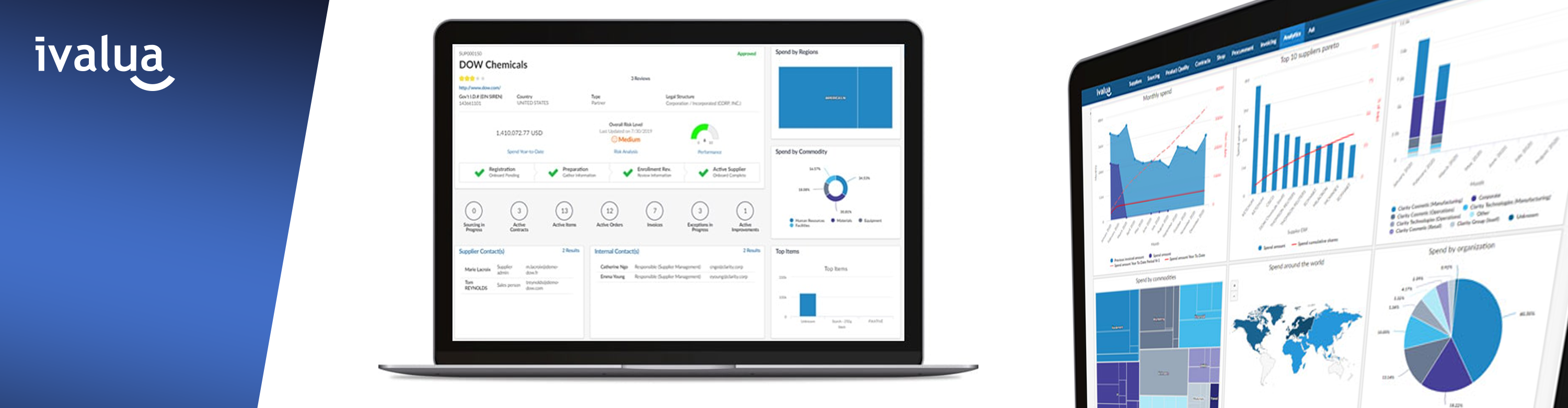
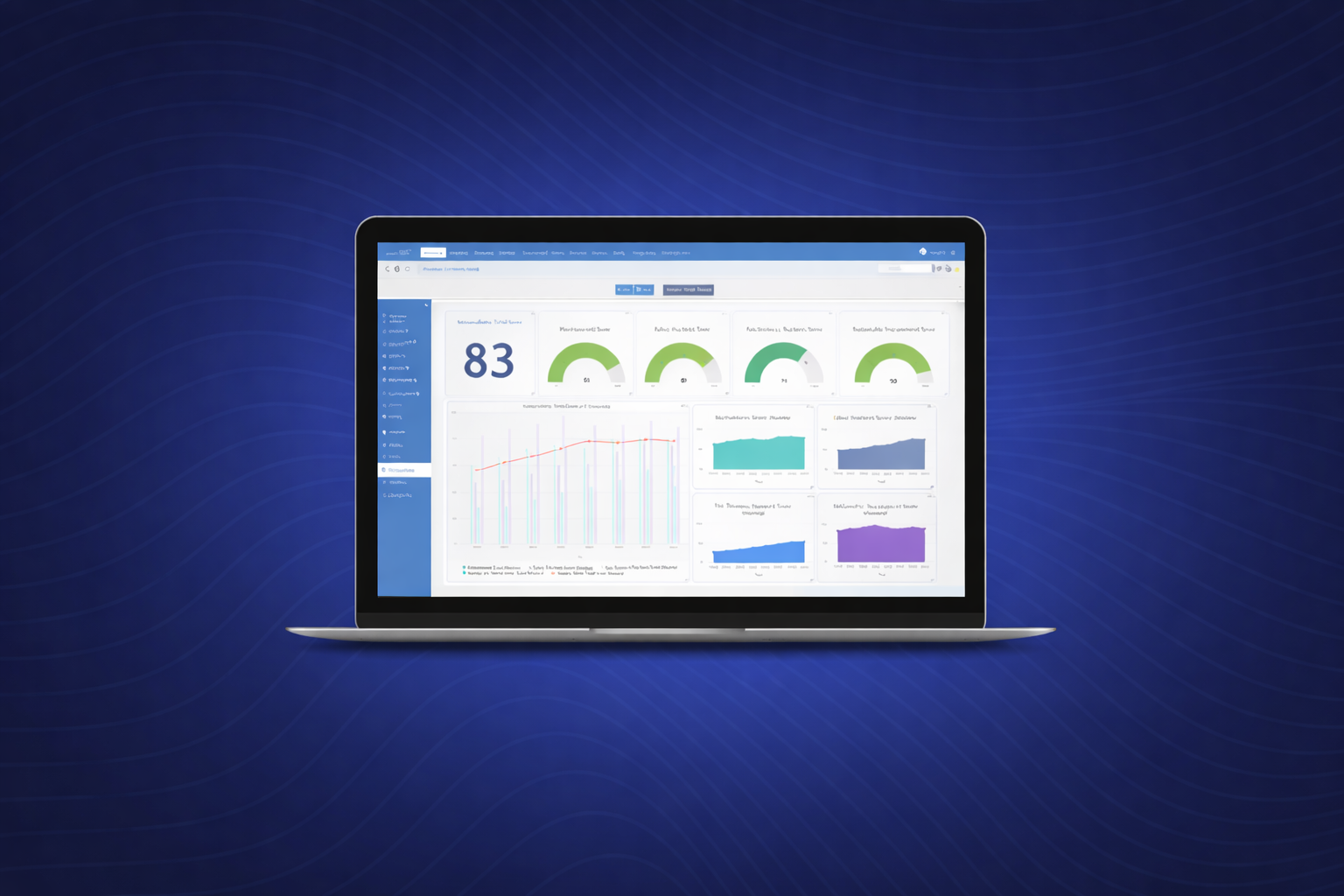
Today’s supplier scorecards are dynamic, real-time supplier scorecard dashboards that unify performance, compliance, and risk data. One common framework is the Supply Chain School example, which visualizes service level agreements related KPIs such as on-time delivery, defect rates, invoice accuracy, and ESG compliance.
The dashboards incorporate automated alerts to flag deviations as they happen, so teams can take action to correct a problem before it impacts operations or customers. You could say that these dashboards are like control towers for supplier management.
The data feeds directly into quarterly business reviews (QBRs), enabling procurement and supplier relationship managers to compare supplier tiers, analyze trends, and discuss underperformance issues.
When KPIs fall below pre-defined thresholds, they can link automatically to continuous improvement plans, as well, with assigned owners, milestones, and recommended re-evaluation dates.
Because dashboards bring operational, compliance, and risk data together in one place, they help increase visibility and accountability, enabling you to recognize and reward high-performing suppliers, or send data-backed development plans to underperforming suppliers to help them improve.
Solve: Closing The Loop With Corrective Action Plans
When performance KPIs dip below your pre-defined thresholds, they should trigger the implementation of corrective action plans that target the root causes of the problem and enable you to make meaningful improvements.
These action plans should help to ensure that your remediation efforts are traceable and linked directly to KPIs and risk factors.
Data from your supplier scorecards should also feed into supplier performance management and supply chain risk management workflows, enabling your teams to visualize how chronic delays, compliance violations, or quality issues influence overall supplier risk ratings.
With this level of visibility, you can make data-driven decisions about your sourcing strategy and how to improve supplier performance.
Ivalua enables proactive collaboration via supplier collaboration portals where buyers and suppliers can co-create action plans, assign ownership, and monitor progress together in real time. Because it logs every step, the platform creates a transparent and accountable path to improving performance.
Once you have the right metrics and processes in place, you have to make sure your supplier scorecards will operate effectively and scale successfully across your global supply base.
Operating Models That Make Supplier Scorecards Work At Scale
A successful supplier scorecard program has the right structure, and is consistent and scalable. It’s a good idea to begin with a supplier segmentation and tiering framework that puts vendors in categories depending on their spend, the impact on the organization, and the level of risk. For example, categories can include Strategic, Critical, and Transactional.
Separating vendors by tiers improves proper governance. While strategic suppliers may be reviewed monthly or quarterly through joint business reviews, lower-tier suppliers may be assessed using automated performance monitoring. The review cadence grows with SRM maturity, ensuring suppliers get attention based on their importance.
To monitor supplier performance effectively, you should also link supplier scorecards to total cost of ownership (TCO) and risk metrics. By combining delivery, quality, and service KPIs with financial, ESG, and cyber-risk data, you’ll have a full view of the contribution and exposure for each of your suppliers.
If you’re grappling with the added complexity of multi-ERP integration, you may be challenged with inconsistent data models that get in the way of tracking performance holistically.
Modern platforms such as Ivalua normalize supplier data across systems to create a single source of truth that supports accurate scorecard analytics.
Finally, AI and automation are transforming how we govern suppliers. For instance, machine learning models can surface anomalies such as early signs of supplier distress or compliance issues before they get out of control.
Now let’s take a look at some examples of supplier scorecards that you can leverage to create your own.
Supplier Scorecards Examples From Industry And Non-Software Benchmarks
Here are three compelling supplier scorecard examples from non-software vendors. Each one differs in scope, the metrics it covers, and intended use case :
- IADC Supplier Performance Metrics: The IADC supplier scorecard is published by the drilling and energy industry. It includes categories such as quality, delivery, commercial, and sustainability and uses quantitative KPIs such as defect rate, on-time delivery, and warranty claims, supplemented by vendor feedback surveys. This business-to-business vendor scorecard is rigorous and appropriate for heavy industries that need to meet high standards for reliability.
- Supply Chain School Balanced Scorecard: Designed for broader supply chain use, this balanced scorecard offers perspectives on financial, environmental, service, and innovation performance. It tracks cost, time, quality, ESG, and continuous improvement metrics, which is ideal for companies that require cross-functional alignment.
Using these templates as a springboard, you can tailor your supplier scorecard to meet the needs of your industry, maturity level, and strategic goals.
So, what metrics should you include on your scorecard? In the next section, we explore the KPIs we think are essential.
Supplier Scorecard Metrics That Actually Drive Enterprise Value
The following key metrics help you to quantify the business value of your supplier performance monitoring and should be included on any supplier performance evaluation scorecard:
- On-time delivery rate: Ensures supply continuity and customer satisfaction, and helps you to pinpoint logistics bottlenecks and adhere to service level agreements (SLAs).
- Product quality defect rate: Directly impacts warranty claims, brand perception, and any rework costs that arise downstream. Low defect rates signifies operational efficiency and high product reliability.
- Invoice accuracy rate: Measures the percentage of supplier invoices that match purchase orders and receipts. High invoice accuracy reduces, accelerates payment and improves supplier relationships, and often reflects the maturity of automation and data integration across systems.
- Contract compliance tracking: Compares supplier behavior relative to negotiated terms and requirements. A high rate demonstrates adherence to service levels and sustainability obligations.
- Total cost of ownership (TCO): Indicates how much the supplier actually impacts your margins, accounting for hidden costs such as transport, rework, and maintenance.
Tracking these supplier scorecard metrics enable your team to be proactive and make data-driven decisions about what suppliers to prioritize and how to help them perform optimally.
Now that you understand which metrics are critical to tracking supplier performance, we’ll help you build a functional supplier scorecard you can implement in your organization.
H3 Building Trust With A Standardized Supplier Scorecard Template
Creating and implementing a well-structured supplier scorecard can help you increase the consistency and clarity of your supplier performance evaluations. Below you’ll find an example of a template you can work with for tracking KPIs across delivery, quality, finance, compliance, and cost.
| Supplier | KPI Category | KPI Metric | Target | Actual | Weighted Score | Notes / Corrective Action |
| Supplier A | Delivery Performance | On-time Delivery Rate (%) | 98% | 96% | 0.85 | Slightly below target. Review logistics partner performance. |
| Supplier B | Quality Control | Product Quality Defects (PPM) | <500 | 420 | 0.95 | Meeting quality goals. Maintain current inspection cadence. |
| Supplier C | Finance Accuracy | Invoice Accuracy Rate (%) | 99% | 97% | 0.80 | Below target. Trigger corrective action plan for data mismatch issues. |
| Supplier D | Compliance Management | Contract Compliance Tracking (%) | 100% | 100% | 1.00 | Fully compliant. Model supplier for governance reviews. |
| Supplier E | Cost Efficiency | Total Cost of Ownership (TCO, $M) | 2.5M | 2.7M | 0.70 | Costs trending above baseline. Initiate cost optimization review. |
| Supplier F | Risk & ESG | ESG Compliance Score (1–10) | 8 | 9 | 1.10 | Exceeding sustainability targets. Share best practices with peers. |
Now, let’s look at how one organization – a regional sports organization – put these principles into practice through a real-world supplier scorecard transformation.
How A Sports Governing Body Elevated Supplier Scorecards
A leading regional sports organization needed a better way to manage its complex operations. The company provides events, broadcasting, hospitality, and merchandise across 55 athletic associations. Unfortunately, its procurement activities were fragmented, leaving them with limited visibility into their suppliers and spend.
They needed a procurement solution that was flexible enough to support rapid growth yet structured enough to enforce compliance, so they turned to Ivalua’s supplier management solution.
Despite rapid growth, the organization was able to leverage Ivalua’s advanced capabilities to negotiate stronger contracts and foster long-term supplier partnerships. Ivalua’s scalable architecture adapted seamlessly to the company’s evolving needs, without sacrificing governance.
As a result, they now have a modern, transparent, and future-ready procurement operation that’s capable of supporting their mission to empower athletes and communities worldwide.
What we saw at the time of selection was the possibility to adapt the tool to our needs. We didn’t have a process, we built it with the Ivalua Platform. The biggest tangible benefits we see is the amount of data that we can handle to drive positive impact to the business. Our decisions are well-informed, pointed and strategic, which would not have happened without the flexibility, transparency and analytics Ivalua provides.
– Company Representative
From Supplier Scorecards To Continuous Improvement
Excel spreadsheets and manually maintained vendor scorecards are no longer sufficient to today’s complex procurement organizations. To truly manage performance, compliance, and risk, an integrated supplier scorecard program that connects performance metrics to decision-making is essential.
By linking performance insights directly to corrective action plans, procurement teams can drive continuous improvements and build stronger, longer-lasting supplier relationships where everyone benefits.
But that’s not all – an integrated approach also ensures your suppliers are aligned with your key business objectives such as cost efficiency, ESG compliance, and long-term business resilience.
Ivalua’s supplier management software can help you embed supplier scorecards into everyday workflows, so you can automate supplier performance tracking and oversight and build a transparent and collaborative system for optimizing supplier performance.
Boost Performance And Make Smarter Supplier Decisions With Supplier Scorecards
FAQs
In enterprise procurement, KPIs such as on-time delivery rate, defect rate, invoice accuracy, and contract compliance are essential to provide insight into your operations. Advanced indicators such as sustainability ratings and risk scores help you understand supplier behavior and how it relates to business resilience. It’s important to maintain a balanced view of performance that supports both cost efficiency and long-term value creation.
Start by aligning KPI weights with business priorities. While cost and delivery may dominate transactional categories, quality, innovation, and risk probably hold more weight for strategic suppliers. Be sure to normalize the data consistently, to ensure your scorecards are comparable and actionable.
They should do both! Modern systems such as Ivalua integrate risk data and performance trends in real time, and automatically flag any anomalies or metrics that aren’t meeting expectations. They support early intervention and help you take action to strengthen the supply chain.
That depends. You may have different needs depending on your industry business goals. Including weighted categories for cost, delivery, quality, service, and risk is always recommended, but you may decide to layer in sustainability or innovation metrics as well. Ivalua’s configurable templates provide a great starting point and the flexibility to adapt to specific procurement and compliance frameworks.
Sharing real-world supplier scorecards examples that are tied to quantifiable outcomes (i.e. 20–30% fewer late deliveries or 15% better compliance) can help your stakeholders visualize the impact of using scorecards. You can also try benchmarking internal performance against proven frameworks, such as IADC or Supply Chain School. Finally, show them how your scorecard can integrate with dashboards and workflows to reinforce how they can be used to make ongoing improvements.