

Supplier collaboration is often thought of as a soft skill. But in today’s enterprise environment, where procurement leaders have to justify every investment, your ability to collaborate with suppliers has a huge impact on your procurement strategy.
As you work to strengthen supplier relationships, reduce risk, and support ESG goals, you’re also burdened with managing fragmented tools and inconsistent data using largely manual processes.
While it may seem obvious that supplier collaboration can help you navigate these challenges, most organizations lack the structure and visibility to measure it or prove its worth to upper management.
Without a unified view of supplier interactions, performance, and outcomes, it’s nearly impossible to quantify the impact – or ROI – to the business.
This guide is here to help you prove the benefits of supplier collaboration for your CFO and COO using a framework of “proof layers” – four measurable areas where better collaboration can have a direct impact on business results:
- Operational Efficiency
- Risk Mitigation
- Performance Improvement
- ESG Outcomes
After reading the guide, you’ll be able to prove that supplier collaboration is a measurable, strategic capability that your organization should track, optimize, and treat just like any other performance lever.
Key Takeaways
- Supplier collaboration is a strategic capability when it’s supported by shared data, real-time visibility, and unified processes.
- Ongoing performance tracking and proactive communication are essential for strong supplier collaboration.
- Proving impact across operational efficiency, risk mitigation, supplier performance, and ESG outcomes is essential to demonstrating ROI.
- A unified Source-to-Pay platform like Ivalu can help build measurable evidence of supplier collaboration done well and its impact on the organization.
Why Most Supplier Collaboration Efforts Fail to Prove Their Worth
Procurement teams understand the importance of supplier collaboration, but it’s hard to quantify the impact it has on the business.
That’s because all of the communication and coordination that goes on between the business and its suppliers happens in a disconnected environment that lacks the structure for effective measurement. Here are three key challenges:
- Data Silos: Supplier information is scattered across legacy procurement systems, ERP systems, email threads, and Excel spreadsheets, making it nearly impossible to track performance trends or link specific activities to measurable results. A lack of centralized data severely limits real-time visibility – and that makes it hard to gain insights.
- Manual Procurement Processes: According to recent research, 71% of procurement time is still spent doing manual tasks like chasing down approvals, managing intake, or reconciling data. That leaves very little time to engage strategically with suppliers or conduct any meaningful analysis. The result is that potential supplier collaboration benefits go unrealized.
- A Lack of Integrated Measurement: It’s common for supplier scorecards, risk incidents, ESG initiatives, and spend metrics to be tracked in isolation. Disconnected metrics are difficult to analyze, and it’s hard to see how collaboration efforts directly affect business performance. While collaboration may be valued in principle, it’s hard to prove its true value in practice.
What’s causing these gaps? Legacy procurement systems that weren’t designed to measure collaboration in a quantifiable way. Prioritizing procurement process improvement and investing in unified procurement platforms can help connect the dots between collaboration and business impact.
When Fragmented Data Blocks Supplier Performance Visibility
When supplier data is scattered across multiple ERPs and disconnected systems or spreadsheets, supplier network collaboration is nearly impossible to manage at scale. Commodity managers have no real-time insights into supplier capacity, compliance, or product quality and must rely on manually pulling together data across systems.
This approach is slow and error-prone – it delays decision making and undermines trust.
If there’s a disruption, teams can’t act with confidence, because they’re working with incomplete data. A shared data platform is essential to provide a single version of truth.
This is particularly true for multi-tier supplier collaboration, where a lack of visibility into sub-tier partners makes it impossible to know whether collaboration is actually improving delivery reliability, reducing risk, or accelerating innovation.
Truly effective procurement and supply chain management requires an integrated approach that connects supplier data, workflows, and metrics across systems and tiers. In this environment, it’s possible to measure collaboration and provide its role in procurement strategy.
How Manual Workflows Consume Strategic Capacity
Manual tasks such as approving requests, matching purchase orders, and reconciling invoices consume a huge amount of time and attention from teams that are already too busy.
And they’re costly. Every hour spent chasing down approvers or correcting mismatched POs is time that could be spent planning better processes, learning how to mitigate risk, or fostering innovation with suppliers.
Without automation of workflows, supplier collaboration is more reactive than proactive. You have to focus on putting out fires instead of building long-term value. You could be having strategic planning sessions with your suppliers; instead you’re handling exceptions and routing emails.
Even essential initiatives such as improving the supplier onboarding process get moved to the back-burner.
The problem is capacity – while supplier relationships can have great potential, digital procurement systems aren’t ready to support the necessary collaboration and co-innovation. What’s needed are automated workflows, which shift effort away from low-impact, manual tasks and free up time for working on supplier partnerships, performance improvement, and innovation.
In the next section, we’ll explain why it’s important to have a clear, structured plan in place to prove the impact of supplier collaboration. We also explain how to use the “proof of impact” framework.

How to Prove Supplier Collaboration Works—and Why Most Teams Can’t
To move beyond the idea that your ability to collaborate well with suppliers is a soft skill and prove measurable value, you need a new lens for evaluating the benefits – one that understands how true collaboration leads to better business outcomes. Our “proof of impact” framework outlines four measurable layers that effective supplier collaboration impacts:
- Operational Efficiency
- Risk Mitigation
- Performance Improvement
- ESG/Innovation Enablement
Each layer requires a unified supplier collaboration platform that leverages integrated data, along with analytics that connect collaboration activities to real outcomes.
This is where Ivalua sets itself apart. Most tools enable communication. But few supplier collaboration software solutions deliver the real-time visibility and closed-loop measurement that’s necessary to prove the impact of your collaboration efforts.
Can you show that a shared forecasting workflow improved delivery reliability? That supplier innovation reduced carbon impact or shortened time to market? With the right system, you can. In fact, it can produce a documented, repeatable approach to collaboration that drives resilience and competitive advantage – and turn collaboration into evidence.
Operational Proof: Collaboration That Accelerates Cycle Time and Accuracy
Operational proof is the first and most foundational layer of supplier collaboration impact. It shows up as measurable gains in procurement velocity and transactional accuracy, both of which are clear indicators that procurement process improvements are working.
When you collaborate with suppliers using a unified Source-to-Pay platform, all the guesswork and delays disappear. Procurement automation streamlines the process of creating POs, matching invoices and routing exceptions, eliminating manual friction from everyday processes.
As a benchmark, you should aim for 95% or more touchless invoicing and requisition-to-PO cycle times of less than 48 hours.
The improvements you can achieve with a Source-to-Pay platform like Ivalua are tangible. Our customers report higher PO/invoice match rates, fewer approval bottlenecks, and faster issue resolution.
With automated invoice processing and centralized data, you don’t have to chase down missing information or dig through siloed systems to find what you need.
Additionally, real-time tracking of operational KPIs helps you know when to intervene proactively, rather than wait for a problem to occur.
Long story short, when collaboration is built into the transactional layer, every PO, invoice, and approval is part of a measurable value stream.
Risk Proof: How Shared Visibility and AI Reduce Supplier Risk Events
Becoming risk proof requires you to shift from reactive risk management style to a proactive approach to reducing supplier‑related disruptions, compliance gaps, and audit failures. In practice, this means tracking some clear metrics:
- Fewer risk events (like financial instability, quality failures or late deliveries)
- Higher compliance completion rates (certifications, regulatory filings)
- Audit‑trail coverage, and more effective early‑warning systems.
With supplier performance tracking and risk managment strategies in place, you can tie collaboration and monitoring directly to business outcomes. And this helps eliminate disruptions – according to SAGE Journals, companies that integrated risk monitoring and collaboration features were able to reduce supply disruptions by 36%.
A unified supplier relationship management platform like Ivalua centralizes supplier data, integrates risk signals across tiers, and surfaces audit‑ready insights. One manufacturer used Ivalua to reach 98% of total spend analyzed across primary and sub‑tiers, and gain full visibility into supplier performance, risk exposure, and supplier resilience.
Given its benefits, supplier collaboration software market is expected to grow from USD 4.45 B in 2023 to USD 12 B by 2032. With a shared data platform and multi‑tier visibility, you can reach the recommended benchmarks of <5% supplier non‑compliance rate and 100% audit trail coverage, and be able to realize – and measure – the power of supplier collaboration.
Performance Proof: Scorecards That Drive Measurable Improvement
Performance proof requires demonstrating tangible results from supplier collaboration through scorecards, savings, and strong delivery performance. Key indicators include quarter-over-quarter supplier scorecard improvement, negotiated savings relative to baseline spend, increased on-time delivery rates, and reduced quality defects.
Research published in SAGE Journals found that firms using digital supplier performance dashboards achieved up to a 19% improvement in procurement efficiency, while collaboration tactics directly contributed to a 22% lift in delivery reliability.
A useful benchmark for high-performing organizations is to target 10%+ year-over‑year improvement in supplier scorecards and 95%+ on-time delivery.
Using a solid supplier segmentation strategy, you can leverage supplier performance tracking to prioritize top-value suppliers and drive continuous improvement.
Ivalua’s Performance Management and Analytics modules empower buyers and suppliers with instant feedback. By building supplier relationship management into the supplier management platform, Ivalua enables buyers and suppliers to track their progress in real time against shared performance metrics and set clear milestones for ongoing improvements.
ESG and Innovation Proof: Collaboration That Delivers Sustainability and Co-Innovation Outcomes
According to market research, the global supplier collaboration solutions market was valued at USD 4.45 billion in 2023 and is projected to reach USD 12 billion by 2032, in large part due to the rise of ESG mandates and AI‑enabled innovation collaboration.
With pressure mounting on companies to adopt ethical sourcing strategies, it’s important to document metrics like Scope 3 emissions reduction, ESG compliance completion rates, number of joint innovation projects, and time‑to‑market improvements.
For example, you may report a 10%+ annual drop in supplier‑network carbon emissions, or complete 5+ co‑innovation initiatives per strategic supplier annually. Supplier network collaboration enables effective supply chain collaboration that makes ESG performance transparent and measurable.
And, through a strong supplier segmentation strategy, companies can pick high‑impact suppliers to collaborate on innovative products, joint cost‑down initiatives, or sustainability breakthroughs.
Ivalua’s Environmental Impact Center and Integrated Collaboration Plans help buyers and suppliers set ESG targets and create innovation roadmaps that are in sync, and share real‑time dashboards to showcase progress alongside broader corporate sustainability commitments.
Once you have proof of the impact effective supplier collaboration has on your organization, it’s time to create a process for achieving sustainable value. In the next section, we show you how.
Turning Proof Into Process: The Continuous Collaboration Feedback Loop
Proving the impact of collaboration can’t be done with static KPI snapshots. You must constantly capture, analyze, and act on data to achieve sustainable value. Ivalua’s unified platform enables you to create a continuous feedback loop that supports ongoing improvements.
Let’s take a look at the steps in this process:
- Collaborate: Engage with your suppliers through a unified platform during all sourcing events, contract negotiations, performance improvement plans, and innovation initiatives.
- Capture: Record every transaction, scorecard update, risk flag, and ESG disclosure with Ivalua’s single, centralized data model, so that nothing gets lost in spreadsheets or disconnected systems.
- Analyze: Leverage Ivalua Analytics for real-time visibility into trends, benchmarks, and anomalies across the entire supplier base. Gain instant insights into everything, from contract leakage to delivery reliability or ESG gaps, without any manual reporting.
- Improve: Leverage insights to address issues proactively or renegotiate terms, if needed. You can also launch data-driven corrective action plans or realign priorities with your suppliers.
- Collaborate Again: Once those improvements are made, you have an even stronger foundation to support the next round of collaboration, and can benefit from better data to drive innovation.
Keep in mind, a shared data platform is critical to supporting this continuous improvement process.
Unlike point solutions that bolt onto legacy ERP systems, Ivalua’s unified Source-to-Pay procurement platform is purpose-built to support this closed loop. It functions as both a supplier collaboration portal and the data backbone that enables enterprise-wide, scalable procurement management.
Why Unified Platforms Outperform Point Solutions for Supplier Collaboration
A unified platform is unlike disconnected point solutions or inflexible ERP-native modules, and they deliver far better visibility, control, and scalability. Here are three reasons Ivalua’s unified platform outperforms traditional solutions:
- A single source of truth: With Ivalua, all supplier information including contracts, scorecards, transactions, risk events, ESG metrics and more are in one place, eliminating version control issues and integration problems that come with using disconnected tools. With a shared data foundation, suppliers and buyers can collaborate more effectively.
- End-to-end workflow continuity: Supplier collaboration has to be effective during the entire sourcing cycle, from contract execution to ordering, invoicing, and payment. Ivalua’s connected workflow provides transparency into every part of the sourcing process, from cash flow to compliance, which is especially crucial during disruptions or escalations.
- Ownership and agility: With Ivalua, you manage all configuration, reporting and integration internally, eliminating costly vendor customizations. This means you can rapidly adapt to policy changes or new sustainability mandates.
By centralizing collaboration into one supplier collaboration system with robust procurement integration, Ivalua is more than a document sharing platform – it’s a flexible, secure, and scalable supplier collaboration software solution built for complex cloud procurement environments.
Next we’ll look at a real-world example of an Ivalua customer that has been able to provide tangible proof of the impact of effective supplier collaboration.
Customer Story: Elkem Elevates Supplier Management with Ivalua to Effectively Manage Risk
Elkem, a global leader in advanced silicon-based materials, has transformed its supplier management with Ivalua. Facing fragmented processes, limited supplier visibility, and challenges in operationalizing ESG objectives, Elkem centralized and standardized supplier data and processes across its global operations.
Integrated with existing ERP systems and third-party risk tools, Ivalua now serves as a single source of truth for several thousand suppliers, enabling full lifecycle management, improved transparency, and stronger collaboration.
Elkem now benefits from:
- End-to-end supplier visibility and data integrity through a single source of truth, eliminating duplicates and breaking down organizational silos
- Stronger ESG, risk, and compliance management with standardized qualification processes, auditable documentation, and configurable performance tracking
- Improved efficiency and collaboration across procurement, finance, and suppliers, supported by scalable processes and effective change management
Ivalua was the best fit for Elkem, offering both the flexibility we needed and the structure to consolidate and streamline our supplier management operations. I am proud to say that we now have 100% of our suppliers on a single system, giving us a unified, transparent view with clear data that breaks down silos and fosters stronger collaboration.
“Ivalua has enabled our transformation journey effectively, making Procurement more agile and digital. It really began with a focus on suppliers and clean supplier master data to make better decisions.” – Emilie Genin, Procurement Manager
How Ivalua Enables Proof-Driven Supplier Collaboration at Enterprise Scale
Ivalua’s unique capabilities makes it possible to provide evidence of supplier collaboration benefits across all four proof layers with the following capabilities:
- Unified Source-to-Pay Architecture: Collaboration should not be a bolted-on capability. Rather, it should be woven into every stage of the procurement lifecycle. As a supplier collaboration system, Ivalua enables teams to engage with suppliers, manage data, and drive value, all within a single, unified procurement platform that supports end-to-end workflows.
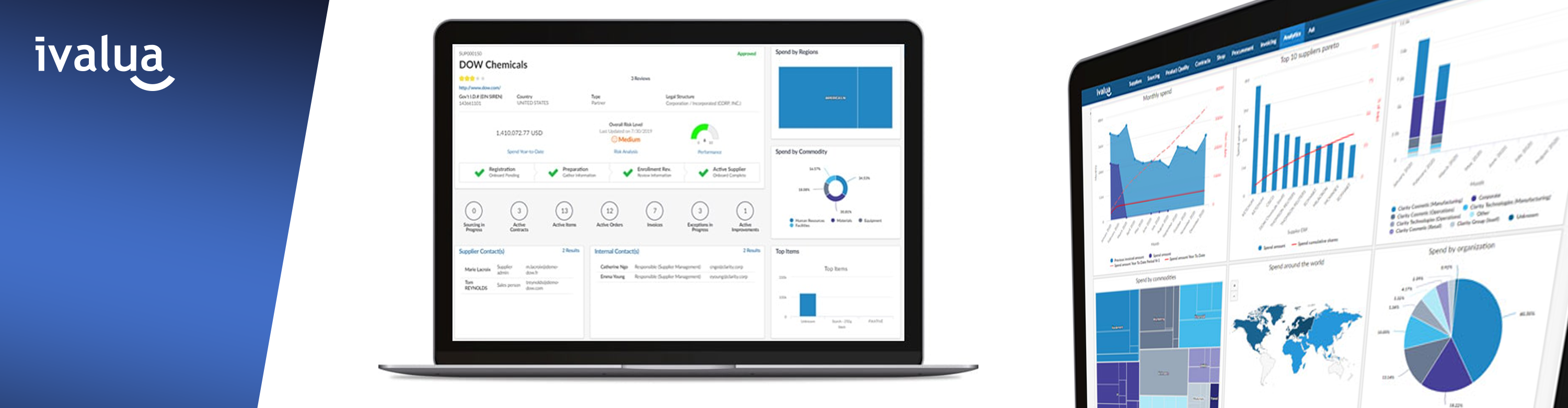
- Supplier Risk Center + Performance Management: With built-in supplier relationship management capabilities, Ivalua offers risk monitoring and performance tracking through a unified dashboard, so buyers and suppliers can access scores, risk alerts, and improvement plans in real time. This level of transparency enables joint planning processes and shared accountability.
- Environmental Impact Center + Collaboration Plans: Sustainability and innovation should be managed side-by-side. Ivalua’s supplier collaboration software enables you to set goals and track ESG compliance easily using dashboards that link supplier behavior to corporate sustainability targets. Both suppliers and buyers can share progress and collaborate efficiently in a unified, embedded workflow.
- Multi‑ERP Integration and Ownership Model: Many global enterprises have complex systems and multiple ERPs. With Ivalua, teams can maintain control over integration, configuration, and reporting via a shared data platform. Ivalua supports multiple live integrations into SAP and other enterprise systems, so there’s no vendor lock-in. This agility means you can scale, adapt, and evolve with changing business models, regulations, and even M&A scenarios.
Recognized as a Leader in The Forrester Wave™: Supplier Value Management Platforms, Q3 2024, Ivalua serves mid‑to‑high‑maturity procurement teams. These are large, global organizations that require a supplier collaboration platform that enables strategic impact and helps prove procurement’s strategic value through data.
Supplier Collaboration as a Measurable Competitive Advantage
Historically, the impact of supplier collaboration has been hard to quantify – but in today’s environment of supply chain volatility, regulatory scrutiny, and rising sustainability expectations, supply chain collaboration, you need proof.
A system that supports collaboration and also generates evidence of its impact across on operational efficiency, risk mitigation, performance improvement, and ESG advancement is essential.
Once you have proof across these four layers, you can begin a cycle of continuous improvement, and drive innovation with your best suppliers. A unified platform like Ivalua eliminates silos, eliminates manual tasks, and embeds collaboration across the entire Source-to-Pay lifecycle.
Explore how a supplier management solution like Ivalua enables you to measure the business value of supplier collaboration to help position procurement as a true strategic function.
Easily Manage Suppliers Across Every Spend Category
Frequently Asked Questions About Supplier Collaboration
Supplier collaboration is the practice of working closely with suppliers to improve performance, reduce risk, and drive innovation. The importance of supplier collaboration lies in its ability to strengthen supply continuity, accelerate time‑to‑market, and unlock cost and quality improvements. When powered by modern supplier relationship management practices and unified workflows, collaboration increases transparency, improves decision‑making, and boosts procurement efficiency. In today’s global environment, suppliers are strategic partners—not transactional vendors—which means collaboration is essential to competitiveness and resilience.
A supplier collaboration platform is a unified environment where buyers and suppliers jointly manage sourcing, contracts, performance, and innovation. A supplier collaboration portal, by contrast, typically supports basic transactions like PO acknowledgment or invoice submission. True supplier collaboration software offers shared performance dashboards, co‑innovation tools, risk monitoring, and workflow automation. It functions as a full procurement platform, not just a login page.
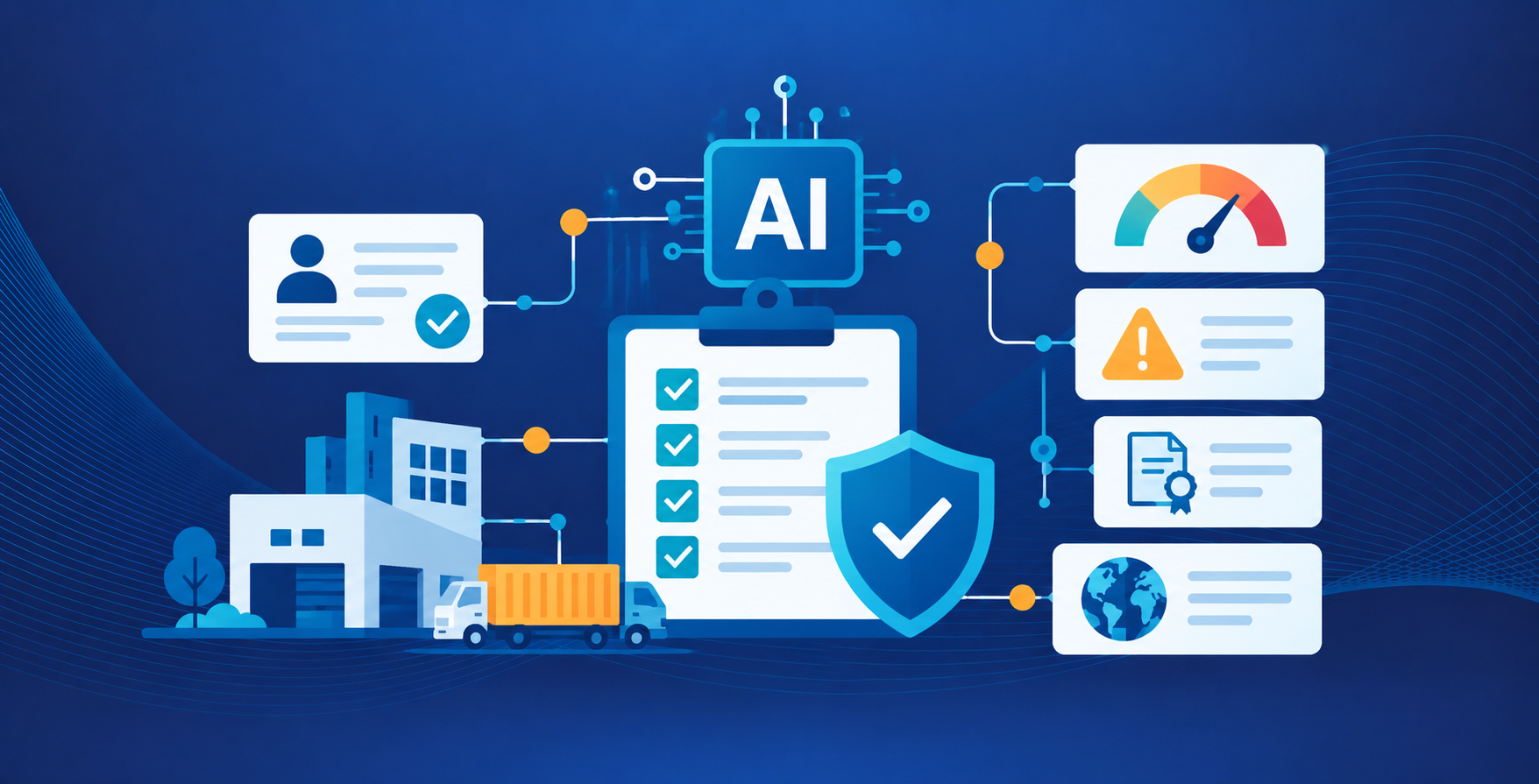
AI in procurement enhances collaboration by analyzing supplier history, pricing trends, lead times, and third‑party intelligence to surface insights. It strengthens risk mitigation strategies by flagging early warning signals, potential supplier risk events, and compliance gaps before they impact operations. AI also recommends actions, supports smarter negotiations, and automates routine tasks—freeing teams to focus on strategic supplier partnerships.
Supplier performance improves when procurement uses structured supplier performance tracking, segmented relationship strategies, and supplier segmentation strategy to prioritize strategic partners. Collaboration should include joint planning processes, transparent objectives, and shared KPIs. With tools like supplier scorecards, improvement plans become measurable and aligned to business goals.
Common roadblocks include legacy procurement systems, lack of standardized data, and siloed processes. Poor procurement integration, heavy reliance on email spreadsheets, and manual procurement issues slow adoption. Data silos make it difficult to create shared visibility, limiting collaboration impact. Successful implementation requires unified workflows, shared KPIs, and change management.
Unified source‑to‑pay tools centralize supplier data and collaboration across sourcing, contracting, purchasing, invoicing, and analytics. This supports seamless procurement management and eliminates fragmentation caused by point solutions. With cloud procurement technology, suppliers and buyers share real‑time data, documents, and workflows instead of juggling systems.
Further Reading
- The Ultimate Guide to Supplier Relationship Management
- Supplier Risk Management (SRM): Strategies to Mitigate Supplier Risks
- Ultimate Guide to Supplier Performance Management (SPM)
- Supplier Onboarding 101: Essential Tips for a Smooth Process
- Supplier Enablement: Enhancing Visibility and Control for Stronger Supply Chains