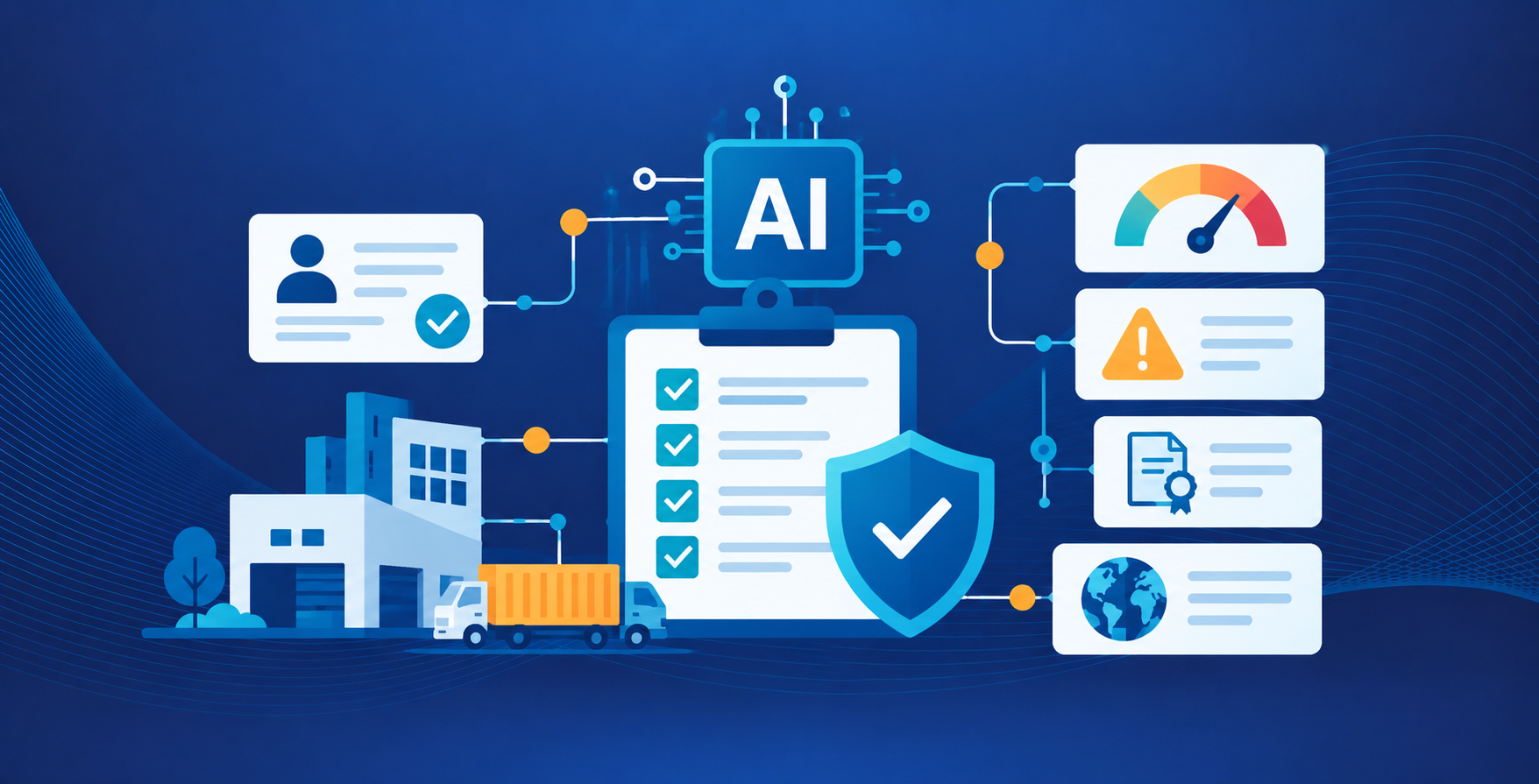


Across industries and across the globe, regulations, ESG mandates, and ethical sourcing standards are continuously evolving. As a result, supplier compliance is now a necessity for Procurement.
Steep fines, supply disruptions and reputational damage can cost organizations dearly – yet many still rely on fragmented, manual processes that make it nearly impossible to consistently comply with regulations or maintain complete visibility across the supply chain.
Meeting today’s complex compliance requirements demands a more proactive, data-driven approach to supplier management – one that elevates supply chain compliance tracking and management from checking off boxes to a process that mitigates risk and drives value.
This guide explores how to start thinking about supplier compliance management as a structured operating loop that strengthens transparency, trust and supply chain resilience.
Key Takeaways
- A strong supplier compliance program can safeguard your brand reputation and build customer trust.
- Proactive ongoing monitoring, supplier audits and reporting are essential to ensuring accountability across the supply chain.
- Effective remediation processes can help you address compliance gaps quickly to reduce risk.
Supplier Compliance Requirements Fail When Audits Are Treated As One-Off Events
If you’re still relying solely on traditional audit processes to verify compliance, you may find it difficult to meet increasingly stringent supplier compliance requirements. With long gaps between periodic audits, blind spots can put your organization at risk as certifications expire and supplier data becomes outdated.
According to Fintech Global, regulatory fines reached $19.3 billion globally in 2024, and nearly 35% of companies faced penalties due to expired supplier certifications. This statistic indicates how periodic reviews are failing to protect organizations from escalating risk.
Poor master data management is the culprit. Without a centralized, continuously updated record of supplier information, you’ll find yourself struggling to understand the status of supplier certifications – or take corrective action to mitigate supplier non-compliance risks.
If you don’t have the right data, audit results will be inaccurate, and you’ll lose visibility of the risk profiles of your suppliers.
Modern governance standards and regulatory standards require organizations to demonstrate continuous oversight and accurate supplier records. Evidence of proactive remediation to fix compliance gaps is also essential.
Achieving this requires replacing manual audit processes with technology-enabled compliance capabilities, complete with real-time risk visibility and automated alerts.
Continuous Monitoring Fills The Gaps Left By Supplier Audits
Conducting traditional supplier audits or applying for compliance certifications can only provide a single, point-in-time view of supplier risk. That won’t prevent failures that happen in between those events.
Certifications become outdated quickly due to supplier conditions, ownership, or changes in risk exposure and new red flags can go un-checked between audits.
Today, supplier compliance management leverages real-time monitoring tools and real-time sanctions screening along with automated alerts tied to regulatory updates. This helps to extend an organization’s visibility and control.
Integrating supplier scorecards and performance metrics helps, as well. Keeping track of KPIs such as the share of suppliers tracked in real time, how many audits are completed, and how quickly corrective actions are closed help with accountability.
Procurement teams can use these tools to spot early warning signs and take action before issues escalate.
Supplier Compliance Management Improves When Teams Use An Operating Loop
In addition to leveraging new supplier management tools, modern procurement teams are switching from point-in-time checks to a continuous Supplier Compliance Operating Loop – a repeatable process for ensuring suppliers comply with constantly evolving regulations and business priorities throughout the contract management lifecycle.
Here are the five key components of a Supplier Compliance Operating Loop:
1. Define requirements by category and region: Manufacturers in different categories and regions have varying data privacy laws, labor laws, and environmental standards they must meet.
It’s important to define regulatory, ESG, and contractual requirements up front, so your suppliers know your expectations before they do business with your compliance framework and ethical sourcing standards.
2. Gate suppliers during onboarding: Onboarding serves as a critical checkpoint for compliance, and “gating” new suppliers can help you validate that they’re meeting all of the requirements prior to giving them access to financial information like contracts and payments.
Gating suppliers helps to filter out potential compliance issues early and prevent downstream remediation costs within your supplier compliance management process.
3. Support compliance with certifications and training: Compliance requirements are always in flux, so keeping employees up to date on evolving standards – ISO, REACH, or anti-bribery frameworks – is paramount.
Verifying and tracking supplier certifications and policies, and compliance training using automated reminders and renewal workflows helps to keep records current and reduce the administrative burden of compliance tracking. It also helps you stay audit-ready.
4. Monitor continuously with external data and scorecards: Between audits, real-time visibility into supplier risk and performance is essential. Real time monitoring tools and dynamic supplier scorecards enable you to perform continuous monitoring of compliance indicators.
Multi-ERP integration brings together data from ESG disclosures, news feeds, and regulatory databases to help you stay abreast of any new industry regulations or changes and respond quickly to emerging risks.
5. Remediate issues through contracts and improvement plans: When there is a gap in compliance, you must react in a structured and transparent way. Leverage contractual clauses and supplier improvement plans to define corrective actions and timelines for completing them. You should also be documenting and tracking these steps to ensure compliance issues can be prevented in the future.
The Supplier Compliance Operating Loop enables you to benefit from continuous governance, insight, and improvement. In the long-term, it supports resiliency and transparency across the supply chain.

Pro Tip
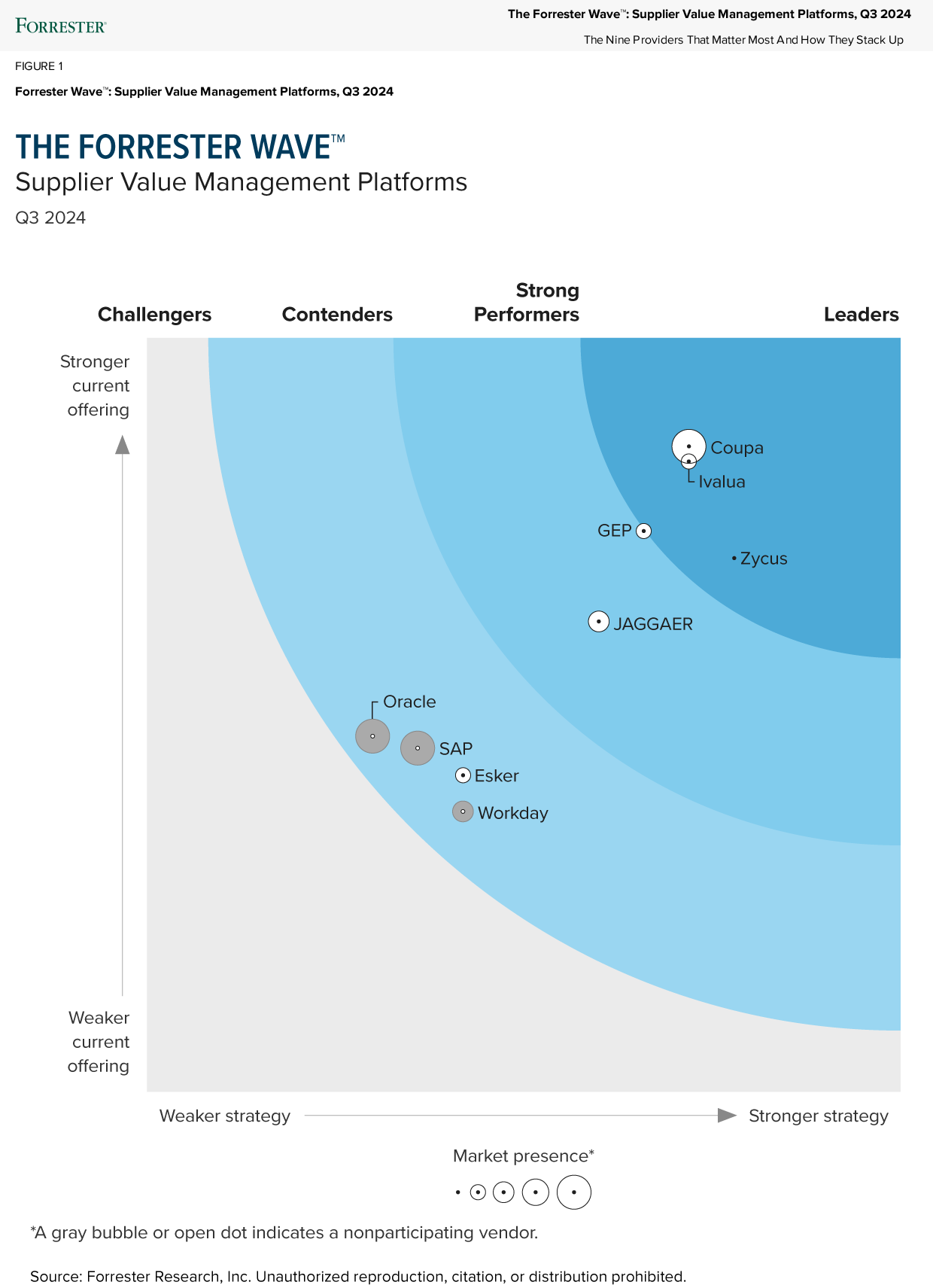
For more insights, take a look at Forrester’s report: The Supplier Value Management Platforms Landscape.
Below we explore each of the components of the Supplier Compliance Operating Loop in greater detail.
Define Requirements To Establish A Compliance Framework
Building a strong compliance framework begins with creating a centralized requirements library, with obligations defined clearly by category, geography, and supplier type. It should include all of the relevant regulatory standards and industry regulations that apply to suppliers – anti-bribery and anti-corruption, data privacy laws, and sector-specific requirements like FDA or REACH.
Don’t forget about ethical sourcing and ESG expectations for things like conflict minerals reporting, fair labor practices, or carbon disclosure goals.
Aligning these requirements to supplier categories, regions, and contract types enables you to maintain a single source of truth, eliminating ambiguity and reducing non-compliance risk.
Plus, when expectations are clear from the start, your supplier onboarding is quicker and easier, and you can monitor and enforce compliance consistently across all of your suppliers.
Gate Suppliers With Risk-Based Onboarding Controls
Another important part of the supplier compliance process is to validate their identity and integrity using automated know your customer and anit-money laundering (KYC/AML) checks. You should also run beneficial ownership screening and third-party compliance assessments.
These checks can reveal hidden risks such as unethical practices or financial instability that could threaten the supply chain. Once you have these insights, you can assign suppliers to risk tiers (low, medium, or high) and monitor their performance accordingly.
Embedding these criteria into onboarding workflows will help you make data-driven, objective decisions and improve compliance.
Assure Compliance Through Certification And Training
Maintaining consistent compliance depends on continuous compliance training. Ensuring your suppliers maintain the right certifications such as ISO, REACH, or industry-specific credentials will help protect your organization from non-compliance fines.
Certificate lifecycle automation can be put in place to send alerts when a supplier’s credentials are about to expire, and you can integrate this data with contract lifecycle management to keep track of whether suppliers are meeting renewal deadlines per their contracts. In this way you can identify gaps before they lead to audit process failures or contractual breaches.
Monitor Continuously With External Data And Supplier Scorecards
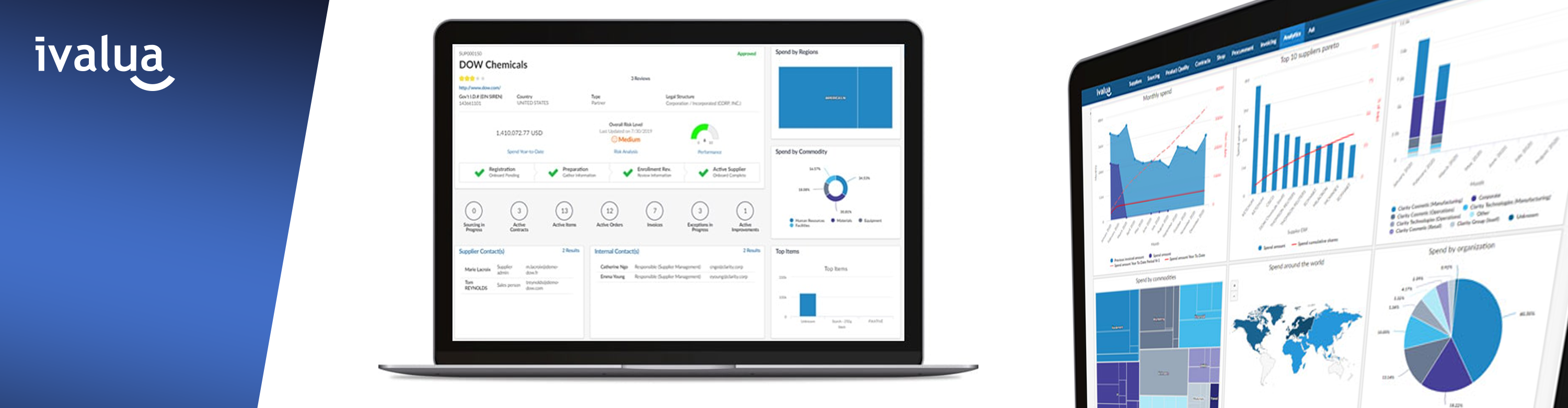
To maintain supply chain compliance, you need complete visibility. Ongoing monitoring lets you track real-time risk indicators with supplier scorecards, KPIs, and external datasets (i.e., sanctions lists, or ESG disclosures), so you know early when there’s a risk of non-compliance – before it happens.
By aligning these insights with internal governance standards, you can also assess the performance of your suppliers against the thresholds you’ve implemented, so you can implement corrective actions before a disruption occurs. You can:
- Use automated dashboards and alerts to identify trends.
- Measure compliance KPIs.
- Maintain oversight and transparency across global supplier networks.
Continuous oversight strengthens accountability and turns compliance into a measurable process that protects your business from financial and reputational risk.
Next we examine how supplier improvement plans can help keep compliance issues at bay.
Remediate Issues With Contractual Remedies And Supplier Improvement Plans
Modern Contract Lifecycle Management (CLM) transforms legal agreements from static files into centralized, dynamic assets. By centralizing all documents and obligations into a single source of truth, organizations eliminate the ‘blind spots’ that lead to non-compliance and missed renewals. These systems also enable the linkage of obligations and milestones, providing real-time transparency and alerts into compliance issues.
KPIs and governance standards help to reinforce and track supplier performance. For example, tracking incident resolution times, audit findings, or remediation progress can help suppliers stay on track.
When contracts fall out of compliance, you can initiate supplier improvement plans easily, since you have immediate insight into corrective actions, timelines, and success criteria. And if there is significant risk, you can initiate a requalification process to validate that the non-compliant suppliers are taking corrective steps.
This data-driven approach will help you strengthen supplier risk management – and supplier relationships – and make proactive, continuous improvements.
Now, let’s take a look at how one Ivalua customer is managing supplier compliance effectively with Ivalua.
Elkem Unified Supplier Risk Management To Achieve Full Compliance Visibility
Elkem, a global leader in advanced silicon-based materials, was grappling with growing complexity and risk exposure across the regions it serves and needed a scalable, strategic solution for supplier risk and compliance management.
With Ivalua, the company can proactively monitor risk signals and track compliance throughout the supplier lifecycle, identify issues early and mitigate risk before it impacts operations.
Elkem’s success is impressive:
- Achieved 100% supplier coverage
- Gained full visibility across supplier categories, regions, and performance metrics
- Reduced sourcing cycle times by 30%
- Decreased overall risk exposure by 25% through smarter decision-making and real-time insights.
“I am very proud to say that 100% of our suppliers are now in one system! I’m proud of implementing Ivalua, and having a system that is global that tries to unify and break the silos in our company.” — Emilie Genin, Procurement Manager
Strong Supplier Compliance Protects Operational Integrity And Brand Reputation
Strong supplier compliance requirements are essential to protecting business continuity, brand reputation, and customer trust.
By enforcing clear supplier management compliance standards across the procurement process, you can strengthen supply chain compliance and minimize financial and operational risks.
However, scaling supplier compliance successfully depends on technology that’s able to unify supplier data, automate monitoring, and streamline collaboration between procurement, risk, and legal teams.
A modern procurement platform like Ivalua empowers businesses to manage compliance across thousands of suppliers with consistency and transparency.
Strengthen Supplier Compliance And Reduce Risk With Ivalua
Frequently Asked Questions About Supplier Compliance
In 2026, supplier compliance requirements increasingly center on data privacy (GDPR and CCPA), anti-bribery and corruption (FCPA, UK Bribery Act), sustainability (CSRD, Scope 3 reporting), and ethical sourcing (conflict minerals, labor standards). Companies must also demonstrate traceability across their supply chains and provide transparent reporting on ESG performance.
Supplier compliance audits are point-in-time evaluations that confirm adherence to specific standards, while continuous monitoring uses real-time data, supplier scorecards, and alerts to detect emerging risks between audit cycles. Together, they provide a full picture of compliance health and risk exposure.
The right tools automate supplier compliance monitoring by scanning global databases for sanctions, recalls, or ESG updates. Automation accelerates reporting, ensures timely alerts for expiring certifications, and enables predictive insights into potential compliance risks—reducing manual oversight and improving accuracy.
Contract Lifecycle Management (CLM) embeds compliance clauses and renewal alerts directly into supplier agreements, so organizations can track obligations, certifications, and corrective actions. It promotes supplier accountability and helps to enforce compliance across the supplier base.
Organizations that operate with multiple ERP systems struggle with data silos and inconsistent supplier records. When supplier compliance monitoring and tracking is centralized in a unified platform like Ivalua, you benefit from reduced duplication, improved reporting, and consistent governance across all ERP environments.
Third-party non-compliance can lead to financial fines, operational disruption, and reputational damage. When suppliers are non-compliant suppliers, shipping delays, product recalls, and legal violations proliferate, leading to labor, safety, and even environmental standards. Plus, you lose customer trust. Supplier compliance management enables you to continuously and proactively monitor and mitigate risks.