

This may seem counterintuitive, but the “best” supplier management platform isn’t necessarily the one with the most features. More features often mean more complexity, more configuration, and more friction for both internal users and suppliers.
What matters most is whether the platform consistently drives user engagement and enforces the right controls across your operations. More importantly, does it keep data accurate across the supplier lifecycle?
This guide presents a framework for evaluating supplier management platforms, so you can choose the right one for your organization to reduce supplier risk, improve performance, and encourage adoption.
Key Takeaways
- Prioritize adoption first! Without consistent user and supplier engagement, even the most advanced platforms fail to deliver value.
- Ensure controls are embedded into workflows so risk and compliance are enforced without slowing down procurement execution.
- Require a single source of truth that connects supplier risk, contracts, and transactions to enable accurate, real-time decisions.
- The sum is greater than its parts – evaluate how all of the capabilities within a platform work together.
What a Supplier Management Platform Is in 2026
Supplier management platforms centralize the processes involved in managing suppliers, such as collecting and storing supplier data, onboarding and qualifying vendors, monitoring risk, and managing performance. They support collaboration across the full supplier lifecycle.
In 2026, supplier management and Source-to-Pay processes are tightly intertwined, to ensure supplier decisions, policies, and controls carry over into sourcing, contracting, and transactions.
In the following section, we examine the impact of a single source of truth and the complete visibility it provides across supplier networks.
Why “All-in-One Supplier Visibility” Breaks in Large Enterprises
The ability to maintain a single, unified view of suppliers is challenging for many enterprises, because they operate across multiple ERPs, regions, and business units. This leads to fragmented supplier records and inconsistent processes, which are difficult to reconcile and can lead to gaps in visibility and control.
Another problem is supplier participation. When suppliers have to navigate multiple portals, or re-enter the same data across systems, they may not engage with the systems consistently. This can impact data quality as records become outdated, limiting insight into supplier risk and performance.
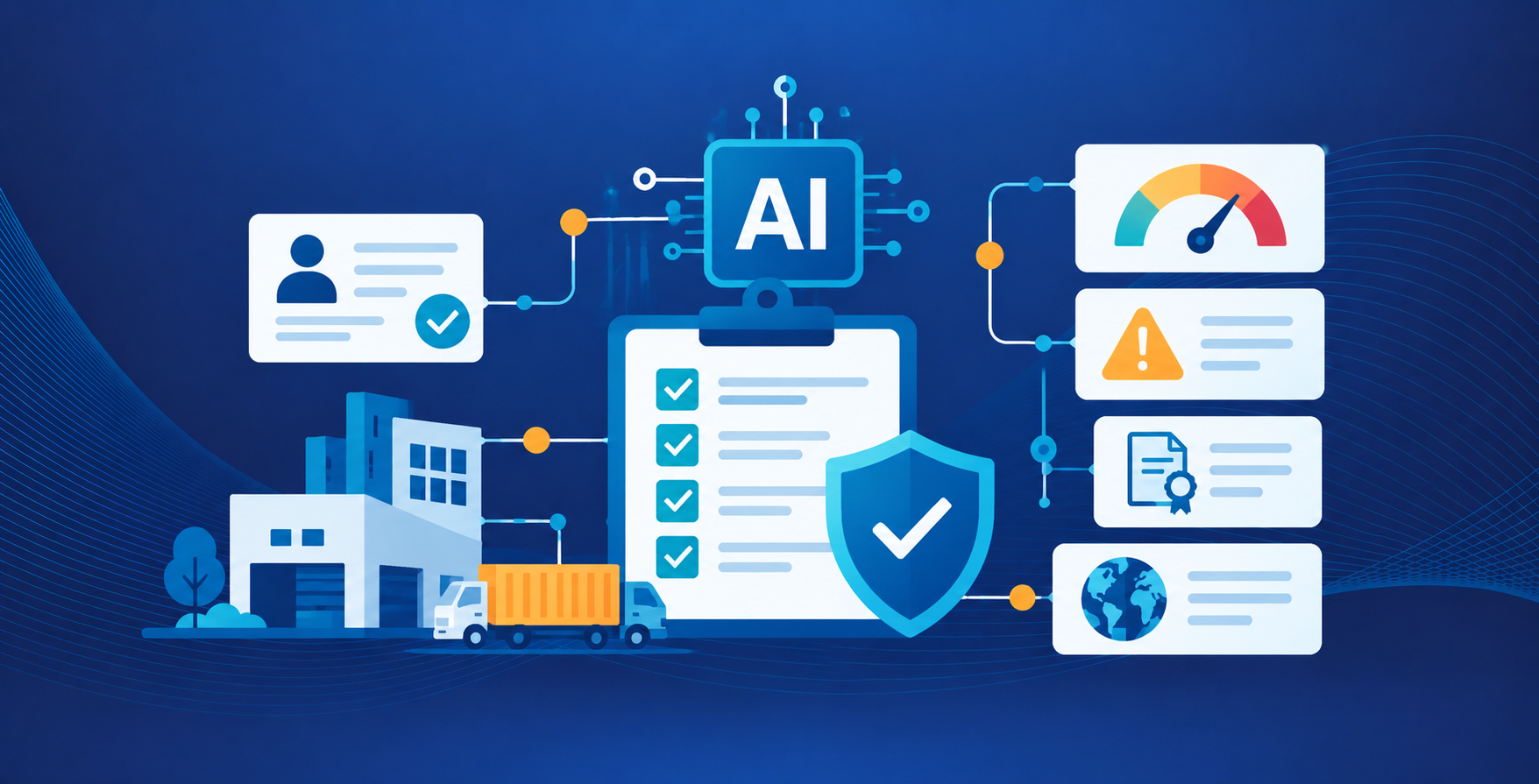
Advanced AI procurement platforms address these challenges by linking supplier risk and performance data directly to sourcing history, contract terms, and transactional outcomes.
How do you know if the platform you choose will provide these capabilities? Let’s take a look at a proven framework for evaluating supplier management platform vendors.
Use the A.C.T. Supplier Management Platform Test to Evaluate Vendors
A well-done demo can make any supplier management platform seem robust, but until you deploy it in your enterprise, you may not have a full picture of how it will hold up to the pressure of enterprise procurement. The A.C.T. framework – which stands for Adoption, Controls, Truth – provides a more practical and thorough way to evaluate whether a platform will actually work in the real-world.
Instead of comparing capabilities one by bone, A.C.T. focuses on outcomes, asking:
- Adoption: Will users and suppliers engage?
- Controls: Are controls enforceable without friction?
- Truth: Does the platform maintain a reliable single source of truth across the supplier lifecycle?
Let’s dive into each of these parameters to understand how the test works.
Adoption: Ensure Suppliers Actually Complete Onboarding, Updates, and Assessments
Adoption is where most supplier management platforms succeed or fail. If users won’t use the system, you can’t reap the benefits. That’s why it’s important to look for a supplier experience that makes onboarding, re-qualification, and ongoing updates easy to complete, not a hassle.
What features encourage adoption? An intuitive supplier portal, guided steps, automated reminders, and clear service-level agreements. It should also support segmentation so that low-risk suppliers aren’t forced to complete the more complex processes that are intended for critical or regulated vendors.
During the evaluation stage, be sure to ask vendors to demonstrate the full supplier-side onboarding experience from end-to-end. Ask what they measure (i.e. completion rates, cycle times, drop-off points, etc.) and how they actively improve them. How do they minimize supplier effort while maintaining compliance standards?
Ivalua supports strong adoption through supplier enablement workflows that minimize manual follow-ups and keep supplier data current, alongside a streamlined supplier onboarding process designed for enterprise scale.
Controls: Enforce Risk, Compliance, And Audit Requirements Through Workflow
A strong supplier management platform applies and enforces controls in a standardized way, using configurable questionnaires and policy-driven workflows that ensure data is collected consistently. Also look for continuous monitoring capabilities, with automated alerts and the ability to maintain audit-ready data logs.
Effective platforms also map third-party risk management to supplier tiers, for example:
- Tier 1 strategic suppliers receive deeper assessments and more frequent monitoring
- Tier 2 suppliers undergo targeted checks based on category or region
- Tier 3 lower-risk suppliers generally follow lightweight processes with targeted actions based on criticality of material or service.
A tiered approach prevents overburdening suppliers while maintaining compliance.
Ivalua embeds supplier risk and performance directly into operational workflows, enforcing controls in context rather than managing them using a separate system.

Truth: Maintain A Trusted Supplier Record With Clean, Current Data
Data quality is the foundation of effective supplier lifecycle management. The best platforms maintain a single supplier record with clear governance, including defined ownership, validation rules, and ongoing enrichment.
The platform should actively detect duplicates and maintain a consistent “record of truth,” instead of relying on periodic cleanup exercises. Most importantly, the platform should embed data quality into workflows, keeping information accurate at all times.
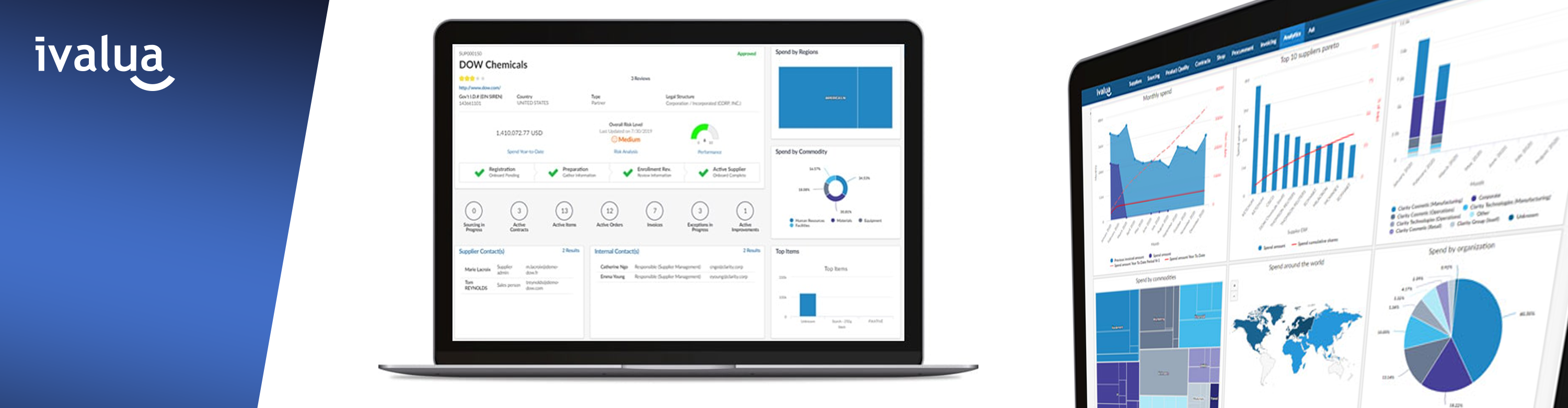
During evaluation, check the KPIs in the platform’s dashboard. Key metrics include:
- Profile completeness (percentage of required fields completed by supplier tier)
- Data freshness (percentage updated within a defined timeframe)
- Duplicate rate
- Exception backlog age
- Availability of audit-ready evidence
These metrics demonstrate whether the system can maintain high data quality at scale.
Ivalua’s supplier information management capabilities can function as supplier MDM, supporting a true single source of truth across the lifecycle.
AI in Supplier Management: What to Demand (And What to Ignore)
AI is now a standard claim across supplier management software, but it’s critical to make sure the AI is providing value. There’s a difference between superficial features that look flashy during the demo and enterprise-grade AI that actually reduces risk, and boosts performance and decision-making.
Let’s explore how you can be sure AI capabilities will deliver consistent, explainable results in real-world conditions.
Why AI Needs A Unified Data Model
AI is only as good as the data it uses, and that hinges on how the data is connected.
When AI operates on a single, unified data model, it can analyze relationships across sourcing, supplier risk, contracts, and transactions to generate accurate, context-aware insights. But when AI is layered on top of siloed systems, it can provide recommendations based on incomplete or inaccurate signals and amplify errors in the data.
For example, a bid that seems too good to be true may actually be too good to be true, if the AI evaluates it on price alone. A unified AI-native spend platform can flag risk by correlating multiple data points such as declining supplier credit, late payment trends, and historical performance issues.
In other words, AI using siloed data may recommend the lowest bid, but AI using unified data can surface the underlying risk, helping you make a more informed decision.
What “Better AI” Looks Like in Practice
When AI is applied across supplier management workflows and operates within real-world context, it can provide substantial value across several areas:
- Supplier Information Management (SIM): AI can extract data from documents to populate supplier profiles, detect duplicates, and assist with supplier communications. A single supplier record is maintained and connected to sourcing, contracts, and transactions, helping to ensure the data is always consistent and actionable.
- Supplier Risk Management (SRM): AI can enable proactive risk management , continuous adverse media monitoring, and GenAI-generated risk summaries. For example, Ivalua’s Virtual Assistant (IVA) uses a unified process context to assess risk signals against what’s actually happening in sourcing and procurement workflows.
- Supplier Performance Management (SPM): AI can detect anomalies in performance metrics and analyze sentiment from stakeholder feedback. It can then tie performance trends to PO and invoice data, and contract expectations.
- Collaboration: AI-powered assistants support supplier questions within the portal and generate improvement plans. For instance, IVA enables supplier self-service and in-portal collaboration, reducing internal workload while improving responsiveness.
However, taking advantage of these capabilities requires users trust the AI – and that requires transparency.
Transparent and Configurable AI as an Adoption Lever
As buyers, you should have clear visibility into how the system generates risk scores and recommendations. They should also be able to have configurable weightings to align AI outputs with the organization’s business priorities, risk tolerance, and category strategies.
When users understand and can adjust how the AI works, they are far more likely to rely on it in decision-making.
Ivalua’s AI operates across a unified Source-to-Pay lifecycle, enabling richer, more actionable insights by combining data from sourcing, supplier management, contract management, and transactions.
Applying Ardent’s 2025 Supplier Management Technology Advisor to Your Platform Shortlist
Shortlisting supplier management platforms carries a risk, especially if the vendor claims about the platform are inflated. Ardent’s 2025 Supplier Management Technology Advisor provides a practical, third-party lens to validate platform scope, pressure-test vendor assertions, and ensure you’re evaluating what actually matters in production.
The framework helps connect what analysts identify as critical capabilities with how platforms perform in practice. It provides an objective approach to assessing the platform’s fit for your organization. Let’s dig a little deeper to understand how.
Use Ardent’s Four-Part Model to Confirm You’re Buying a Complete Supplier Management Platform
According to Ardent, supplier performance management isn’t a single workflow. Rather, it’s a holistic system of interconnected capabilities. Evaluating platforms through a narrow lens such as onboarding or risk alone is shortsighted.
To that end, Ardent frames supplier management across four key areas: Supplier Information Management, Supplier Risk Management , Supplier Performance Management , and Supplier Collaboration/Innovation/Development. Each area is supported by shared platform capabilities such as data governance, workflows, and spend analytics – and together, they define whether or no a platform can manage suppliers end-to-end.
To apply this in practice, validate that any platform on your shortlist covers all four areas in an integrated way, instead of as disconnected modules. Fragmentation between SIM, SRM, SPM, and collaboration can result in inconsistent data, weaker insights, and lower adoption.
Use Ardent’s Two-Score Ranking Lens to Pressure-Test Vendors in Demos And RFPs
Ardent simplifies evaluation with two buyer-friendly scores: Solution Strength and Provider Strength:
- Solution Strength: Can the platform support the full scope of supplier management – SIM, SRM, SPM, and collaboration – with embedded workflows, governance, and a unified data model?
- Provider Strength: Can the vendor execute, drive adoption, and deliver outcomes across a complex enterprise environment?
You can translate these into practical evaluation gates during demos and RFPs. For example, to evaluate solution strength, ask:
- How do SIM, SRM, SPM, and collaboration work together in a single workflow, not separate modules?
- How does risk, performance, and supplier data connect to sourcing events, contracts, and transactions?
- How is governance enforced (policies, approvals, audit trails) across the supplier lifecycle?
- How is data consistency maintained (duplicate prevention, golden record, cross-module updates)?
To assess provider strength, ask:
- Can you show us evidence of enterprise-scale deployments (multi-ERP, global suppliers, complex categories)?
- Can you share measurable adoption metrics (supplier onboarding completion rates, user engagement)?
- What’s your implementation approach and time to value, including change management support?
- How does the platform evolve with customer needs (roadmap delivery, customer feedback loops)?
Using both lenses helps to ensure you’re selecting the platform that’s most likely to succeed in your environment.
What Ardent Signals About Ivalua’s Fit for Enterprise Supplier Risk and Performance
Ardent’s 2025 analysis provides several buyer-relevant signals that reinforce how to evaluate enterprise-grade platforms.
First, Ivalua’s Market Leader positioning reflects both strong Solution Strength and Provider Strength, indicating the platform can support the full scope of supplier management while also delivering at enterprise scale.
A key differentiator Ardent highlights is Ivalua’s unified platform and data model, which enables consistent data, workflows, and insights across SIM, SRM, SPM, and collaboration. Ardent also calls out Ivalua’s SIM foundation as robust enough to function as supplier MDM.
For complex enterprises, Ardent points to Ivalua’s depth in direct materials procurement as proof of scalability across demanding, multi-tier supply chains. On the AI front, Ardent emphasizes practical use cases such as supplier assessment summaries and document evaluation. This demonstrates how AI supports real-time insights and decision-making, rather than relying on generic “AI-powered” claims.
Together, these signals align with Ardent’s broader view of supplier management as a holistic system and its dual scoring model for evaluating platforms.
What Forrester TEI 2025 Adds to the Buying Decision
So, how can you quantify and defend the value your supplier management platform provides in practice? The Forrester TEI 2025 study provides a structured approach.
- What you can expect to measure: Business value typically shows up across four areas: efficiency (reduced manual work and cycle times), risk reduction (better visibility and compliance), performance improvement (stronger supplier outcomes), and decision quality (faster, more informed sourcing and supplier decisions).
- What the TEI model shows: Forrester’s composite organization analysis quantifies these four benefits, including significant efficiency gains, faster onboarding, and reduced reliance on fragmented tools. All of these contribute to measurable financial impact over a 3-year period.
- How to interpret it: The results represent a modeled composite. While it’s not a guarantee, it provides a credible benchmark. The key is understanding how closely your organization aligns in terms of scale, complexity, and implementation, and whether your platform choice supports unified data, embedded workflows, and adoption at scale.
Have a look at the full Forrester TEI 2025 study for more detail around these parameters.
Examples of Value Proof Metrics:
- 393% ROI over three years
- $25.5M Net Present Value (NPV)
- Payback in under 6 months
- 80% reduction in supplier onboarding time (from 14 days baseline)
Implementation Reality: How to Roll out Supplier Management Without Losing Adoption
Successful supplier management rollouts can fail when adoption breaks down after the first wave. Modernizing supplier management requires a practical rollout model that balances speed, control, and supplier participation from day one. The goal is to start focused, prove value quickly, and scale with confidence.
Start with Supplier Segmentation
Define supplier tiers based on risk and business value, then align workflows accordingly. Strategic suppliers require deeper onboarding, monitoring, and collaboration, while low-risk suppliers can follow streamlined, low-friction processes to avoid unnecessary burden and drop-off.
Define a Minimum Viable Supplier Record
Establish the minimum required data and supporting evidence per supplier tier to prevent “empty profiles.” This also helps to ensure that every supplier contributes meaningful, usable data for risk, compliance, and performance management during onboarding.
Prove Value in 90 Days
Pilot with a defined supplier cohort and track leading indicators: onboarding completion rates, data freshness, exception backlog, and early risk or performance insights. This creates a measurable proof point before scaling across the enterprise.
Ivalua’s Design Mode provides a low-code/no-code platform and workflow engine to give you full control to orchestrate processes and AI in line with their governance requirements, supporting scalable, real-world adoption.
How Hiscox Achieved 60% Spend Under Management While Modernizing Supplier Risk Management
Global insurance provider, Hiscox, faced growing pressure to modernize procurement and strengthen supply chain resilience and governance. Without a unified platform, only about 20% of direct and indirect spend was under management, limiting supplier spend visibility and control. Risk and compliance processes such as due diligence, third-party risk, and sustainability tracking were largely manual and difficult to scale.
At the same time, increasing regulatory requirements, including readiness for DORA, made a more structured, automated approach necessary.
By implementing Ivalua, Hiscox transformed procurement into a core digital capability. It increased spend under management from ~20% to ~60% within two years, and is on-pace to exceed 80%. Automated due diligence and risk scoring enabled through FSQS integration centralizes supplier risk data, while Ivalua’s Risk Center supports DORA readiness and supplier audit management.
Additional integrations, such as Trustpair for fraud prevention, strengthens controls, and embedded ESG scoring provides real-time visibility into supplier risks and opportunities.
“Our key metric is all about bringing spend under management. When we started this journey, it was about 20%, at the end of last year it was pushing 60. So in two and a bit years, we’ve made very considerable progress.” – Karl Poulsen, Chief Procurement Officer
Choose a Supplier Management Platform that Scales In Real Life
When evaluating supplier management software, look past the features list and focus on which platform can deliver Adoption, Controls, and Truth (A.C.T.) in your production environment. That means working across multi-ERP complexity, driving supplier participation without friction, and maintaining governance under growing regulatory pressure.
If you’re evaluating how to scale supplier management beyond initial rollout and into sustained value, explore how Ivalua’s Supplier Management solutions support enterprise-wide adoption, embedded controls, and a true single source of truth.
See how Ivalua’s Supplier Management solution helps you reduce risk, improve performance, and drive adoption at scale.
FAQs About Supplier Management Platforms
A supplier management platform is a centralized system for managing supplier data, onboarding, performance, and risk across the procurement lifecycle. It enables organizations to maintain a single source of truth and improve collaboration, compliance, and decision-making.
Vendor management software typically focuses on transactional supplier relationship management activities, such as contract administration and payments. Supplier management takes a broader, more strategic view, covering performance, vendor risk intelligence, innovation, and long-term value creation.
Effective supplier risk management requires continuous monitoring, predictive risk scoring, and integration of external data such as financial health, ESG metrics, and news signals. Platforms should also support automated alerts and workflows to proactively mitigate disruptions.
Supplier performance management is measured through KPIs such as on-time delivery, quality, cost adherence, and responsiveness. Advanced platforms connect these metrics to real transaction data, enabling more accurate and real-time supplier insights.
Streamlining supplier onboarding and qualification requires intuitive interfaces, guided workflows, and minimal manual data entry for suppliers. Automation and pre-filled data help reduce friction while maintaining compliance and data accuracy.
An AI procurement platform improves supplier management by providing transparent insights, explainable recommendations, and configurable decision rules. Strong governance and auditability ensure users can trust AI outputs without losing control.