

If you’re a Director of SRM or a Category Manager, you’re likely facing fragmented data, inconsistent evaluation criteria, and constant pressure to prove supplier performance to stakeholders. A supplier capability assessment – a structured evaluation of how a supplier can meet your organization’s performance, quality, risk, and compliance requirements – can help you do just that.
In practice, the assessment predicts how a supplier can reliably deliver on your expectations today, as well as scale with future needs.
In this blog, we explain exactly what a supplier capability assessment is, breaking it down into its essential components. We provide some real-world examples of modern, data-driven workflows that leverage a platform like Ivalua to centralize criteria, normalize supplier data, and streamline evaluations.
By the end of the blog, you’ll understand how to build a rigorous, scalable capability assessment process to support strategic decision-making and supplier improvement.
Key Takeaways
- A supplier capability assessment is a structured way to evaluate a supplier’s ability to meet performance, quality, risk, and compliance needs.
- Assessments help to reduce uncertainty and improve stakeholder confidence, while eliminating subjective scoring.
- Ivalua simplifies capability assessments by centralizing data and automating evaluation workflows.
What Is a Supplier Capability Assessment?
Supplier capability assessments are used to evaluate whether a given supplier can meet your organization’s requirements for production capacity, managerial maturity, supplier quality assurance and delivery performance. It helps you understand a supplier’s financial stability and compliance readiness, as well.
Unlike on-site audits that serve to verify specific practices, or performance management for monitoring results over time, capability assessments help you establish a baseline used to reference when onboarding suppliers and making sourcing decisions.
Effective assessments rely on clear, measurable data such as on-time delivery and defect rates. For example, one study by the International Journal of Innovation showed a supplier achieving 98.18% on-time delivery and a 0.019% defect rate, demonstrating how quantifiable metrics reveal true capability.
With Ivalua’s unified Supplier Risk and Performance Management(SRP), you can evaluate suppliers consistently, since all capability data lives in a single supplier record across Source-to-Pay. One semantic data model is governed by role-based access and standardized structures, ensuring that every assessment pulls from the same verified data model.
In the next section, we break down the components of a comprehensive evaluation that will help you improve supplier management.
Key Elements of a Supplier Capability Assessment
According to research by Plos One, when evaluators see a supplier perform well in one area, they tend to automatically assume the supplier is strong in every area, even if the evidence doesn’t support it. That’s why it’s important to assess multiple dimensions of a supplier’s ability to perform, scale, and comply under real-world conditions.
Below is a breakdown of each critical capability area, and how Ivalua’s Supplier 360° view brings them into focus.
Production Capability
Production capability reflects a supplier’s ability to meet required output volumes consistently, efficiently, and at the required quality levels. This area includes things like equipment capacity, technology sophistication, process stability, and throughput performance.
Evaluators look for evidence of robust production capacity with minimal bottlenecks, and a proven delivery reliably under varying demand.
Ivalua supports this evaluation with real-time performance metrics and historical fulfillment data, maintaining supplier qualifications, as well as the ability to capture capacity confirmations at an item level from suppliers, all of which helps to eliminate manual information gathering.
Scalability
Scalability measures whether a supplier can expand production, workforce, or logistics capacity to accommodate surges in demand or changes to the product mix. It captures flexibility in machinery, supply chain networks, subcontractor availability, and the ability to ramp up without compromising quality.
Scalable suppliers demonstrate planning maturity and have made investments to prepare for potential growth..
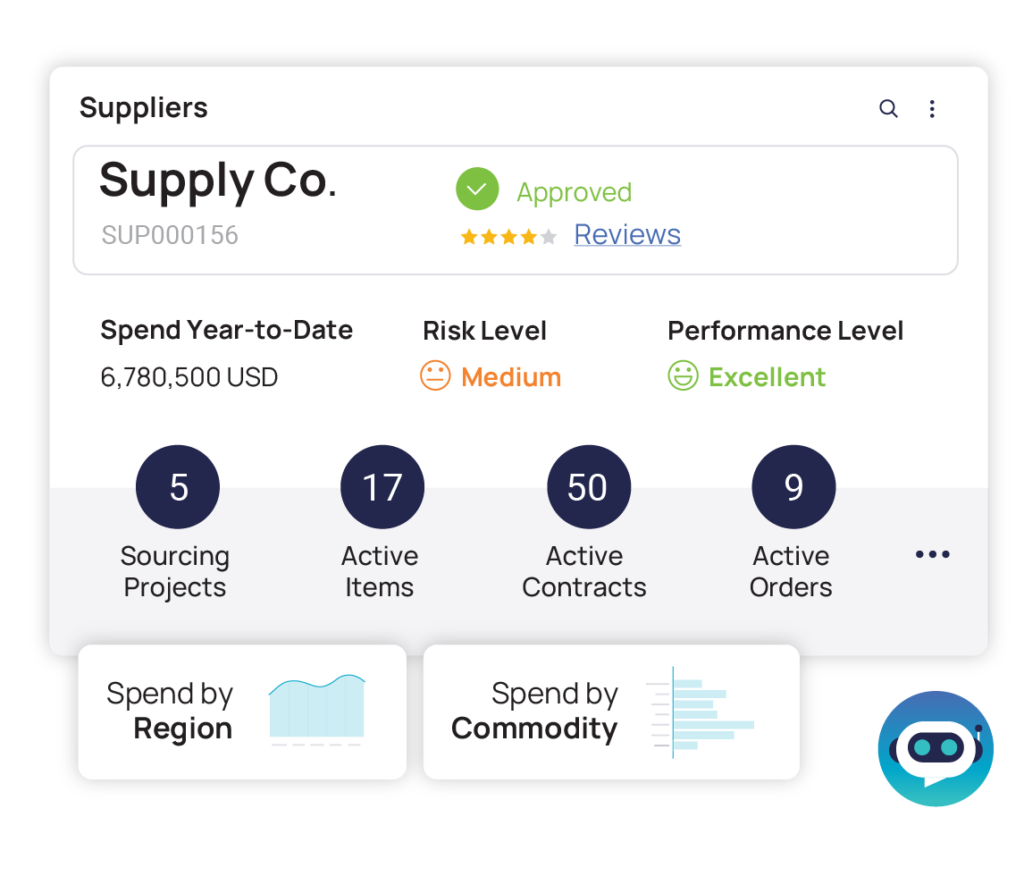
Ivalua’s Supplier 360° enables you to review capacity trends, scalability indicators, past ramp-up performance, and contractual commitments. It centralizes all of the relevant data on vendor scorecards (supplier scorecards) to help in evaluating supplier capabilities at scale.
Quality Control Processes
Quality Control evaluates the strength of a supplier’s quality systems. This includes everything from inspection protocols and defect-prevention methods to certification status and audit history.
Mature quality control processes help to reduce variability and support compliance, while enhancing reliability. It involves assessing procedural design and real-world defect rates to determine fitness.
Ivalua consolidates quality certifications such as ISO, product quality (e.g., APQP, PPAP, FAI, 8D, etc) and audit reports, non-conformance events, and corrective action plans in a single pane of glass, simplifying assessment methods.
Managerial Maturity
Managerial maturity is about leadership competence and decision-making discipline. This area of the assessment reveals planning sophistication and what governance structures are in place. This dimension also covers communication transparency and cross-functional coordination.
Suppliers with mature management teams use data effectively and maintain structured processes, which enables them to respond quickly to disruptions.
Ivalua integrates governance documents, organizational charts, performance trends, and communication logs within the Supplier 360° record, so that evaluators have insight into operational discipline and leadership reliability.
Cost, Delivery and Quality Performance
Assessing cost, delivery and quality (CDQ) performance involves reviewing a supplier’s historical unit costs, on-time delivery rates, lead-time consistency, and defect or return rates.
Strong performance in this dimension points to stable operations and predictable outcomes, as well as efficient use of resources. It’s one of the most empirical indicators of long-term partnership value and success.
Ivalua aggregates these KPIs automatically, displaying multi-year trends and comparative benchmarks. Category-level ratings enable you to evaluate operational performance – without spreadsheets.
Financial Health
Financial stability determines whether a supplier can remain viable, invest in improvements, and weather economic ups and downs. Weak financial health elevates supply continuity risks, especially for critical categories.
To assess financial health, you should look at liquidity metrics, debt structure, profitability, credit scores, and third-party financial risk assessments.
Ivalua’s financial dashboards, external risk feeds, credit ratings, and uploaded statements are presented in a unified model to help you continuously monitor your suppliers’ financial indicators.
Regulatory Compliance
Regulatory compliance measures how much suppliers adhere to industry and safety standards, environmental regulations, labor requirements, and product-specific mandates. This dimension is critical, because if a supplier is non-compliant, your organization may be exposed to fines, recalls, or even reputational damage.
Ivalua’s Supplier 360° view centralizes certificates and compliance attestations, as well as regulatory audit results, expiration alerts, and automated risk mitigation flags. With a unified view, you can perform proactive, evidence-based oversight.
Workforce & Human Reliability Factors
Supplier capability isn’t just about machines, processes, or certifications. Human reliability which includes things like training, workload, stress, fatigue, clarity of procedures is equally important.
A well-trained and resilient workforce will help reduce operational disruptions and improve process quality. Compliance with labor standards compliance and workforce development practices are also dependent on human reliability..
Ivalua offers structured data fields, labor-compliance dashboards, safety documents, and risk scoring to help you assess human reliability in a holistic and consistent way.
When combined, these various capability dimensions form a structured foundation you have used to compare suppliers and make sourcing decisions with confidence.
How to Conduct a Supplier Capability Assessment (Step-by-Step Guide)
A structured procurement capability assessment process helps organizations move from raw information to clear, defensible decisions. The steps below outline a practical, repeatable supplier capability assessment framework for the vendor selection process, enhanced by Ivalua’s automation and AI.
- Collect supplier information and documentation: Gather certifications, financials, policies, and process evidence needed for supplier capacity analysis. Ivalua’s Document Intelligence Agents automatically read documents, extract compliance requirements, and flag missing or outdated items.
- Evaluate capability dimensions using predefined criteria: Assess production capability, scalability, quality processes, managerial maturity, financial health, and regulatory compliance against standardized criteria. Ivalua’s Supplier 360° view surfaces all supporting data – on-site audits, KPIs, risk signals – without manual consolidation.
- Validate claims through evidence, audits, or historical performance: Cross-check supplier responses against audit records, corrective actions, defect rates, and past delivery performance. Ivalua automatically centralizes this evidence and routes validation tasks through onboarding agents when documentation is incomplete.
- Score and compare suppliers using structured scoring models: Apply weighted scoring or maturity models to quantify each supplier’s strengths and risks. Ivalua streamlines this with integrated performance KPIs – especially delivery reliability – financial indicators, and AI-generated capability summaries that give evaluators faster context.
- Document outcomes and define improvement or mitigation plans: Capture findings, decisions, and required corrective actions to support transparency and future evaluations. Ivalua’s Supplier 360° record stores all outcomes, action plans, and follow-up tasks in one auditable source of truth.
A consistent supplier onboarding process ensures organizations can operationalize capability assessments at scale. The next step is to segment suppliers so that you can calibrate capability assessments to the strategic importance and risk level of each supplier. This will help to ensure that your evaluations are focused on what matters most.
Segment Suppliers Before Assessing Them
Effective supply base segmentation requires grouping suppliers by various parameters, including spend impact, risk exposure, operational criticality, category specialization, or tier within the value chain.
Each parameter determines how deep the capability assessment should go, whether they are high-risk or strategic suppliers that require more rigorous evidence and audit cycles, or lower-impact vendors who can have simpler supplier surveys to support scalability.
Segmenting suppliers in this way helps to ensure that your evaluations align with the business’s priorities and broader risk mitigation strategies.
Ivalua offers configurable supply base segmentation logic to automatically assign workflows, questionnaires, risk checks, and required documentation, based on each supplier, helping to ensure the right level of scrutiny every time.
Why Supplier Capability Assessments Matter
Supplier Capability Assessments (SCAs) play a crucial role in supplier performance management, because they reduce operational risk, improve supply chain resilience, and enable more confident sourcing decisions.
SCAs provide a structured way to evaluate supplier performance metrics, so that you can better detect issues before they disrupt operations.
According to research published in International Journal of Engineering Trends and Technology, human error contributes significantly to process deviations. That’s why systematic, evidence-based assessments are essential for strong supplier risk management.
Procurement capability assessments are essential to catch weaknesses in workforce reliability, training, and process adherence, which are major sources of supplier risk. They also target supplier improvement by identifying gaps and informing corrective action plans that strengthen long-term partnerships.
Ivalua enhances this process by reducing the cost of manual monitoring, increasing visibility into multi-tier suppliers, and continuously enriching supplier records through integrations that feed financial risk data, ESG indicators, sanctions lists, and diversity attributes.
So, what does an AI-enabled capability assessment look like in practice? The latest findings from Ardent Partners highlight how leading organizations are using automation, intelligence, and real-time data to transform supplier evaluation.
What Modern Supplier Capability Assessment Looks Like
Modern supplier capability assessment methods look fundamentally different from manual, spreadsheet heavy processes. The latest Ardent Partners findings explain how today’s procurement leaders leverage unified data, automation, and AI driven evaluation processes. This change provides greater accuracy, regulatory compliance, and better long-term financial stability.
Modern SCAs depend on a strong supplier data foundation, and high-quality assessments require complete, trusted, and continuously enriched data, which unified platforms like Ivalua deliver. In fact, Ivalua was named a market leader in the report.
The report also explains that a capability assessment cannot be an isolated activity. Rather, it must use a variety of information such as performance metrics, risk signals, and development insights to perform consistent, comparable evaluations.
Ardent’s research highlights that Supplier Information Management (SIM) operates as full master data management (MDM) in leading platforms like Ivalua and a single supplier record that global teams can score against consistently. This helps organizations avoid the problems of fragmented data and conflicting assessments.
With clean, governed data, you can form a holistic picture of a supplier’s production capability, product quality, and compliance posture.
Ardent’s research also explains how Ivalua’s GenAI capabilities can automate many parts of the evaluation process. It can summarize supplier profiles, analyze documents for quality and compliance, flag risks, and even pre-fill assessment scores to save teams time and increase accuracy.
Additionally, the research explores the mandate for scalability. Large and mid-size enterprises conducting assessments across thousands of suppliers need platforms that can integrate with multiple ERPs, support deep supplier quality control requirements, and manage high data volume. Ivalua was recognized as ideally suited for these complex, global environments.
With Ivalua’s intelligence-driven model:
- AI agents automatically extract data from supplier documents, validate compliance requirements, and enrich records with third-party financial, ESG, sanctions, and risk data.
- Supplier capability summaries are automatically generated by AI, which pre-fills scoring inputs and standardizes evaluation models for consistency across global teams.
- Governed workflows route exceptions to reviewers with full auditability, ensuring assessments remain compliant and defensible.
- Integrated supplier portals and supplier networks streamline data collection, accelerate onboarding, and maintain cleaner, up-to-date supplier profiles.
Together, these capabilities make supplier capability assessments dramatically faster, more accurate, and scalable compared to traditional methods.
To see how these principles play out beyond theory, it’s helpful to look at a real-world example where unified data, automation, and AI have materially improved supplier evaluation.
Customer Story: How Elkem Centralized 100% of Supplier Data to Strengthen Capability Assessment
Elkem needed a unified way to understand supplier risk and capability across its global teams, but siloed supplier data made assessments slow, inconsistent, and difficult to scale. Each region had been maintaining its own documentation and processes, which limited visibility into quality control systems, performance trends, and cost efficiency.
With Ivalua, Elkem now manages 100% of its suppliers in a single platform, giving teams standardized data, consistent documentation, and complete transparency into capability, performance, and risk. The result is a scalable evaluation process with real-time visibility that supports both supply chain risk management and capability assessment.
I am very proud to say that 100% of our suppliers are now in one system… a system that is global that tries to unify and break the silos in our company.– Emilie Genin, Procurement Manager, Elkem
Making Supplier Capability Assessments a Strategic Advantage
SCAs strengthen supplier reliability, resilience, and performance by helping to ensure you make decisions about suppliers based on objective data. But this requires standardized, data-driven frameworks supported by a unified platform like Ivalua that can deliver consistent insights at scale.
As you evaluate your own processes, consider whether your current approach aligns with a modern supplier capability assessment checklist, and whether your teams have the visibility needed for effective supplier enablement. If not, maybe it’s time to upgrade to a system that unifies data, automates assessments, and strengthens every supplier decision you make.
DEMO BLOCK
Learn how to Improve Supplier Reliability and Resilience with Ivalua
FAQs on Supplier Capability Assessment
A supplier capability assessment evaluates a supplier’s ability to meet your organization’s quality, delivery, compliance, and scalability requirements. Its purpose is to ensure suppliers can reliably support operational demands and future growth.
Core elements include production capability, quality management systems, financial stability, regulatory compliance, and historical delivery/quality performance across relevant categories.
Assessments should be conducted during onboarding, annually for active suppliers, and whenever disruptions, performance issues, or changes in supplier risk levels occur.
Common tools include structured supplier scorecards, on-site or virtual audits, standardized questionnaires, performance dashboards, and unified Supplier Management platforms that consolidate data and automate evaluations.
Capability assessment measures a supplier’s potential to perform, while supplier performance management evaluates their actual output and results over time.
A complete checklist should include production capacity, certifications, quality control processes, delivery history, financial health, and risk indicators such as compliance status or exposure to disruptions.