

Over the years, globalization has dramatically increased the reliance of businesses on their suppliers, which presents both challenges and opportunities. This interconnectedness makes supplier risk management essential, to unlock value, innovation, and resilience across the supply chain.
According to The Hackett Group, 44% of services organizations cited a risk avoidance strategy as the primary mitigation strategy. “Risk reduction is the primary risk mitigation strategy for nearly all risk categories, with the exception of location-based risk in services industries,” the report reads. “While contract clauses and other risk reduction tactics are useful, it is important to review and consider multiple strategies.”
In this blog post, we’ll unravel the intricate world of supplier risk assessment! Discover what it entails, follow our step-by-step guide to conducting a thorough assessment, and explore effective tools and techniques to safeguard your business. Get ready to transform your risk management strategy!
Key Takeaways
- Supplier risk assessment is essential for modern procurement strategic sourcing, protecting against financial, operational, compliance, cybersecurity, reputational, and geopolitical risks.
- A structured step-by-step methodology—define scope, identify risks, assess/score, develop mitigation, implement, monitor, review—ensures thorough evaluation and proactive management.
- Best practices include continuous monitoring, cross-functional collaboration, technology enablement, and supplier segmentation.
- Tools like Ivalua’s Risk Center enable automated, real-time insights to support strategic procurement decisions and reduce exposure to supply chain disruption
What is a Supplier Risk Assessment?
Supplier Risk Assessment is a systematic process used by organizations to identify, evaluate, and manage the risks associated with their suppliers. It is a critical component of strategic sourcing and procurement risk management, aimed at protecting the organization from disruptions, financial losses, compliance breaches, and reputational damage.
Supplier risk assessments analyze financial stability, operational performance, regulatory compliance, cybersecurity threats, ESG standards, and geopolitical factors.
The process generally includes key steps: defining scope, identifying risks, assessing and scoring, developing mitigation strategies, implementing mitigation measures, monitoring continuously, and reviewing improvements.
What Should be Included in a Supply Chain Risk Assessment?
A comprehensive supply chain risk assessment ensures visibility across all levels of the supply chain, aligns with business standards and regulatory requirements, and proactively addresses vulnerabilities.
It evaluates and mitigates supplier performance risks to ensure compliance, quality, and reliability while fostering collaboration with suppliers to drive innovation and supply chain resilience.

Pro Tip
Learn more by reading our Ultimate Guide to Supplier Performance Management.
Categorizing Types of Supplier Risk
In the dynamic world of procurement, risk is an ever-present factor that can significantly impact operations and outcomes. Understanding these risks is crucial for procurement teams aiming to safeguard their strategies and optimize their supply chains.
Below is an overview of the various types of risks commonly encountered in procurement, along with illustrative examples for each category. Whether it’s navigating supplier uncertainties or managing market fluctuations, being aware of these risks equips procurement professionals with the insights needed to implement effective mitigation strategies.
Financial Risks
These risks involve the financial stability of suppliers, including their ability to meet contractual obligations; financial risks can lead to disruptions if a supplier faces bankruptcy, liquidity issues, or significant financial downturns.
- Credit risk
- Bankruptcy and insolvency risk
- Payment defaults
- Insurance and liability
- Currency exchange rates
- Tax management/avoidance
Operational Risk
- Delivery delays,
- Quality issues
- Capacity constraints
- Production disruptions.
Compliance And Regulatory Risks
These risks arise when suppliers fail to comply with industry regulations, standards, or legal requirements, which can result in penalties, legal action, or disruption to operations.
- Legal compliance: Anti-bribery, anti-corruption
- Industry-specific regulations: OCC/FED
- Environmental, social, and governance (ESG) considerations
- Operational Risks: – SSAE18
Supply Chain Disruptions
These include any interruptions in the supplier’s ability to deliver goods or services on time, such as those caused by natural disasters, geopolitical tensions, labor strikes, or other unforeseen events that impact the flow of products or services.
- Location based + geopolitical
- Quality and reliability issues
- Capacity and scalability
- Operational impact of failure, interruption or error
- Business continuity
Cybersecurity And Data Risks
These risks involve potential breaches of sensitive data or cyberattacks that can compromise the security of information shared between the organization and its suppliers, potentially leading to data loss, operational downtime, or reputational damage.
- Data breaches and cyberattacks
- Data privacy regulations
- Confidential data access
- Intellectual property
- Cloud/data security
Reputational Risks
These occur when a supplier’s actions, such as ethical breaches, poor labor practices, or environmental violations, negatively affect the reputation of the company they supply to, potentially leading to loss of customer trust and brand damage.
Reputational Risks:
- Supplier and individual persons legal exposure
- Brand impact resulting from other risk categories
For Example, Boeing’s recent crisis involving loose door bolts on an aircraft has sparked global controversy, diminishing trust throughout the supply chain and highlighting the reputational risks that arise from quality control failures.
This incident underscores how supplier-related issues can severely impact a company’s reputation and stakeholder confidence.
Geopolitical Risks
- Trade tariffs
- Sanctions
- Political instability
Indicators for Each Risk Type:
- Financial: Credit rating declines, missed payments.
- Operational: Increased defect rates, late shipments.
- Compliance: Regulatory fines, failed audits.
- Cybersecurity: Malware incidents, unauthorized access logs.
- Reputational: Negative media coverage, customer complaints.
- Geopolitical: Export restrictions, regional instability reports.
How to Perform a Supplier Risk Assessment: A Step-by-Step Guide
A structured, step-by-step approach ensures that supplier risk assessments are consistent, repeatable, and aligned with organizational priorities, while enabling procurement and risk teams to identify, prioritize, and mitigate risks effectively.
Step 1: Define Scope
Clearly outline the boundaries of your assessment, including supplier types, categories, geographies, and critical processes. Decide whether to focus on strategic suppliers, high-value vendors, or the entire supplier base.
Step 2: Identify Risks
Catalog potential supplier risks, including financial, operational, compliance, cybersecurity, reputational, and geopolitical risks. Incorporate a supplier risk assessment template and third-party risk assessment tools to standardize identification.
Step 3: Assess and Score Risks
Evaluate the likelihood and impact of each identified risk. Assign scores to prioritize high-risk suppliers and areas needing immediate attention. Use vendor risk assessment frameworks to quantify exposure systematically.
Step 4: Develop Mitigation Strategies
Create specific actions for each risk category, such as financial monitoring, operational redundancies, compliance audits, cybersecurity safeguards, and contingency planning for geopolitical disruptions. Document mitigation plans in the supplier risk assessment template.
Step 5: Implement Mitigation Measures
Apply the identified mitigation actions with clear responsibilities, timelines, and monitoring checkpoints. Ensure cross-functional teams are involved in executing these strategies.
Step 6: Monitor Continuously
Establish ongoing monitoring of supplier risks using automated alerts, KPIs, and dashboards. Regularly update risk scores and mitigation plans to respond to evolving threats. This ensures your third-party risk assessment remains current and actionable.
Step 7: Review and Improve
Periodically review the effectiveness of your supplier risk assessment program. Identify gaps, update risk indicators, and refine mitigation strategies based on lessons learned and market changes.
How to Successfully Implement a Risk Mitigation Strategy
In today’s fast-paced business environment, sourcing and procurement teams need to stay ahead by optimizing their supplier networks. The secret to success? A robust risk mitigation strategy that doesn’t just identify risks but tackles them head-on.
Picture this—thorough due diligence that dives deep into understanding your suppliers’ financial stability, compliance history, and operational capabilities. It’s about transforming potential threats into strategic opportunities. Don’t just manage risks; master them and elevate your supply chain game to new heights!
By using data-driven tools and technologies, such as real-time analytics and supplier risk management platforms, teams can continuously monitor supplier performance and external risk factors, such as geopolitical events or market fluctuations, that may impact global supply chains.
Establishing clear criteria for risk tolerance and setting up automated alerts for any deviations helps procurement teams take proactive measures, such as diversifying suppliers or negotiating more flexible contracts, to mitigate potential disruptions. Additionally, fostering strong, transparent relationships with suppliers plays a crucial role in risk mitigation.
Let’s examine how people and processes impact an organization’s ability to mitigate supplier risk.
People and the Organization
Implementing and automating a dynamic supplier risk and performance management program can unlock significant value across multiple areas.
In organizations with a large supply base, numerous and varied commodities, a large group of stakeholders, and unique/regionalized business requirements, this value can be replaced with churn. Churn can sabotage procurement automation initiatives and the overall program.
Churn can occur because many individuals are impacted by suppliers and many maintain close relationships with their suppliers. Those relationships may be profoundly personal, and stakeholders can be territorial about disrupting existing procurement processes and supplier relationships.
A few recommendations when dealing with individuals and organizations:
- Secure executive sponsorship
- Define a governance structure for the project to effectively address issues
- Establish the strategic sourcing program objectives and identify the owners of these objectives
- Map the supplier life-cycle and identify cognizant stakeholders for each phase
- Define the attributes to be measured (including data sources) for each supplier life-cycle phase
- Define the reporting requirements, triggers, and frequency of reports/monitoring activities
- Identify missing skills, needed training, and develop plans to address
- Identify and include project advocates. Identify and include project opponents
The Impact of Disconnected Processes
Organizations often have many disparate supplier risk and performance management processes to address different types of spend, categories, regions, business requirements, and more.
These processes rely upon different systems (if any at all) and utilize numerous and disconnected sources of data. The lack of continuity can lead to inefficiencies, which can be a roadblock to compliant, scalable programs.
Challenges in Supplier Risk Assessment
Supplier risk assessment has become increasingly complex as organizations operate across global, multi-tier supply networks and face a broader range of interconnected risks. Procurement and risk teams must balance the need for comprehensive visibility with practical constraints around data, resources, and speed, while ensuring assessments remain relevant in a rapidly changing risk landscape.
- Managing a large and fragmented supplier base across multiple geographies, categories, and tiers, often with limited transparency beyond tier-1 suppliers.
- Limited, inconsistent, or low-quality data from internal systems and external risk intelligence providers, reducing the reliability of risk scoring.
- Resource constraints that limit the ability to perform frequent, in-depth vendor and third-party risk assessments, particularly for non-strategic suppliers.
- Rapidly evolving risk factors, including cybersecurity threats, regulatory changes, geopolitical tensions, and climate-related disruptions.
- High supply chain complexity, requiring strong cross-functional coordination between procurement, risk, compliance, IT, finance, and operations.
Pro Tip
Check out the results from the Hackett Group’s Third-Party Risk Management Performance Study.
Best Practices for Supplier Risk Assessment
Effective supplier risk assessment requires a structured, repeatable approach that combines governance, data, and technology to support informed decision-making. As risk exposure becomes more dynamic and interconnected, leading organizations embed risk management into day-to-day procurement processes rather than treating it as a periodic compliance exercise.
- Shift from one-time or annual assessments to continuous monitoring in order to maintain an accurate, real-time supplier risk profile.
- Involve cross-functional stakeholders—including procurement, finance, legal, compliance, IT, and operations—to ensure risks are evaluated from multiple perspectives.
- Leverage technology-enabled supplier risk management platforms, analytics, and external data feeds to automate detection, scoring, and alerts.
- Segment suppliers using structured frameworks such as the Kraljic Matrix to focus risk management efforts on strategic, critical, and high-risk suppliers.
- Standardize documentation of risks, mitigation actions, ownership, and review cycles using a supplier risk assessment template to ensure consistency and auditability.
Tools And Techniques for Supplier Risk Assessment
Implementing digital transformation and advanced analytics is your secret weapon for taming supplier risks. The Hackett Group recommends leveraging supply chain risk management software and network optimization tools to enhance visibility, improve planning, and manage the level of risk proactively.
Currently, 92% of manufacturing and 83% of services organizations use the Microsoft Office suite, but these figures are expected to drop by half in the next two to three years. Many organizations report using Office tools alongside other solutions like financial risk content providers, ERP systems, and spend management suites.
Meanwhile, the use of niche risk and Governance, Risk, and Compliance (GRC) software is projected to grow, as companies seek more specialized tools to meet their needs.
What are the must-have features of supplier risk management solutions? Here’s a breakdown:
For managing supplier information the top two features are:
- Embedded robust governance controls and compliance libraries
- Integration of external data and content
For risk management, the top three features are:
- Risk segmenting
- Automated updating
- Alerting
- Third-party data feeds
The Hackett Group also suggests that integrating AI for demand sensing can significantly boost supply chain agility, enabling companies to adjust their supply strategies in real-time based on near-term market activities.
Technology and Supplier Risk Management Software
Technology and software solutions play a critical role in modern risk assessment by automating data collection, analyzing, and reporting. Supplier Risk Management software facilitates risk assessment and integrates with other procurement and supply chain management tools to provide a holistic view of supplier performance and compliance.
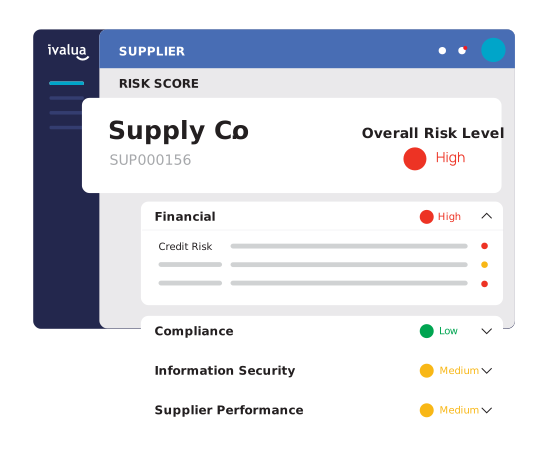
Ivalua enables companies to track supplier risk profiles, conduct ongoing assessments, and receive alerts about potential risks, such as financial instability, regulatory changes, or operational disruptions – so they can proactively address supplier risks and make more informed, strategic decisions.
Watch an interview with Bryan Tividad, Assistant Vice President and Global Procurement Services Head at Jollibee Foods Corporation, as he explains how his organization leverages Ivalua for supplier risk management.
Data Sources for Risk Evaluation
Effective risk evaluation depends on diverse and accurate data. Financial data, such as credit ratings and statements, assess a supplier’s economic stability, while operational data like delivery performance and quality metrics reveal reliability and potential disruptions.
Regulatory and compliance data ensure adherence to laws and standards, particularly in regulated industries. External sources like news feeds and market reports offer early warnings of emerging risks.
By combining internal and external data, organizations can create a comprehensive risk profile for proactive management.
How Ivalua Can Help
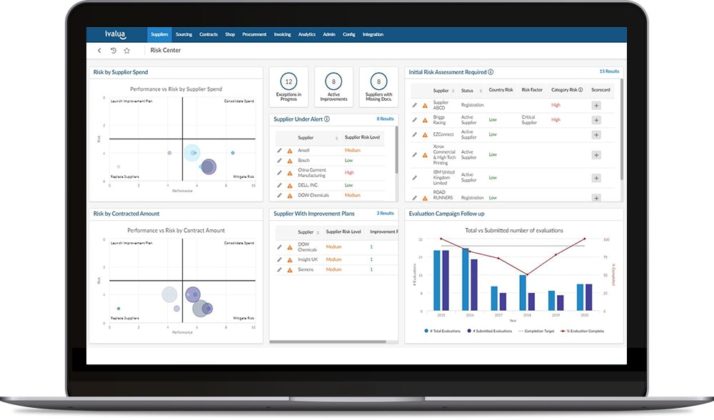
Ivalua’s Risk Center is designed to enhance your supplier risk management strategy by providing a centralized platform for identifying, monitoring, and mitigating risks across the entire supply chain. Through a combination of flexible business rules, real-time alerts, and detailed tracking capabilities, it provides numerous benefits:
- Reduced supply chain risk exposure: Early risk identification and mitigation help lower exposure to disruptions, leading to more resilient operations.
- Visibility into risk mitigation progress: Improved visibility allows teams to track risk mitigation efforts and adjust strategies based on data insights.
- Faster response to risk factors: Real-time alerts enable quicker responses to emerging risks, minimizing their impact and maintaining continuity.
- Improved supplier collaboration: Effective risk management enhances collaboration and transparency with suppliers, leading to better performance and mutual benefits.
Pro Tip
Download Ivalua’s Supplier Risk Center Datasheet to learn more.
Take a Proactive Approach to Reducing Risk
Safeguarding your supply chain isn’t just important—it’s essential. By proactively identifying and assessing risks like financial instability, compliance hiccups, or operational missteps, you can make smart, informed decisions about your supplier partnerships.
This strategic approach isn’t just about managing risks; it’s about minimizing disruptions, preserving quality, and reducing financial exposure to ensure your operations flow seamlessly.
Reduce Supplier Risk With a Unified Procurement Platform
FAQs
A comprehensive supply chain risk assessment ensures visibility across all levels of the supply chain, aligns with business standards and regulatory requirements, and proactively addresses vulnerabilities.
It evaluates and mitigates supplier performance risks to ensure compliance, quality, and reliability while fostering collaboration with suppliers to drive innovation and supply chain resilience.
An example includes scoring a supplier’s financial stability, operational reliability, regulatory compliance, and cybersecurity posture to prioritize mitigation efforts.
Follow a structured process: define scope, identify risks, assess and score, develop mitigation strategies, implement, monitor continuously, and review.
Vendor risk assessment focuses on suppliers providing goods or services, while third-party risk assessment can include broader external entities like contractors, consultants, or logistics partners.
Further Reading
Essential Supplier Risk Management Resources: