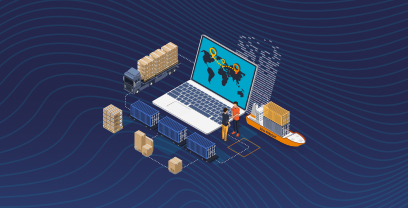



Supply chain managers often face a frustrating imbalance — some shelves sit empty from stockouts while others overflow with slow-moving inventory. It’s a clear sign that manual processes and disconnected data make it difficult to match supply with real demand.
Vendor managed inventory (VMI), or supplier managed inventory, solves this problem by shifting the responsibility of replenishing supply to suppliers, who use real-time consumption data to restock automatically. VMI aligns supply with demand to help delays and create a more efficient flow of goods.
The VMI-OS Framework provides a practical model for VMI success. It’s built on four pillars – Governance, Finance, Integration, and Performance – to help organizations implement VMI effectively.
In this blog, we explore how vendor managed inventory works, what makes it different from traditional ordering models, and how to apply the VMI-OS Framework to achieve replenishment orders automation, all while reducing carrying costs and enabling stronger supplier collaboration.
Key Takeaways
- The vendor managed inventory process shifts replenishment responsibility to suppliers, who use real-time consumption data and min/max thresholds to automate restocking.
- Ownership in supplier managed inventory transfers on delivery or sale, improving cash flow and accountability.
- VMI enhances working capital through faster turnover, lower carrying costs, and more accurate demand forecasting.
- The VMI-OS governance checklist outlines roles, KPIs, and data-sharing rules for rapid deployment within any procurement platform.
Inventory Ownership Gaps Create Procurement’s Biggest Operational Blind Spots
Traditional inventory management may look orderly, but legacy procurement systems and siloed spreadsheets create supply chain visibility gaps that create chaos. Without synchronized data, manual procurement issues can lead to stockouts or excess inventory.
The result is predictable: halted production, inaccessible working capital, and strained supplier relationships result from buyers, suppliers, and systems working in isolation.
With 71% of procurement time spent on transactional work, automation is overdue. The VMI-OS Framework brings governance, technology, and accountability to the process.
Static Min/Max Thresholds Fail When Demand Patterns Shift Constantly
Traditional inventory systems rely on fixed minimum/maximum levels that rarely change, and ignore demand volatility, lead time shifts, and seasonal spikes. When you base reorder points on outdated averages, demand forecasting accuracy drops. Your suppliers lack live data and can’t anticipate changes.
This misalignment results in understocking, excess buying, or disruptions that weaken supplier risk management. Modern strategic sourcing platforms can help by dynamically adjusting thresholds based on real-time consumption and shared forecasts, improving overall stability.
Excess Safety Stock Locks Capital in Storage Fees, Insurance, and Obsolescence Risk
Excess inventory can silently drain profitability – up to 20–30% of total inventory value annually. While CFOs push to reduce stock, procurement fears stockouts and service disruptions. With VMI in place, organizations gain data-driven inventory control and can align cash flow with actual demand.
For example, Ivalua’s spend analytics dashboard provides real-time spend analysis, showing carrying cost drivers and projected ROI from VMI adoption. With shared visibility, finance and procurement can quantify savings and reinvest freed capital into strategic growth.
In the next sections, we take a closer look at the VMI framework and how it functions.
What Is Vendor Managed Inventory: Suppliers Monitor Stock and Make Replenishment Decisions Autonomously
VMI is a collaborative model where suppliers manage buyer stock levels using real-time data and agreed minimum and maximum thresholds. Suppliers track inventory and decide when it’s time to replenish supplies, then ship the goods automatically. This eliminates much of the manual work that is typically required.
Through vendor managed inventory software or integrations, suppliers can receive live inventory updates and maintain optimal levels. In consignment, buyers own the stock only when consumed. By contract, in standard VMI, ownership transfers at shipment or receipt.
A typical VMI replenishment cycle involves suppliers accessing data using a portal or electronic data interchange (EDI) system. Replenishments are triggered automatically when thresholds are met or exceeded, and all that’s required are clear vendor managed inventory agreements and KPP tracking. he
Supplier Management solutions like Ivalua’s Source-to-Pay (S2P) platform enable this automated data exchange.
The VMI-OS Framework: A Structured Path to Implementation
The VMI-OS Framework defines four essential components that align operational, financial, and technological readiness:
- Governance: Defines SLAs, min/max thresholds, and exception handling protocols.
- Finance: Models cash-conversion-cycle (CCC) improvements and clarifies ownership variants.
- Integration: Outlines the S2P architecture, electronic data interchange (EDI) or API setup, and system roles.
- Performance: Establishes KPI dashboards, audit trails, and quarterly review cycles.
We’ll explore each pillar in detail in the following sections
How Vendor Managed Inventory Systems Differ from Consignment and Co-Managed Models
If you’re evaluating VMI vs. consignment or exploring co-managed inventory models, be sure to consider ownership, replenishment control, and financial implications. Each model supports different operational goals and risk profiles across direct vs. indirect procurement categories.
| Model | Who Owns the Inventory | Who Decides Replenishment | When Payment Occurs | Ideal Use Cases |
| Vendor Managed Inventory (VMI) | Buyer owns inventory upon delivery | Supplier decides timing and quantity based on data | On shipment or receipt | High-volume, predictable demand where suppliers can optimize replenishment efficiency |
| Consignment Inventory | Supplier retains ownership until goods are consumed | Supplier typically manages stock levels with buyer visibility | On consumption or withdrawal | High-value, low-turnover goods where buyers seek to minimize working capital exposure |
| Co-Managed Inventory (CMI) | Shared ownership or clearly defined split | Buyer and supplier jointly plan forecasts and replenishment | Based on agreed milestones or drawdowns | Complex or volatile demand environments requiring close collaboration and flexible adjustments |
Consignment models suit slow-moving or high-cost components, helping buyers reduce working capital exposure. VMI works best for stable, high-volume demand, where suppliers manage replenishment directly. Co-managed inventory supports organizations with variable demand, combining shared decisions and supplier expertise.
The S2P Integration Architecture Behind How Vendor Managed Inventory Works
A VMI supplier portal workflow in S2P creates a continuous, data-driven loop that connects buyers and suppliers through automation and shared visibility.
In the Supplier Portal, users access forecasts, shipment schedules, and stock data. During Forecast and Inventory Collaboration, supply aligns with demand using point of sale data and consumption trends.
As goods move, real time data-sharing triggers replenishment once thresholds are reached. The system generates orders, processes Purchase-to-Pay (P2P) receipts, and reconciles invoices all automatically, providing full VMI purchase-to-pay visibility examples across forecast accuracy, responsiveness, and stock health.
This workflow depends on bidirectional integration. Buyers share forecasts and consumption data through the EDI, while suppliers return lead times and shipment plans via the API. Whereas EDI fits high-volume legacy systems, API supports agile Source-to-Pay tools with faster synchronization.
Now let’s take a look at how VMI governance can help prevent misalignment between supply and demand.
VMI Governance Contracts and SLAs Prevent Disputes Over Stockouts and Excess Inventory
Many VMI pilots start informally, leading to disputes over accuracy, delivery, or payment. Strong governance within the VMI-OS Framework requires a formal SLA that defines roles, responsibilities, and escalation paths.
SLAs set minimum and maximum thresholds, determine the update schedule, and outline exceptions for demand spikes or system outages. KPIs such as fill rate, OTIF, and forecast accuracy must be measurable and enforceable.
To align with VMI best practices, SLAs should outline corrective actions and renegotiation clauses. Governance must also cover audit rights, confidentiality, and termination terms to protect both parties and support continuous improvement.
The VMI Contract Checklist: Eight SLA Components That Prevent Implementation Failures
The following framework outlines recommended VMI implementation steps for sustainable results:
| Section | Purpose & Example Fields | Illustrative Example Values |
| Inventory Ownership | Defines who owns inventory at each stage (in transit, at dock, on shelf). | Supplier owns until delivery; buyer assumes ownership at receipt. |
| Min/Max Thresholds | Establishes calculation logic and update cadence. | Min = 3 days’ demand; Max = 10 days; recalculated monthly using rolling averages. |
| Data Sharing | Specifies frequency, format, and data security protocols. | Daily XML or API data transfer; encrypted channel; shared via supplier portal. |
| Replenishment Rules | Outlines order generation, lead time targets, and expedite criteria. | Standard lead time = 7 days; expedite if forecast deviation >20%. |
| Performance Metrics | Defines key performance metrics KPIs to track service quality. | Fill rate ≥ 98%; Stockout frequency < 1 per quarter; OTIF ≥ 95%. |
| Financial Terms | Clarifies pricing model, payment timing, and penalty conditions. | Payment due 30 days post-delivery; 1% rebate for fill rate >99%. |
| Exception Handling | Captures response rules for demand spikes or system downtime. | Notify within 4 hours; deploy backup stock from regional DC. |
| Review Cadence | Sets schedule for governance reviews and renegotiations. | Monthly KPI dashboard; quarterly SLA review and contract update. |
This checklist should be a living governance asset that you revisit as conditions change. You should also embed it in digital workflows and contract management tools to help ensure accountability, transparency, and ongoing performance improvement.
Exception Protocols When Suppliers Hit Capacity Constraints or Demand Surges
SLAs should define escalation steps for supplier capacity issues, surges in demand, and system failures.
- If raw material shortages occur, suppliers notify buyers within set timeframes.
- During sudden demand spikes, automatic replenishment rules adjust thresholds or trigger partial fulfillment.
- For EDI or system outages, predefined manual workflows ensure continuity.
If suppliers fail to provide early warnings, penalties should apply. Mature VMI programs also include buffer stock and dual sourcing to minimize the dependence on any one supplier.
Benefits of Vendor Managed Inventory: Working Capital Improvements Through Reduced Days Sales in Inventory
A well-executed VMI cash conversion cycle model accelerates liquidity by reducing Days Sales in Inventory (DSI) – the time capital remains tied up in unsold stock.
The Cash Conversion Cycle (CCC) formula captures this dynamic:
CCC = DSI + Days Sales Outstanding (DSO) – Days Payables Outstanding (DPO)
Traditional inventory management extends DSI, because buyers maintain high safety stock to protect against uncertainty. VMI, on the other hand, allows suppliers to optimize replenishment based on real-time consumption data, trimming excess stock without jeopardizing service levels.
According to a 2023 study, implementing a combined VMI + Consignment Stock model reduced total supply chain cost by 14.8% compared to operations without these policies.
Two VMI variants deliver different but complementary impacts. The tradeoff lies in pricing and volume commitments:
| Model | Inventory Ownership | Effect on DSI | Effect on DPO | CCC Impact |
| Standard VMI | Buyer owns upon delivery; supplier manages replenishment | Moderate DSI reduction through better forecasting | Neutral DPO (buyer still pays on receipt) | Improves CCC via faster turnover |
| Consigned VMI | Buyer owns only upon consumption | Maximum DSI reduction; inventory remains supplier’s asset | Higher DPO (payment delayed until use) | Strongest CCC improvement, freeing significant working capital |
As you can see, consigned VMI delivers superior cash flow by delaying ownership, but suppliers may negotiate higher unit prices or minimum purchase volumes to offset holding costs.
For example, say a manufacturer holding $10 million in average inventory at 60 DSI reduces DSI to 45 through VMI. This frees up $2.5 million in working capital. If converted to Consigned VMI –which cuts DSI to 30 days – an additional $2.5 million of capital is released, and can be redirected toward growth, debt reduction, or innovation.
Standard vs. Consigned VMI Models: Comparing Ownership Structures for Cash Flow Impact
While both VMI and consignment models rely on supplier-led replenishment, their ownership and payment structures influence working capital, pricing, and the overall cash conversion cycle.
| Model Type | Inventory Ownership | Payment Timing | DSI Impact | DPO Impact | CCC Impact | Typical Unit Price | Best Use Case |
| Standard VMI | Buyer owns inventory upon delivery | Payment on receipt or short terms | Moderate improvement as safety stock decreases | Neutral — buyer pays on delivery | Improves CCC by reducing DSI but not DPO | Standard market pricing | High-turnover, predictable demand commodities where automation and efficiency are key |
| Consigned VMI | Supplier retains ownership until consumption | Payment post-use or periodic settlement | Significant improvement — inventory remains supplier’s asset until used | Higher DPO as payments are deferred | Strongest CCC improvement due to reduced DSI and delayed payment | May include price premium or volume commitment | High-value, slow-moving goods or components where capital efficiency is critical |
Integrating sustainability, resiliency, and agility requirements into modern VMI frameworks is the next generation of Supply Chain Risk Management strategy.
Building the VMI ROI Calculator Finance Teams Need for Budget Approval
A well-structured VMI ROI template for CFO evaluation combines operational and financial inputs to calculate tangible benefits and payback periods. Here are the inputs, outputs, and costs associated with an evaluation.
Inputs:
- Current DSI: Average number of days inventory is held today.
- Target DSI under VMI: Projected reduction based on supplier-managed replenishment
- Annual Inventory Spend: Total inventory value impacted by VMI
- Carrying Cost Percentage: Typically 20–30% of inventory value, representing storage, insurance, and obsolescence
- Labor Hours on Manual Ordering: Time procurement staff currently spend managing reorders
- Hourly Procurement Staff Cost: Used to calculate total labor savings
Outputs:
- Working Capital Freed: (Current DSI – Target DSI) ÷ 365 × Annual Inventory Spend
- Carrying Cost Savings: Working Capital Freed × Carrying Cost %
- Labor Savings: Labor hours saved × hourly rate
- Total Annual Benefit: Sum of all benefits above
Costs include one-time VMI software setup and supplier onboarding, plus ongoing EDI/API fees and potential pricing adjustments to compensate suppliers for added responsibilities.
You can calculate the payback with this equation:
Total Implementation Cost ÷ Total Annual Benefit = Payback Period (in years)
Note that this template provides directional estimates; actual results depend on scale, supplier readiness, and integration depth.
VMI Implementation in Five Phases Without Disrupting Existing S2P Workflows
Many VMI programs fail because they scale too quickly without first validating assumptions.
A smarter approach is a 90-day VMI pilot program with one or two high-volume, collaborative suppliers to test performance, confirm ROI, and refine governance before expansion.
Here are five steps for a structured VMI program rollout:
- Supplier Selection: Choose partners with strong data, delivery, and collaboration maturity.
- Contract & SLA Development: Define roles, thresholds, and KPIs using a governance checklist.
- Technical Integration: Set up vendor portal access and EDI/API links to sync ERP and S2P data.
- Pilot Launch and Monitoring: Run one category, track KPIs daily, and review weekly.
- Scale and Optimize: Expand to more suppliers and categories once stability is proven.
An integrated S2P platform such as Ivalua is vital to making this work, giving suppliers real-time visibility and automated replenishment workflows.
The 90-Day VMI Pilot: Supplier Selection Criteria and Go/No-Go Decision Framework
A 90-day pilot that follows VMI best practices can validate data accuracy, performance, and replenishment in real operations. Here’s a breakdown:
- Days 1–30: Sign the SLA, configure the supplier portal, load historical data, and train teams on the VMI replenishment cycle
- Days 31–60: Supplier monitors inventory and executes replenishment within agreed thresholds; buyer tracks fill rates and stockouts daily
- Days 61–90: Compare KPIs to baseline, diagnose issues like data quality or supplier capacity, and assess readiness to scale
Research shows VMI improves resilience and stability under demand volatility. Ideal pilot suppliers have high transaction volume, strong IT integration, and a collaborative mindset.
Embedding VMI Replenishment Logic into Procurement Platforms Without Custom Development
Using vendor managed inventory software, suppliers can view stock, forecasts, and transactions in real time, propose replenishment that fall within minimum/maximum thresholds, and trigger automatic POs or consignment fulfillment.
The P2P workflow can then match receipts automatically, ensuring transparency and traceability.
Proactive alerts flag low stock or over-shipments, driving real-time VMI P2P visibility examples across procurement teams.
Next we examine how a well-designed performance dashboard can help you track KPIs accurately.
VMI Performance Dashboards Prevent the Slow Drift from Optimization to Stockouts
The Performance component of the VMI-OS framework establishes a structured cadence of monitoring and review to maintain alignment between buyer and supplier goals. A monthly inventory visibility dashboard, paired with quarterly business reviews, can help ensure that responsiveness and efficiency improve over time.
Here are five core performance metrics KPIs to include on your dashboard:
- Fill Rate: Percentage of orders delivered on time and in full
- Stockout Frequency: Number of days a product is unavailable per quarter
- Inventory Turnover Rate: Cost of Goods Sold divided by average inventory
- Forecast Accuracy: Comparison of actual consumption vs. forecasted demand
- OTIF Delivery: On-Time In-Full shipments
Each KPI must align with SLA thresholds and trigger corrective actions when performance drops. The monthly dashboard compares current vs. target metrics with trend indicators, while quarterly reviews analyze root causes and update SLA terms.
Six Dashboard Sections That Flag VMI Issues Before Crises Develop
Your VMI dashboard should be generated automatically from your S2P platform via real-time data sharing and secure vendor portal access. Be sure it covers your KPIs, an overview of inventory health, and recommended corrective actions:
| Section | Purpose & Key Features |
| Inventory Health | Displays current vs. min/max inventory for top SKUs in a color-coded chart (green = optimal, yellow = low, red = critical). Helps procurement identify imbalances at a glance. |
| Fill Rate by Supplier | Tabular view of supplier fill rate percentages with trend arrows showing month-over-month changes. Highlights suppliers performing above or below SLA thresholds. |
| Stockout Log | Automatically generated list of all stockout incidents, root causes (e.g., forecast error, late shipment), and resolution time. Enables accountability and faster corrective action. |
| Forecast Accuracy | Side-by-side bar or line chart comparing forecasted vs. actual consumption to identify planning variances and recalibrate forecast and demand signals. |
| OTIF Performance | Tracks on-time, in-full delivery rates by supplier, visualized as progress bars or scorecards for quick health assessment. |
| Action Items | Dynamic task list capturing open issues, pending approvals, and next steps from monthly or quarterly reviews. Includes responsible owners and due dates. |
Quarterly VMI Reviews Drive Continuous Improvement Through Collaborative Root Cause Analysis
Once your dashboard’s in place, perform quarterly reviews to ensure alignment, agility, and sustained performance across the vendor managed inventory program lifecycle:
- KPI Review: Evaluate fill rate, stockout frequency, inventory turnover rate, and OTIF. Celebrate successes, then identify where performance falls short.
- Root Cause Analysis: For each KPI miss, determine whether data quality, supplier capacity, or process inefficiency caused the deviation to ensure targeted action.
- Demand Change Discussion: Review evolving demand patterns, then adjust min/max thresholds or SKUs under management to maintain agility and service stability.
- SLA Update and Continuous Improvement: Revisit SLAs to recalibrate thresholds, delivery targets, pricing, or cycle count frequency based on recent performance.
Research shows that accounting for deterioration and defect rates in VMI models significantly impacts lot sizes and replenishment cycles. This affects profitability and service levels. Regular reviews enable continuous procurement process improvement, aligning buyers and suppliers through data-driven collaboration.
Next, we explain how Ivalua can equip you with everything you need to deploy and manage a VMI program.
Ivalua: The Complete Platform for Vendor Managed Inventory
Ivalua supports VMI success with the following capabilities:
- Automation & Visibility: Replaces manual workflows with real-time data sharing, automated replenishment, and end-to-end visibility across buyers and suppliers.
- Forecast Collaboration: Enables continuous demand signal exchange, proactive alerts, and synchronized planning to reduce stockouts and waste.
- Configurable Workflows: Supports standard, consignment, and co-managed inventory models, aligning ownership, thresholds, and risk by category or region.
- Governance & Compliance: Integrates contract lifecycle management to automate SLA tracking, KPI monitoring, and corrective actions.
- Risk Management: Detects supplier capacity issues early, automates exception handling, and recommends alternate sourcing to maintain supply continuity.
- Financial Intelligence: Provides built-in inventory visibility dashboards to model working capital impact, track CCC improvements, and quantify ROI before rollout.
- AI-Powered Adaptability: No-code rule configuration, anomaly detection, and full P2P integration streamline performance while maintaining audit-ready transparency.
- Scalable Deployment: Pre-configured templates, supplier readiness assessments, and pilot tools ensure low-risk, high-impact implementation.
With Ivalua, organizations transform VMI from a manual coordination task into a predictive, data-driven ecosystem. Now we explore how one Ivalua customer did just that.
Honeywell Consolidates Global Supplier Data Across 100,000 Employees
Honeywell, a global manufacturing leader with 100,000 employees was looking to gain enterprise-wide visibility, and standardize supplier enablement and inventory replenishment. They turned to Ivalua to consolidate supplier information, streamline approvals, and improve spend insight.
By unifying supplier portals and inventory collaboration, Ivalua provided real-time supplier performance visibility. Integration across procurement, inventory, and third-party logistics partners improved coordination and replenishment accuracy. The result was a unified, data-driven ecosystem that standardizes governance, enhances collaboration, and automates replenishment.
“Ivalua allows us to meet our ever-changing business needs across all of our organizations, and deploy solutions both on our regionality and the needs of our business users going forward.”
–Steven Velte, Senior Director of Procurement Transformation
Vendor Managed Inventory Transforms Reactive Ordering into Proactive Partnership
Recent research on three-layer VMI models found that when manufacturers coordinate the VMI process centrally, overall joint profit increases and benefit distribution across the chain improves – proof that centralized leadership and structured governance enable VMI success.
The VMI-OS framework for Governance, Finance, Integration, and Performance provides a clear, measurable blueprint for success, providing benefits like lower inventory carrying costs, higher fill rates, and stronger supplier partnerships that boost agility.
Modern vendor management solutions like Ivalua’s procurement platform offer configurable VMI capabilities, supplier portals, and real-time performance monitoring, to help you take advantage of proactive, automated collaboration.
Modern Vendor Management That Drives Capital
FAQs About Vendor Managed Inventory
Vendor managed inventory is a supply chain model where the supplier monitors inventory levels and makes autonomous replenishment decisions using real-time consumption data and agreed min/max thresholds.
Unlike traditional systems with buyer-initiated purchase orders, VMI shifts day-to-day stock responsibility to the supplier. This creates a more proactive, data-driven replenishment process that reduces stockouts and manual ordering effort.
Key vendor managed inventory benefits include reduced stockouts, improved inventory turnover, and lower inventory carrying costs, which directly support working capital improvements.
VMI increases service levels by ensuring the right inventory is available when needed, without excess manual intervention. It also strengthens supplier relationships through shared visibility and coordinated planning.
Vendor managed inventory software costs vary widely based on scale and integration needs, typically ranging from $10,000–$50,000 for mid-market solutions and $75,000–$250,000+ for enterprise deployments.
Pricing often depends on the number of sites, connections, and data integrations. Many organizations achieve payback within 12–18 months thanks to inventory cost savings and operational efficiency gains.