


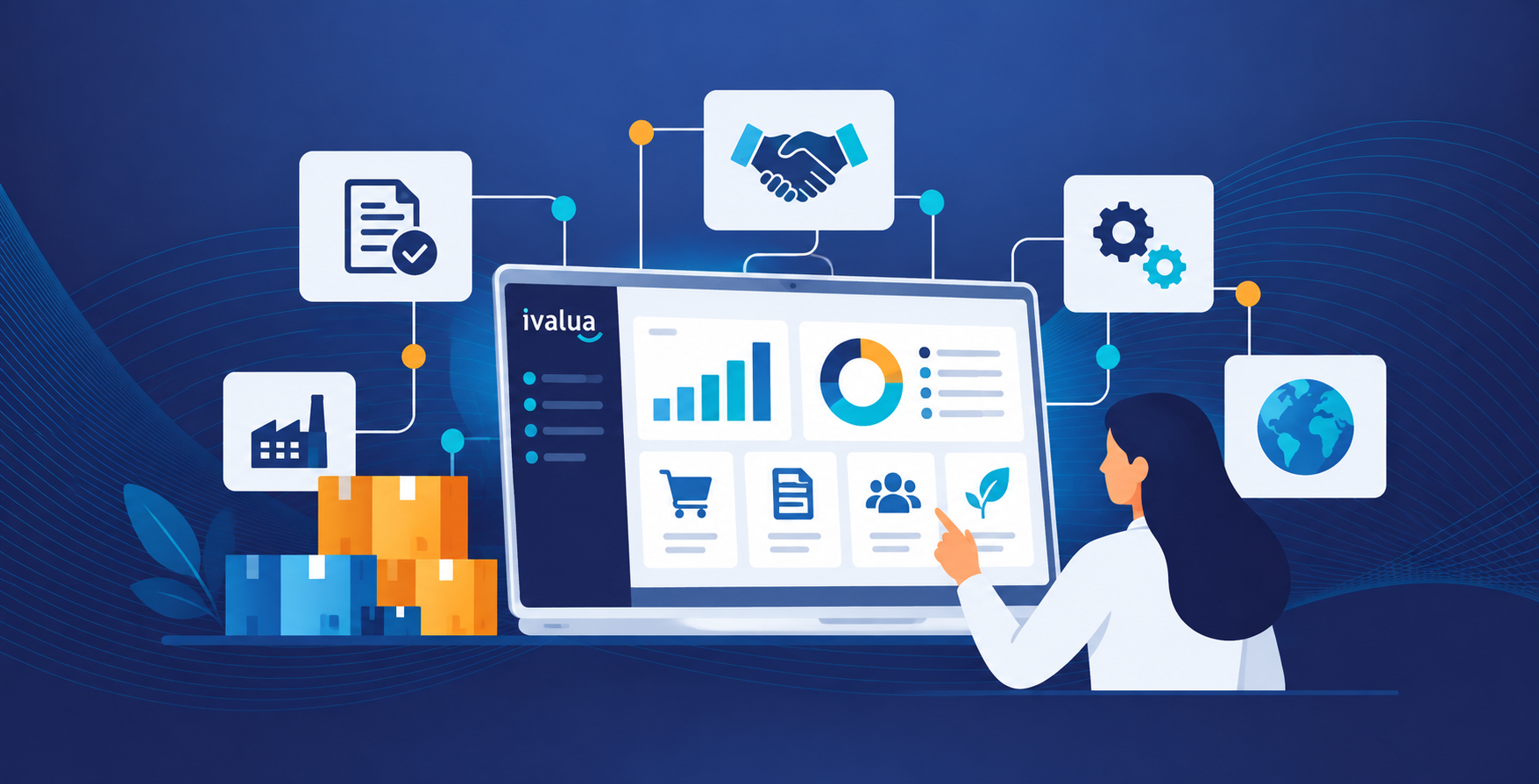
The best Procure-to-Pay (P2P) software has evolved beyond simply digitizing purchasing and payment processes. Today’s leading platforms connect requisitions, purchasing, receiving, inventory, invoicing, and payments while helping organizations improve spend visibility, strengthen compliance, and increasingly apply AI across the P2P lifecycle.
In this guide, we compare the ten leading Procure-to-Pay solutions for 2026 using the P2P Platform Maturity Spectrum; a framework that evaluates each platform’s ability to support AI-driven procurement as enterprise needs evolve.
Key Takeaways
- The P2P Platform Maturity Framework compares platforms based on short- and long-term capabilities.
- Whether or not a platform features unified data and architecture determines how well a platform can support future AI.
- Platforms that connects well to upstream processes like supplier management, contract management and sourcing make for a longer term solution that procurement can truly level up on.
The Procure-to-Pay Platform Maturity Evaluation Framework
Procure-to-Pay (P2P) software automates the purchasing lifecycle from the original purchase request through supplier payment. Automated P2P workflows replace manual, paper-based processes with standardized digital workflows.
As procurement teams seek to improve efficiency and adopt more AI-driven workflows, choosing the right P2P solution requires looking beyond basic process automation. McKinsey estimates that technology could improve procurement efficiency by 25–40%.
Realizing those gains, however, depends on more than individual features. Platform architecture, operational maturity, and AI readiness can determine how effectively a solution supports procurement as requirements evolve.
The P2P Platform Maturity Spectrum evaluates these capabilities across four tiers, helping organizations assess how well a platform can support both current needs and future procurement strategies.
The table below outlines the four tiers of the P2P Platform Maturity Spectrum.
| Tier | Description | Best For |
| Tier 1: Transactional P2P | Automates requisitions, purchase orders, invoices, and payments. Limited supplier data with little upstream context. | Mid-market organizations replacing spreadsheets and email approvals. |
| Tier 2: Connected P2P | Integrates with ERP and adds supplier management, compliance workflows, and basic analytics. | Growing enterprises consolidating multiple procurement tools. |
| Tier 3: Intelligent P2P | Adds embedded AI for spend classification, invoice matching, anomaly detection, and guided buying, but AI remains largely confined to P2P data. | Enterprises scaling procurement automation. |
| Tier 4: Full-Lifecycle P2P (with option to expand into S2P) ) | P2P operates within a unified Source-to-Pay platform where AI can access sourcing, contracts, suppliers, and spend data to support end-to-end, agentic workflows. | Organizations transforming procurement into a strategic function through enterprise-scale procurement automation and governed agentic AI. |
Comparing The 10 Best Procure-to-Pay (P2P) Solutions in 2026
Choosing the right platform starts with knowing where each one actually sits on the maturity curve. We evaluated the following 10 platforms using the P2P Platform Maturity Spectrum, along with each vendor’s core strengths, AI approach, and fit for enterprise complexity.
The table below gives you that view at a glance; the full breakdowns that follow go deeper on positioning, AI approach, data architecture, and what to watch for with each platform.
| Platform | Maturity Tier | Best For | Pros | Cons |
| Ivalua | Tier 4 | Enterprises over $1B in revenue. Any category of spend. , | No-code flexibility to tailor workflows, rules.; Connects P2P to contracts & supplier data to realize value; free supplier portal | More than simple P2P; full value depends on upstream S2P adoption |
| Coupa | Tier 3 | Mid to large enterprises, mostly indirect spend | Guided buying; fraud detection; consumer-friendly UX | Restrictive for direct spend/complex approvals; no unified data model due to acquisitions; supplier network fees |
| SAP Ariba | Tier 2–3 | Enterprises standardized on SAP | Seamless S/4HANA integration; strong compliance/audit. SAP business network | Fragmented data across modules; limited flexibility; supplier onboarding friction |
| GEP | Tier 2–3 | Fortune 500/Global 2000 wanting software + consulting | Broad S2P coverage; strong analytics; deep Microsoft integration | Verify AI depth in P2P and AP vs. analytics; check for reconciliation gaps |
| JAGGAER One | Tier 2–3 | Manufacturing, higher ed, public sector, healthcare | Direct-procurement fit; vertical-specific solutions; strong analytics | Acquisition history left some modules/logins separate; added costs post-go-live |
| Basware | Tier 2 | High invoice volume across many countries | Strong invoice matching; e-invoicing compliance in 50+ countries | Narrow beyond AP — needs added systems for sourcing/contracts |
| Medius | Tier 2 | Finance teams focused on invoice/payment automation | Strong AP automation | Procurement module less mature than AP |
| Zycus | Tier 2–3 | Mid to large organizations | Modern UX; strong AI (Merlin); broad automation | Depends on data quality; some integration gaps reported |
| Oracle Fusion Cloud Procurement | Tier 2–3 | Orgs already on Oracle Cloud ERP | Tight ERP/Financials integration | AI strongest in-ecosystem; heavy lift for mixed-ERP orgs |
| Procurify | Tier 1 | Mid-market orgs on NetSuite, Sage Intacct, etc. | Intuitive, fast deployment; strong mobile approvals | No sourcing/CLM; may need to migrate as org matures |
Here’s a detailed look at the best Procure-to-Pay software, starting with Ivalua, a Tier 4 solution.
1) Ivalua
Platform Maturity Tier: Tier 4
Overview: Ivalua’s Procure-to-Pay solution unifies purchasing, invoicing, receiving, inventory and payments on one platform. Ivalua approach is centered on carrying the commercial context established during sourcing into downstream transactions. Its underlying data model preserves negotiated terms and pricing across purchasing, invoicing, and payments, while compliance rules and supplier risk controls are applied upfront at the point of order rather than retroactively.
Best For: Enterprises over $1B in revenue looking to improve adoption and compliance to on contract spend, evolving buying scenarios, and a goal of eliminating maverick spend by connecting P2P directly to negotiated contracts and supplier risk data rather than running P2P as a standalone tool.
Core Strengths:
- AI coworker to help any user find and buy what they need all via a conversation
- Purpose-built to absorb P2P exceptions — tail spend, one-time vendors, non-PO invoices, autonomous AP, and urgent payments through no-code/low-code configurability, rather than forcing every scenario into a rigid core process.
- Intake offering to capture demand for end-users simply looking to buying something, add a new vendor, review a contract, request a virtual card and more. No need to know the process, Ivalua does that automatically.
- Configurable buying channels adapt to how the business actually buys with budget checks embedded directly in the P2P workflow for real-time spend control.
- Pricing, contracts, POs, invoices, and receipts sit in one data model, so procurement-to-finance handoffs close automatically. E.g., Ivalua customer FNAC-Darty processes most invoices touchless.
- The supplier portal (free to suppliers, 95%+ adoption) cuts payment-inquiry volume by giving suppliers self-service visibility into PO and invoice status.
- The intuitive interface requires no training ensuring maximum user adoption and continuous, organization-wide compliance at all times.
AI Approach: Ivalua’s unified architecture enables agentic AI without creating disconnected AI agents or fragmented governance. Ivalua’s Intelligent Virtual Agent (IVA) is embedded across the entire platform and can execute workflows across sourcing, supplier management, contracts, procurement, and accounts payable from day one. IVA can guide requisitioners to the right buying channel, flag policy or budget issues at the point of requisition rather than in a later audit, and support invoice coding and duplicate/exception detection.
What to watch for: Ivalua is designed for organizations where purchasing needs extend beyond simple, catalog transactions. Its breadth is intended to accommodate evolving commercial and buying requirements while keeping the user experience simple for the business.
Implementation: Implementations are typically phased, beginning with high-value capabilities and expanding over time. Customers often begin with supplier management, Sourcing, contract management, AP automation, or eProcurement modules before rolling out the full Source-to-Pay suite as their business needs evolve.
Timelines scale with scope: Maxim Healthcare went live with P2P in 8 weeks, while full S2P deployments ranged between 8-10 months across Forrester’s interviewees.
Pricing: Enterprise pricing is customized based on the modules deployed, user counts, and organizational requirements.
| Call to Action Block: Access our on-demand demo library to see Ivalua’s P2P Solution in action: Watch P2P Demo |
2) Coupa
Platform Maturity Tier: Tier 3
Overview: Coupa is a cloud-based Business Spend Management platform built around a large buyer/supplier network and community-sourced spend data, with indirect procurement and guided buying as its core strength.
Best For: Enterprises with primarily indirect spend who want prescriptive, guided-buying workflows and are comfortable operating within Coupa’s standardized processes and Open Business Network.
Core Strengths:
- Guided buying and policy-based purchasing steer employees toward compliant purchases through a consumer-friendly interface
- SpendGuard fraud detection and community benchmarking draw on Coupa’s aggregated buyer/supplier network data
- Strong fit for indirect procurement specifically, backed by a large 10M+ buyer/supplier network
AI Approach: Coupa’s AI focuses on spend classification, invoice matching, guided buying recommendations, and purchasing insights. While effective within the P2P process, it has a constrained capacity. It is not able to translate the entire business context from a contract into a P2P transaction.
What to Watch For: Coupa’s prescriptive workflows are well-suited to standardized indirect procurement but can become restrictive for complex enterprise scenarios, including direct materials, non-PO invoices, and multi-level approval processes. Organizations with unique business requirements may require vendor assistance for customization.
Implementation: Complex ERP environments often require custom integrations that can increase implementation effort and total cost of ownership. Suppliers must also accept the Coupa Open Business Network terms to transact, with certain payment services carrying associated fees.
Pricing: Enterprise pricing is customized based on the modules deployed and organizational requirements.
3) SAP Ariba
Platform Maturity Tier: Tier 2–3
Overview: SAP Ariba is a cloud-based procurement platform built to extend SAP’s ERP core that allows sourcing, contract, and supplier data to flow directly into S/4HANA rather than sitting in a separate system.
Best For: Enterprise organizations already standardized on SAP S/4HANA or SAP ECC that want procurement embedded in their existing SAP landscape rather than integrated from a separate best-of-breed vendor.
Core Strengths:
- Broad Source-to-Pay capabilities in a single cloud-native platform
- Strong analytics and reporting, with tight integration into the Microsoft ecosystem
- Competitive pricing relative to other full-suite S2P platforms
AI Approach: Joule delivers AI recommendations within SAP workflows, but its value depends largely on SAP ecosystem data, limiting cross-platform intelligence.
What to Watch For: Data can be fragmented across sourcing, contracts, and procurement modules, limiting end-to-end visibility and future agentic AI capabilities. Workflow flexibility is also more limited than purpose-built procurement platforms.
Implementation: Complex ERP environments often require custom integrations, especially outside SAP. Supplier onboarding through the SAP Business Network can also create more friction than private, fee-free supplier portals.
Pricing: Enterprise pricing is customized based on the deployed modules, user counts, and organizational requirements.
4) GEP
Platform Maturity Tier: Tier 2–3
Overview: GEP is a cloud-native, Source-to-Pay platform unifying upstream sourcing and downstream procurement in one system, aimed at midsized to large enterprises.
Best For: Midsized to large enterprises looking for broad Source-to-Pay coverage paired with strategy consulting and managed services.
Core Strengths:
- Broad Source-to-Pay capabilities in a single cloud-native platform
- Strong analytics and reporting, with tight integration into the Microsoft ecosystem
- Competitive pricing relative to other full-suite S2P platforms
AI Approach: GEP Qi embeds AI across the platform, but buyers should evaluate how deeply it supports transactional P2P workflows versus analytics. Also evaluate if AI can act across sourcing, contracts, and procurement on shared data.
What to Watch For: Validate support for complex workflows, multi-business-unit environments, and all-spend procurement. Confirm that supplier and sourcing data flow seamlessly into P2P without reconciliation gaps.
Implementation: Assess scalability across multiple ERPs and high transaction volumes, along with data residency and multi-instance requirements for large enterprises.
Pricing: Enterprise pricing is customized based on deployed modules, users, and organizational requirements.
5) JAGGAER One
Platform Maturity Tier: Tier 2–3
Overview: JAGGAER One is a Source-to-Pay platform built around vertical-specific configurations, with particular depth in direct materials procurement for regulated and complex industries.
Best For: Large, complex organizations in manufacturing, higher education, public sector, healthcare, and life sciences that need vertical-specific procurement configurations.
Core Strengths:
- Deep direct-procurement capabilities, including PPAP, 8D, and supplier quality workflows
- Industry-specific solutions for manufacturing, life sciences, higher education, and public sector
- Strong sourcing and spend analytics
AI Approach: AI capabilities are expanding, particularly in supplier intelligence. However, you should verify whether AI operates across a unified data model or separate sourcing and P2P modules.
What to Watch For: The platform’s acquisition history has left some customers managing separate modules, logins, and supplier records. This may cause data gaps between sourcing and procurement. Be sure to evaluate the product roadmap in light of recent acquisitions.
Implementation: Review implementation scope carefully, as workflow configuration and services may add costs after go-live. You should also assess partner availability and implementation capacity for complex deployments.
Pricing: Custom quotes based on modules, user count, and deployment scope — no published pricing.
6) Basware
Platform Maturity Tier: Tier 2
Overview: Basware is an invoice-centric platform focused on AP automation and global e-invoicing compliance, rather than a full source-to-pay suite.
Best For: Enterprise organizations whose primary pain point is invoice processing with multi-country e-invoicing/tax compliance, but not full upstream sourcing or contract management.
Core Strengths:
- AI-powered invoice processing with automated 3-way matching
- Global e-invoicing compliance across more than 50 countries
- Workflow engine built for complex, high-volume invoice approvals
AI Approach: AI automates invoice capture, coding, matching, and anomaly detection, delivering high levels of touchless AP automation. AI is focused on accounts payable.
What to Watch for: Basware’s procurement capabilities are narrower than full S2P platforms. If you also require sourcing, contracts, or supplier management, you’ll need additional systems. Some users also report supplier onboarding and invoice submission friction.
Implementation: Implementation can be resource-intensive, with a noticeable learning curve and specialized ERP integration requirements.
Pricing: Custom pricing based on invoice volume, country coverage, and modules (e-invoicing network, AP automation) selected.
7) Medius
Platform Maturity Tier: Tier 2
Overview: Medius is an AP-first spend management platform — invoice capture, coding, and payment automation are the core product, with procurement functionality layered on top rather than the other way around.
Best For: Mid-market and enterprise organizations whose finance teams primary need is high-volume invoice processing and payment automation, rather than end-to-end strategic sourcing.
Core Strengths:
- AI-powered invoice capture, automated coding, approvals, and fraud detection
- Robust payment automation alongside AP workflows
AI Approach: Medius Copilot applies AI to invoice extraction, coding, approvals, and fraud detection. Its strengths are concentrated in AP and payments rather than sourcing, supplier management, or contract intelligence.
What to Watch For: The procurement module is less mature than the AP functionality, with limited flexibility for purchasing workflows and supplier onboarding. If you need end-to-end S2P capabilities, you may outgrow the platform.
Implementation: Initial ERP integration and user adoption can require additional effort. Some users also report a steeper learning curve for new teams.
Pricing: Tiered subscription model (Professional and Enterprise packages), with pricing scaling by modules and invoice volume.
8) Zycus
Platform Maturity Tier: Tier 2–3
Overview: Zycus is a procurement platform built around an “intake-to-outcomes” model, using AI agents across intake, negotiation, and analytics as its primary differentiator rather than breadth of traditional S2P modules.
Best For: Enterprise organizations prioritizing AI-driven negotiation and tail-spend automation, particularly those where previous procurement tools saw weak user adoption and need a platform built around ease of engagement as much as functionality.
Core Strengths:
- Modern user experience with Merlin AI as a core differentiator, built on Microsoft Azure OpenAI
- Broad procurement automation capabilities across intake, sourcing, and analytics
- Autonomous negotiation agents aimed at tail spend and repetitive tactical purchasing
AI Approach: Merlin AI operates across the platform, but its effectiveness depends on the quality and consistency of underlying data. Be sure to evaluate whether supplier, contract, and sourcing data are synchronized across modules.
What to Watch For: Some customers report data synchronization gaps and fragile integrations between modules. IF you have complex direct procurement requirements, including large BOMs and high-volume purchase orders, be sure to validate the fit carefully.
Implementation: Complex deployments may require more implementation effort than expected. Take time to assess partner availability and workflow flexibility for highly customized enterprise environments.
Pricing: Custom enterprise pricing based on modules and AI agent configuration
9) Oracle Fusion Cloud Procurement
Platform Maturity Tier: Tier 2–3
Overview: Oracle Fusion Cloud Procurement is the procurement module within the broader Oracle Fusion Cloud ERP/SCM suite and not a standalone S2P platform, but an extension of Oracle’s core financials and supply chain data model into purchasing.
Best For: Organizations already running Oracle Fusion Cloud ERP that want procurement natively embedded in that environment rather than integrated from an outside vendor.
Core Strengths:
- Comprehensive source-to-settle capabilities tightly integrated with Oracle Cloud ERP and Financials
- Seamless procurement, AP, and financial reporting within one Oracle data model
- Native fit for organizations already standardized on Oracle Cloud
AI Approach: Oracle embeds AI across procurement workflows, but its value is strongest within the Oracle ecosystem. Organizations with multiple ERP platforms may see more limited cross-system intelligence.
What to Watch For: Mixed-ERP environments often require significant integration effort, and users frequently cite a complex interface that can make navigation and routine tasks less intuitive.
Implementation: Enterprise deployments can be lengthy, and workflow customization typically requires technical expertise or Oracle consulting.
Pricing: Custom pricing as part of the broader Oracle Fusion Cloud ERP/SCM suite, based on modules and user counts.
10) Procurify
Platform Maturity Tier: Tier 1
Overview: Procurify is a mid-market spend management platform covering intake-to-pay, and is built for finance and operations teams that have outgrown spreadsheets but don’t need enterprise-suite complexity.
Best For: Small to mid-market organizations running NetSuite, Sage Intacct, Dynamics 365, or QuickBooks that want fast P2P deployment over deep customization.
Core Strengths:
- Purchase order automation with an intuitive interface and minimal training required
- Strong mobile approvals and real-time budget visibility
- Native integrations with the ERPs mid-market finance teams already run (NetSuite, Sage Intacct, Dynamics 365, QuickBooks)
AI Approach: Procurify’s AI capabilities include spend insights and basic analysis. It lacks advanced automation, agentic workflows, or AI-driven procurement capabilities found in enterprise purchasing software.
What to Watch For: Procurify does not include sourcing, contract management, or strategic supplier management, making it best-suited for organizations with straightforward purchasing needs.
Implementation: Deployment is typically fast and straightforward. The greater risk is future migration as your organization matures.
Pricing: Custom quotes starting around $1,000+/month, scaling with team size and modules — positioned as more affordable than enterprise suites.
How to Evaluate Procure-to-Pay Software: A Maturity-Based Buying Framework
Next, we provide five key activities to incorporate into your Procure-to-Pay software evaluation process.
Use these five steps to evaluate whether a platform can support your procurement transformation strategy today and down the road:
- Identify your current and future maturity. Determine where your organization sits today on the P2P Platform Maturity Spectrum and where you expect to be in the next 18–24 months. If you base your decision on your current requirements, you may have to replace the platform later, as your organization matures.
- Test the data architecture. Ask every vendor whether a single supplier record spans sourcing, contracts, procurement, invoicing, and performance. Also ask whether AI can access sourcing history or contract terms while processing an invoice. If data is fragmented across modules, the platform’s AI capabilities will be limited.
- Validate exception handling. Ask vendors to demonstrate non-PO invoices, tail spend, urgent payments, offline change orders, and other real-world exceptions, which will reveal whether the platform can support enterprise complexity.
- Probe the depth of AI. Many P2P automation tools use AI for invoice matching, spend classification, or guided buying. Fewer support agentic AI that works across sourcing, contracts, suppliers, and procurement to automate end-to-end outcomes. Understanding that distinction helps separate Tier 3 from Tier 4 platforms.
- Calculate total cost of ownership. Licensing costs are just the beginning. Be sure to evaluate the costs of implementation, integrations, configuration, supplier fees, and expanding functionality over time.
According to Ardent Partners, 72% of AP leaders identify smarter enterprise systems as the biggest driver of future success. Choosing the right platform, therefore, is critical to achieving better business outcomes.
Let’s examine why AI readiness is a critical driver for long-term ROI.
Why AI Readiness Should Drive Your P2P Platform Decision in 2026
Agentic AI is changing the P2P lifecycle, but its success depends on the foundation beneath it.
McKinsey estimates that procurement teams use less than 20% of the data available to them when making decisions. Standalone P2P tools often reinforce this problem by isolating transactional purchasing data from sourcing, contracts, and supplier performance – the context AI needs to make reliable decisions.
Supporting agentic AI procurement requires a platform with a unified data model, end-to-end process coverage across the Source-to-Pay lifecycle, and built-in governance with audit trails. Role-based permissions and an integration architecture that connects to multiple ERPs are also important. These architectural capabilities separate platforms that can support autonomous execution from those limited to task-level automation.
Ivalua’s IVA (Intelligent Virtual Agent) was designed to operate across the Source-to-Pay platform using trusted procurement data. It can automate invoice matching against contract terms, classify spend, onboard suppliers, monitor contract compliance, and generate or analyze RFx events while operating within existing approval policies and governance controls.
According to the Hackett Group, 43% of procurement organizations are now actively pursuing AI deployment, nearly double the prior year, and 69% access AI through capabilities embedded in their procurement platform. At the same time, Gartner predicts that more than 40% of agentic AI projects will be canceled by the end of 2027 because of cost, unclear business value, or inadequate governance. These problems are often due to deploying AI on fragmented data foundations.
McKinsey’s research illustrates what’s possible with AI when a strong data foundation is in place:
- A chemicals company used autonomous sourcing agents to improve procurement productivity by 20–30% while capturing an additional 1–3% in value.
- An aircraft manufacturer reduced active inventory by 30%, increasing EBIT by approximately $700 million.
These outcomes depend on AI having access to connected procurement data across the entire Source-to-Pay lifecycle, from intake management through vendor payment.
The Financial Case for Full Procure-to-Pay Transformation
Forrester Consulting conducted an independent Total Economic Impact™ Study of four enterprise Ivalua customers and modeled a composite organization with $1B in revenue, $500M in procurement spend, 10,000 suppliers, and 300 platform users. Key findings include:
- 393% ROI with payback in under six months. The study found $25.5M in risk-adjusted NPV, demonstrating that organizations can realize measurable value within the same fiscal year.
- $24.2M in procurement efficiency gains. Customers achieved average annual savings of 2.25%–2.35% of spend and reduced procurement and AP operating costs by 20–30%.
- 80% faster supplier onboarding. Onboarding times fell from 14 days to as little as eight hours, generating $5.4M in risk-adjusted savings. CACI reduced onboarding from 21 days to under 24 hours while enabling 98% of 40,000 suppliers.
- Near-touchless Invoice-to-Pay processing. Automation delivered $1.3M in savings by reallocating the work of up to eight AP FTEs from manual invoice processing to higher-value activities.
- Lower technology costs. Organizations eliminated six legacy procurement tools, saving approximately $450K annually ($1.2M over three years) through platform consolidation.
- Scale without adding headcount. CACI grew from $3B to nearly $8B while adding only a handful of procurement staff, demonstrating how a unified platform supports growth without proportional increases in resources.
These results demonstrate a unified procurement platform can deliver measurable improvements in efficiency, cost, and scalability.
The following customer example shows what those outcomes look like in practice.
Maxim Healthcare’s 8-Week Procure-to-Pay Transformation with Ivalua
Maxim Healthcare Services, a nationwide healthcare provider with more than 60,000 employees and 300+ locations, needed to replace its legacy Procure-to-Pay platform, because of lack of adoption. After seven years, only 15 suppliers were enabled, and 80% percent of invoices were still processed manually. ROI was further reduced as supplier fees rose with each new software release.
Working with OPTIS Consulting, Maxim implemented Ivalua’s Procure-to-Pay solution in just eight weeks. They enabled 1,118 users and onboarded more suppliers than they had in the previous seven years.
Maxim hosted catalogs from 10 suppliers and made 2,162 catalog items available to buyers, providing an intuitive and guided buying experience that drove strong user adoption with minimal training. Additionally, Ivalua’s fee-free supplier model removed a major barrier to supplier participation and accelerated adoption across procurement.
Testimonial Block
“Our users went right into the system with only a few training guides. Our team believes they didn’t even need to use the guides because the system was that easy to navigate.”
– Cindy Seabrease, Director of Purchasing and Accounts Payable, Maxim Healthcare
Read the full Maxim case study.
Invest in the Best Procure-to-Pay Platform for your Business Case
The best Procure-to-Pay software should support your current purchasing processes as well as the way your procurement organization will operate over the next several years. Start by identifying where you fall on the P2P Platform Maturity Spectrum today and where you want to be in the next 18–24 months.
As you evaluate vendors, assess the underlying data architecture, AI readiness, and the ability to handle real-world procurement complexity. Ask every vendor to back up their claims with measurable business outcomes before making your investment decision.
Modernize Your Procure-to-Pay Process With Ivalua
FAQs About Procure-to-Pay Software
Procure-to-Pay (P2P) software automates the purchasing process from requisition and approval through purchase orders, invoice matching, and payment. It reduces manual work, improves compliance, and gives organizations greater visibility and control over procurement spending.
Procure-to-Pay manages the transactional purchasing process, while Source-to-Pay (S2P) also includes sourcing, supplier management, and contract lifecycle management. Organizations pursuing long-term purchasing transformation typically benefit from a unified S2P platform rather than a standalone P2P solution. Explore the key differences between Source-to-Pay vs. Procure-to-Pay to determine which approach best fits your procurement needs.
Enterprise buyers should look beyond core procure-to-pay features such as requisitions, approvals, purchase orders, and invoice automation. A unified data model, configurable workflows, ERP integration, supplier collaboration, and embedded AI are often stronger indicators of long-term value than feature count alone.
Modern P2P automation tools use AI to automate invoice matching, classify spend, detect anomalies, and recommend guided buying decisions. More advanced platforms extend AI across sourcing, contracts, suppliers, and procurement analytics to support end-to-end, agentic workflows.
The ROI of procure-to-pay software should include savings from invoice automation, reduced operating costs, faster supplier onboarding, and improved procurement efficiency. Organizations should also consider lower technology costs, productivity gains, and the long-term value of consolidating multiple procurement systems onto a single platform.
When deciding how to choose procure-to-pay software, evaluate the platform’s data architecture, AI readiness, workflow flexibility, ERP integrations, supplier experience, and total cost of ownership. Testing how the solution handles complex exceptions and future growth is just as important as comparing features.