


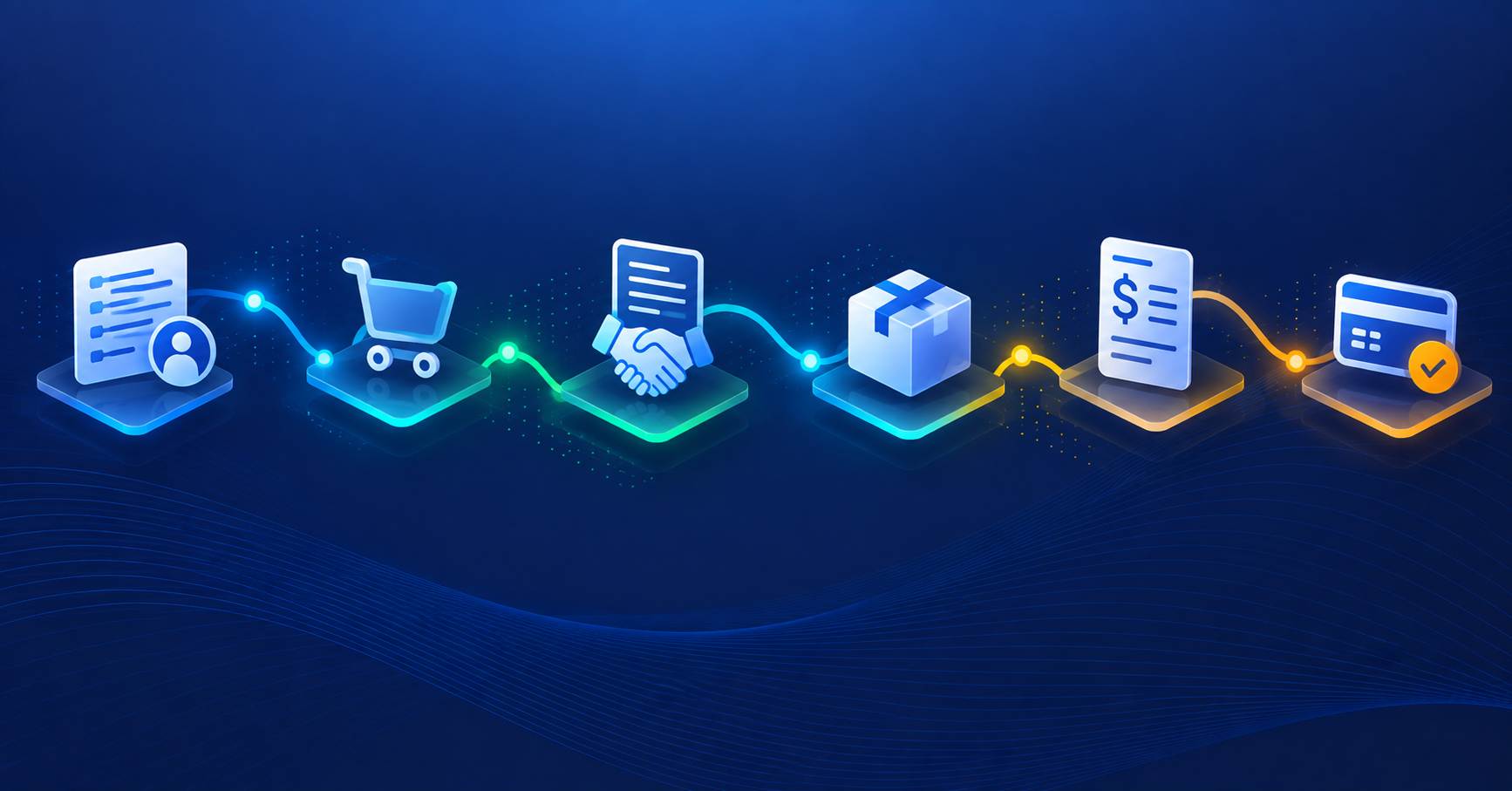
Purchasing solutions have evolved from a tool for automating transactions into a foundation for smarter, more connected procurement. Today’s best purchasing software automates requisitions, approvals, purchase orders, invoicing, and payments. In 2026, however, the best platforms also provide the unified data and AI foundation needed to support modern procurement.
In this guide, we compare seven leading purchasing software platforms using our Purchasing Technology Maturity Spectrum, evaluating each platform’s purchasing capabilities, data architecture, and AI readiness for the future.
Key Takeaways
- The Purchasing Technology Maturity Spectrum evaluates software based on long-term capability, not just feature lists.
- Unified data is the foundation for scalable automation and enterprise-ready agentic AI.
- Compare vendors on implementation complexity, flexibility, and real-world fit.
- Leading procurement teams are investing in platforms that connect purchasing, suppliers, contracts, and AI.
The Purchasing Technology Maturity Evaluation Framework
The Purchasing Technology Maturity Spectrum provides a framework for evaluating how well each platform can support your procurement needs today and evolve with your organization over time. It considers not only core purchasing capabilities, but also the data, integration, flexibility, and AI foundation needed to support more intelligent and agentic procurement processes. The vendor reviews in this guide are organized using this spectrum.
| Tier | Description | Best Fit |
| Tier 1: Transactional Purchasing | Automates the core purchasing workflow from requisition through purchase order, invoice, and payment. Typically operates as a standalone purchasing application with limited supplier data and no sourcing or contract context. | Mid-market organizations replacing spreadsheets, email approvals, and manual purchasing processes. |
| Tier 2: Connected Purchasing | Connects purchasing with ERP systems and basic supplier management while supporting three-way matching, compliance workflows, and operational reporting. | Growing organizations consolidating fragmented purchasing and finance tools. |
| Tier 3: Intelligent Purchasing | Adds embedded AI for spend orchestration, anomaly detection, guided buying, invoice matching, and purchasing recommendations. AI primarily operates on purchasing and AP data rather than the full procurement lifecycle. | Enterprise procurement teams seeking greater automation without a fully unified Source-to-Pay platform. |
| Tier 4: Full-Lifecycle Purchasing (S2P-Embedded) | Purchasing operates within a unified Source-to-Pay platform where AI has native access to sourcing history, contracted pricing and terms, supplier data, spend analytics, and transactional data through a single shared data model. | Organizations undergoing CPO-led procurement transformation that require enterprise-scale procurement automation with governed agentic AI. |
The distinction between Tier 3 and Tier 4 becomes increasingly important as procurement adopts agentic AI.
McKinsey estimates that procurement organizations currently use less than 20% of the data available to them for decision-making and projects that AI-driven technology could improve procurement efficiency by 25% to 40%. That value depends on AI having access to complete, connected procurement data.
In a Tier 4 platform such as Ivalua, AI works across sourcing, contracts, suppliers, purchasing, and invoicing from day one, because every function shares the same data model. It also inherits existing permissions and governance, so you can automate workflows without creating separate AI rules for each process.
With these distinctions in mind, the next step is to see how leading purchasing software platforms compare across the maturity spectrum.
Comparing The 7 Best Purchasing Software Platforms in 2026
The following seven platforms are evaluated using the Purchasing Technology Maturity Spectrum, with each review assessing core purchasing capabilities, AI readiness, underlying data architecture, where the platform fits on the spectrum, and the types of organizations it’s best suited to support.
| Platform | Maturity Tier | Best for | Pros | Cons |
| Ivalua | Tier 4 | Full P2P transformation with governed agentic AI on a single data model. | Purchasing that captures the value of negotiated contracts. IVA, their agentic core, operates as an AI coworker on day one. No-code configurability. ERP-agnostic. No supplier fees. Forrester TEI: 393% ROI. 2026 Gartner MQ Leader. | Due to configurability organizations have to know what and how they want to tailor and not over do it. |
| Coupa | Tier 3 | Guided indirect purchasing with community-driven spend intelligence | $10T+ community benchmarking. SpendGuard fraud detection. Consumer-grade UX. Coupa Composed with 20+ agents (GA May 2026). 2026 Gartner MQ Leader. | Tailoring limited , often requires vendor involvement. Hidden TCO in multi-ERP environments. Prescriptive workflows limit complex scenario flexibility. |
| SAP Ariba | Tier 2–3 | SAP-centric enterprises wanting procurement tied to S/4HANA | Tight S/4HANA integration. Large supplier network. Joule AI (GA September 2025). Next-gen Ariba on BTP in progress. | Data sync across modules varies.. High integration overhead for non-SAP ERPs. BTP re-engineering is still rolling out through 2027. |
| GEP | Tier 3 | Broad S2P coverage on a cloud-native platform | Cloud-native single suite with analytics. Qi agentic-AI platform. | Validate all-spend coverage depth and unified data model in demo. Workflow flexibility for non-standard processes needs evaluation. |
| Oracle Fusion | Tier 2–3 | Oracle Cloud ERP shops wanting procurement-to-finance integration | Native Oracle Financials integration. Design-to-Source Workspace (March 2026). AI-Powered Category Suggestions and Autonomous Sourcing Assistant. | Significant integration overhead for non-Oracle ERPs. UX complexity flagged in reviews. |
| Basware | Tier 2 | Finance teams focused on invoice processing and global e-invoicing compliance | AP automation. SmartPDF. AI trained on 2.2B invoices. E-invoicing compliance in 50+ countries. | Narrower purchase order, receiving scope — no sourcing, CLM, or strategic supplier management. PO processing speed flagged in some reviews. |
| Procurify | Tier 1 | Mid-market teams replacing spreadsheets and email approvals | Fast deployment (weeks). Intuitive mobile-first UX. Real-time budget tracking. | No sourcing, CLM, or supplier performance capabilities. Limited enterprise scalability. Outgrowth risk requires full migration. |
Here’s a detailed look at the best purchasing software platforms, starting with Ivalua, a Tier 4 solution.
1) Ivalua
Platform Maturity Tier: Tier 4
Overview: A unified Source-to-Pay platform with best in class intake and P2P capabilities where employees can describe what they need in natural language, while the system evaluates the request against contracts, supplier conditions, inventory, policies, and other business rules to determine the right buying path before commitment
Best for:
Enterprise organizations that need to combine high employee adoption with rigorous spend governance, particularly where purchasing decisions depend on contract terms that reflect business realities, live supplier conditions, internal inventory, risk, or multiple fulfillment channels.
Core Strengths:
- Built on a single codebase and data model that natively connects intake, catalogs, purchase orders, supplier information, receiving, inventory,and invoicing. A supplier update is instantly reflected across the entire procurement lifecycle without manual reconciliation.
- No-code configuration empowers admins to modify workflows, logic, and localized rules without vendor intervention or custom code.
- Multi-ERP integration via open APIs and prebuilt connectors. ERP-agnostic architecture operates across SAP, Oracle, and heterogeneous ERP environments without forcing a single ERP dependency.
- No supplier fees: suppliers can connect, transact, and collaborate at zero cost, supporting high supplier adoption.
- Enforces policy, contract, tax, and risk compliance before PO generation, going beyond simple approval workflows.
AI Approach:
Ivalua’s IVA (Intelligent Virtual Agent) is built directly into the platform, and is an AI coworker for all. Allowing users to easily find what they needs, to automate purchasing, shopping, budget tracking, autonomous accounts payable,, supplier management, connected to contractual pricing, terms, and accounts payable, all on a shared data model. Through IVA Studio, organizations create governed AI Skills. Governance is structural, not bolted on: IVA inherits platform permissions, every action is auditable, and every decision is traceable. The platform is LLM-agnostic, supporting Claude, GPT, Gemini, and custom models.
What to watch for:
Enterprise-focused platform may be more comprehensive than mid-market organizations with simple indirect-only purchasing needs require. Full S2P value is realized when purchasing connects to upstream commercial information and organizations deploy multiple capabilities. For CPO-led transformations or organizations planning to mature from standalone purchasing to full S2P over 18–24 months, this breadth is a strength. For teams with a narrow, fixed AP automation scope and no upstream ambitions, evaluate whether the platform exceeds current requirements.
Implementation:
The Forrester Total Economic Impact™ study found a 393% ROI with payback in under six months, and that most customers implemented the platform incrementally. One organization deployed Procure-to-Pay in less than eight weeks; while broader Source-to-Pay transformations typically took six to ten months.
Pricing: Enterprise pricing is customized based on the modules deployed, user counts, and organizational requirements.
Access our on-demand demo library to see Ivalua’s P2P Solution in action
2) Coupa
Platform Maturity Tier: Tier 3
Overview: Coupa is a purchasing-first platform combining guided buying, spend management, invoicing, expense management, and supplier collaboration with AI-powered insights.
Best for: Large organizations prioritizing guided indirect purchasing, spend visibility, and community-driven benchmarking across a large supplier network.
Core Strengths:
- Guided buying with policy enforcement and a consumer-grade UX for indirect procurement.
- SpendGuard fraud detection and community intelligence benchmarking drawn from $10T+ in transactional data.
- The Cirtuo acquisition (2025) adds AI-powered category management to the strategic sourcing suite.
AI Approach: Coupa’s AI portfolio includes Navi AI agents, Coupa Compose, and Agent Studio with 20+ persona-based agents.
What to watch for: Coupa’s structured workflows are well-suited for standardized indirect purchasing but may require customization for complex processes, but often require vendor involvement rather than self-service configuration.
Implementation: Despite having prebuilt connectors, complex multi-ERP environments frequently need custom integrations, workflow changes, and ongoing modifications frequently require vendor involvement. Organizations should evaluate the full cost of integration, customization, and long-term platform administration.
Pricing: Enterprise pricing is customized based on the modules deployed and organizational requirements.
3) SAP Ariba
Platform Maturity Tier: Tier 2–3
Overview: SAP Ariba is a natural fit for SAP-centric enterprises, combining deep integration with SAP S/4HANA and a large supplier network.
Best for: SAP-centric enterprises that want procurement tightly integrated with SAP S/4HANA and access to the SAP Business Network’s supplier ecosystem.
Core Strengths:
- Tight integration with SAP S/4HANA for organizations already running SAP ERP.
- Access to the large SAP Business Network for supplier reach.
- Strong compliance and audit trail capabilities.
- Joule AI assistant embedded across Guided Buying, Guided Sourcing, and Supplier Management.
AI approach: Joule provides AI recommendations within SAP workflows. Capabilities are improving but remain most effective inside the SAP ecosystem. Organizations should confirm how data from Source-to-Contract and Procure-to-Pay is actually unified for AI-driven workflows before assuming cross-module intelligence.
What to watch for: Validate how supplier, contract, sourcing, and purchasing data synchronize across SAP modules, especially in mixed legacy Ariba and BTP environments. Non-SAP ERP environments face higher integration overhead, and configurability is more constrained than purpose-built procurement platforms.
Implementation: Data synchronization and integration complexity vary by deployment configuration, but Ariba on BTP is rolling out through 2026–2027. Organizations running non-SAP ERPs should also account for higher integration effort and ongoing maintenance.
Pricing: Enterprise pricing is customized based on the deployed modules, user counts, and organizational requirements.
4) GEP
Platform Maturity Tier: Tier 3
Overview: GEP is a cloud-native S2P suite with broad functional coverage and AI capabilities. It unifies purchasing, sourcing, supplier management, contracts, invoicing, and spend analysis on a single platform with configurable workflows and reporting.
Best for: Large organizations evaluating comprehensive Source-to-Pay solutions.
Core Strengths:
- Analytics and reporting.
- Broad S2P functional coverage in a single product (GEP SMART) on a cloud-native architecture.
- GEP Quantum, the AI-first low-code platform (hosted on Microsoft Azure), with Qi as its agentic-AI orchestration layer.
AI approach: GEP Qi is embedded throughout the platform, supporting purchasing, sourcing, and procurement decision-making.
What to watch for: Evaluate workflow flexibility for non-standard processes and validate how effectively the platform supports direct materials, indirect spend, and services within a single operating model. Confirm that supplier information and sourcing data flow across modules without reconciliation gaps, and that the platform performs effectively across multiple ERP systems and high transaction volumes.
Implementation: GEP’s single-suite positioning should simplify deployment, but validate whether all-spend coverage is available at go-live or requires phased module activation, and whether non-standard workflow configuration needs GEP professional services.
Pricing: Enterprise pricing is customized based on deployed modules, users, and organizational requirements.
5) Oracle Fusion Cloud Procurement
Platform Maturity Tier: Tier 2–3
Overview: Oracle Fusion Cloud Procurement is a purchasing solution option for organizations already running Oracle Cloud ERP, with tight native financial-system integration; organizations on non-Oracle ERPs should weigh the integration overhead.
Best for: Organizations already running Oracle Cloud ERP that want procurement data to flow directly into Oracle Financials without middleware.
Core Strengths:
- Native integration with Oracle Cloud ERP and Financials. Procurement data flows directly into the general ledger, AP, and financial reporting without middleware.
- AI-Powered Category Suggestions and an Autonomous Sourcing Assistant within Oracle’s AI Agent Studio.
- Design-to-Source Workspace, a newer agentic-AI application bridging CAD/PLM and procurement.
AI approach: AI capabilities are meaningful but tightly coupled to Oracle ecosystem data, but cross-platform intelligence is limited for organizations running non-Oracle systems.
What to watch for: Oracle’s tight integration with its own ERP ecosystem is a major advantage for existing Oracle customers but can create additional complexity for organizations operating multiple ERP platforms.
Implementation: Enterprise deployments typically range from 9 to 24 months depending on organizational complexity and the number of modules implemented. Workflow customization generally requires technical expertise or Oracle consulting rather than business-user configuration.
Pricing: Oracle publishes a list price starting at $625 per hosted named user per month, although negotiated enterprise pricing is commonly lower depending on contract size and deployed modules.
6.) Basware
Platform Maturity Tier: Tier 2
Overview: Basware is an AP automation and e-invoicing specialist with deep invoice-processing capabilities; organizations needing full procurement lifecycle management (sourcing, CLM, strategic supplier management) will need supplementary tools.
Best for: Finance-led organizations whose primary priorities are invoice processing, AP automation, and global e-invoicing compliance.
Core Strengths:
- Touchless invoice processing with automatic three-way matching.
- E-invoicing compliance across more than 50 countries, serving thousands of businesses globally.
- SmartPDF converts machine-readable PDFs to e-invoices with high field-level accuracy
AI approach: Basware applies AI to invoice capture, coding, matching, and anomaly detection to automate AP. Its AI is focused on invoicing rather than agentic workflows across sourcing, supplier management, or contract compliance.
What to watch for: Procure-to-Pay capabilities are narrower than full Source-to-Pay platforms, so organizations needing sourcing, CLM, or supplier management will likely require additional solutions. Teams should also evaluate purchase order workflows and the supplier onboarding experience during selection.
Implementation: Implementation complexity varies depending on deployment scope, integrations, and global compliance requirements.
Pricing: Enterprise pricing is customized based on deployment scope, transaction volumes, and organizational requirements.
7.) Procurify
Platform Maturity Tier: Tier 1
Overview: Procurify is a purpose-built spend management platform for mid-market organizations replacing spreadsheets and email-based approvals; enterprise scalability at high transaction volumes should be evaluated against growth projections.
Best For: Mid-market organizations replacing manual purchasing processes that need fast deployment, real-time budget visibility, and a modern purchasing experience without enterprise-level complexity.
Core Strengths:
- Consumer-grade UX with a mobile app for on-the-go approvals.
- Real-time budget tracking and spend visibility at the department level.
- Purpose-built for mid-market since 2013.
AI Approach: AI capabilities focus on spend analysis and reporting. Agentic workflows, AI-driven invoice matching, and enterprise-depth spend classification aren’t part of the current platform scope.
What to Watch For: Procurify is designed for purchasing and spend management; organizations needing sourcing, contract lifecycle management, or supplier performance/risk monitoring will need separate tools.
Implementation: The primary consideration is long-term fit as the organization matures.
Pricing: Pricing is subscription-based and customized according to organizational size, users, and required functionality.
How To Evaluate Purchasing Software: A Maturity-Based Buying Framework
Use the Purchasing Technology Maturity Spectrum as a practical buying framework to evaluate not only what a platform can do today, but also where it can take your organization tomorrow.
Identify Your Tier
Start by identifying both your current procurement maturity and your target state over the next 18 – 24 months. If your goals are to replace spreadsheets and email approvals, consolidate disconnected systems, expand AI-driven automation, and build a unified Source-to-Pay operating model, be sure to choose procure-to-pay software that supports these goals.
Test Data Architecture
Ask every vendor whether a single supplier record is shared across sourcing, contracts, purchasing, invoicing, spend analysis, and performance management. Then ask whether an AI agent can access sourcing history or contract terms while processing an invoice. If data must be synchronized between separate modules instead of being natively shared, the platform’s long-term AI capabilities will likely be limited.
Validate Exception Handling
Ask vendors to walk through non-PO invoices, tail spend, offline change orders, urgent purchases, and complex approval scenarios. These situations quickly reveal whether a platform can support real-world procurement operations or only the most common workflows.
Probe AI Depth
Some platforms apply AI to individual tasks or have individual agents, such as invoice matching, spend classification, or guided buying while others use agentic AI to orchestrate work across sourcing, supplier management, contracts, purchasing, and accounts payable. Understanding this distinction helps separate Tier 3 platforms from Tier 4 platforms, where AI can provide meaningful procurement process improvement.
Calculate Total Cost of Ownership Beyond Licensing
In addition to software licensing, consider procurement technology adoption. Compare implementation timelines, integration costs, ongoing configuration and customization requirements, supplier network fees, and the cost of adding new capabilities as your procurement function matures. A platform with a higher initial investment may deliver a lower total cost of ownership if it reduces integration complexity and eliminates the need for additional procurement tools over time.
The AI Architecture Test Every Purchasing Software Buyer Should Run In 2026
Agentic AI is quickly becoming the next competitive advantage in procurement transformation, but not every purchasing platform is built to support it. McKinsey estimates that procurement organizations use less than 20% of the data available to them for decision-making, and standalone purchasing tools make this problem worse by isolating procurement processes. AI can only optimize the information it can see.
What Agentic AI Actually Requires
When evaluating AI purchasing software, ask whether the platform provides four architectural capabilities:
- A unified data model
- End-to-end process coverage
- Embedded governance
- An open integration layer
If any of these are missing, AI is just another point solution, not part of the procurement operating model.
How IVA Extends AI Across Procurement
Ivalua’s Intelligent Virtual Agent (IVA) operates directly within Ivalua’s unified Source-to-Pay platform. An AI coworker for all, one that knows your data, follows your rules and is able to work on your behalf.sing the same trusted procurement data and governance framework as human users.
IVA automates activities such as catalog enrichment, quote-to-order conversion, product information management, non-catalog requisitions, and intake management. Other agents operate across the broader procurement lifecycle, supporting supplier onboarding, autonomous invoice matching at both the commodity and contract level, spend classification, and contract compliance monitoring.
Organizations can also create their own AI agents using IVA Studio. They can build, test, govern, and continuously improve AI capabilities without extensive custom development. Because IVA operates on the same data model and inherits existing user permissions, governance is built into the platform rather than added after deployment.
The Results Come From Architecture, Not AI Alone
The value of agentic AI comes from combining intelligent agents with complete procurement context.
McKinsey reported that by leveraging AI to access sourcing, supplier, contract and transactional data:
- A chemicals company achieved 20–30% staff efficiency gains and 1–3% additional procurement value
- A telecom that reduced analysis time by up to 90% while delivering 10–15% savings
- An aircraft manufacturer that cut inventory by 30%, improving EBIT by about $700 million
When choosing a platform, be sure to examine the architecture, not just AI features. Platforms built on unified data, connected processes, and governance by design will provide the greatest long-term value..
How Bvlgari Built Four Purchasing Channels With 100% User Adoption On A Unified Platform
Bvlgari, part of the LVMH Group, was building a new sourcing organization and needed a platform that could modernize procurement while preserving its existing IT architecture. The platform needed to provide the intuitive user experience that employees expected across the premium global brand.
In a phased implementation, Bvlgari deployed Ivalua’s unified platform, which evolved alongside its procurement maturity. Today, more than 1,100 users across 15+ countries manage global spend through four streamlined buying channels designed to handle everything from one-time suppliers to complex multi-service purchases. The company has 100% user adoption, and custom configurations support unique stakeholder requirements while standardizing procurement processes on a single platform.
“One of the main metrics for sure has been agility and the speed of the procurement tools compared to the past. We’re focusing on excellence and creativity so it’s important that we can deliver the best result with the most strategic solution in a short period of time. And the platform helped us achieve that.” — Matteo Perondi, CPO at Bvlgari
Read the full Bvlgari case study.
Select The Right Purchasing Platform For Your Operating Model
The best purchasing software supports both your current needs and your long-term procurement strategy. We recommend using the Purchasing Technology Maturity Spectrum to evaluate each platform based on its data architecture, AI readiness, and ability to handle real-world purchasing complexity.
As you compare procurement software solutions, ask vendors to prove measurable results, so you have a clear picture of your chosen platform’s potential long-term value.
See How Ivalua Modernizes the Purchasing Process
Frequently Asked Questions About Purchasing Software
Purchasing software automates the transactional purchasing lifecycle, helping to establish standardized, auditable processes. Modern purchasing software replaces spreadsheets, email approvals, and manual data entry with connected workflows, improving visibility and reducing processing costs.
The most important purchasing software features include configurable approval workflows, ERP integration, automated invoice matching, real-time spend visibility, supplier collaboration, and embedded AI. Enterprise organizations should also evaluate the platform’s data architecture, scalability, governance, and ability to support future procurement transformation.
Many procurement software solutions focus only on purchasing execution, while a Source-to-Pay platform connects sourcing, supplier management, contracts, purchasing, invoicing, and payments on a unified data model. This broader approach improves visibility, reduces manual handoffs, and provides a stronger foundation for AI-driven procurement.
Modern AI purchasing software automates tasks such as invoice matching, spend classification, approval routing, and guided buying while helping users identify anomalies and savings opportunities. More advanced platforms use agentic AI to coordinate work across sourcing, contracts, suppliers, and purchasing rather than optimizing individual tasks in isolation.
The ROI of procurement management software should include labor savings, faster cycle times, increased automation, lower processing costs, stronger compliance, and improved spend visibility. Organizations should also factor in implementation costs, integration effort, supplier adoption, and the long-term value of reducing manual work and consolidating multiple procurement tools.
Purchasing software implementation time varies depending on deployment scope, integrations, and organizational complexity. Purchasing-only deployments can often go live in a few weeks or months, while full enterprise Source-to-Pay implementations are typically phased over several months to maximize adoption and business value.