

Generative AI (GenAI) is rapidly reshaping procurement, but it also introduces a new challenge: generative AI risk management – the discipline of identifying, governing, and mitigating risks across data, models, processes, and even suppliers touched by AI-driven workflows. For CPOs navigating high-stakes decisions and stringent compliance requirements while minimizing supplier risk exposure, it’s critical to understand the risks involved and manage them responsibly. Only then can you take advantage of the benefits GenAI has to offer.
This guide explains what the risks of GenAI look like in real procurement environments and how you can build the structures to control them. You’ll learn the key risk categories to monitor, the governance models that support safe deployment, and the foundational capabilities required. We also include a real-world success story and practical FAQs. With the pressure to adopt AI growing, procurement leaders need a clear, actionable approach. Let’s begin by exploring how GenAI creates new, more complex risk surfaces compared to traditional tools.
Key Takeaways
- GenAI introduces new risks such as data privacy breaches, hallucinations, bias, and compliance exposure – all of which require human oversight.
- Maintaining unified and accurate data should be a top priority, because it supports safe, reliable AI performance by reducing misinformation and driving informed decision-making.
- It’s important to implement human-in-the-loop workflow governance across sourcing, contracting, and supplier management alongside AI in sourcing and procurement.
Why Generative AI Raises New Risks In Procurement
While generative AI in procurement expands automation and decision-making, it also introduces new potential pitfalls absent in traditional systems. And procurement as a practice is particularly vulnerable due to the sensitive nature of supplier data and contractual obligations involved. Regulatory oversight and data governance are essential, and must extend across multiple functions.
GenAI changes the supplier risk equation for procurement. If left unchecked, it can provide problematic or inaccurate outputs or hallucinations. AI model behavior is complex and requires real-time user prompting to perform optimally.
As you adopt more advanced, multi-step automated workflows, there’s greater opportunity for speed and strategic impact. However, if decisions, actions, and recommendations flow across multiple systems without human oversight, it’s difficult to ensure they are compliant and aligned with policy. You can’t just set it and forget it – you need to implement strict governance and continuous monitoring.
By centralizing supplier, contract, and performance data in one configurable system, a unified platform such as Ivalua can eliminate fragmentation that makes GenAI risky, helping to ensure that AI acts only on accurate, verified data.
To manage these risks, it’s critical to understand the specific categories of GenAI risk in procurement. In the next section, we explore these in detail.
The Most Critical Generative AI Risks Procurement Must Manage
Generative AI expands risk exposure across data privacy, decision accuracy, fairness, security, and regulatory compliance. Let’s take a closer look at each of these risk categories.
Data Privacy And Supplier Confidentiality
Generative AI in procurement exposes supplier data unintentionally, if not properly governed. This risk is known as model leakage: sensitive information is absorbed by an AI model and later revealed in outputs.
Supplier data is especially sensitive, because it often includes pricing, contracts, performance details, and compliance records. Without strong controls, you may experience an incident similar to one that happened at Samsung, when employees fed protected data into external AI tools accidentally, exposing the organization.
Ivalua’s unified data environment dramatically reduces this risk, since supplier data stays within a secure, permission-controlled master record. Ivalua’s GenAI features operate inside a protected ecosystem, where sensitive details never exit the platform or leak into uncontrolled systems.
This leads directly to another critical challenge: the operational risk of introducing misinformation or hallucinated outputs into procurement workflows. These errors can impact decisions and amplify supplier risk.
Hallucinations And Misinformation In Sourcing And Contracting
GenAI can introduce significant operational risk when it hallucinates. Hallucinations occur when the AI generates inaccurate or fabricated outputs.
Hallucinations can warp supplier evaluations or throw risk assessments off-track. In fact, recent risk and compliance surveys have shown hallucinations to be a top concern for AI adoption.
That’s why you need to implement human reviews and workflow constraints. These mitigation strategies help to validate AI-generated recommendations before they influence your decision-making.
However, these reviews and workflows are impossible without high-quality, unified data. When GenAI operates on Ivalua’s structured contract clauses, invoice data capture, validated spend data, and permission-controlled supplier records, it benefits from a single source of truth, reducing misinformation and strengthening risk management.
However, hallucinations are only one way GenAI can increase risk; another concern is bias.
Bias, Fairness, And Supplier Selection
AI can reinforce historical bias – albeit unintentionally – impacting supplier selection. This is especially true when models learn from skewed or incomplete training data.
Bias can undermine supplier diversity goals and expose your organization to regulatory noncompliance and fines, which is why Gartner emphasizes fairness as a core AI risk across industries.
To that end, strong bias detection practices, fairness testing, and anonymized evaluations are critical. Ivalua addressed this need by providing complete, consistent supplier performance and compliance data, all in one place. This gives the AI a balanced foundation and reduces structural bias in scoring or recommendation workflows.
Explainability is also essential. Training data can skew recommendations, impacting your goals for supplier diversity or inviting regulatory scrutiny. With a focus on fairness in testing, Ivalua helps to eliminate structural bias in supplier scoring and recommendation use cases, improving GenAI outcomes.
Beyond bias, managing the risk of unexplainable decisions is also essential.
Explainability And Auditability Failures
Procurement decisions rely on traceability. However, GenAI can introduce compliance risk when its reasoning is opaque or difficult to validate.
In environments where audits, supplier disputes, and regulatory reporting are routine, black-box outputs are simply not compatible with requirements for transparency.
Effective model governance requires model cards, decision logs, and explainability to show how an AI model arrived at a decision or recommendation. You also need to implement structured workflows in order to maintain end-to-end transparency.
Ivalua supports these requirements with automatic logging for every approval, data change, or sourcing event, to help ensure that AI-generated outputs are fully transparent and auditable.
Explainability failures can also increase compliance risk. In the next section, we explore how procurement teams can strengthen transparency and control.
Cybersecurity, Deepfakes, And Fraud
GenAI can also cyber threats by enabling deepfake procurement fraud and targeted AI-powered phishing. These fraud vectors exploit the role of procurement to access financial systems – recent deepfake fraud cases and government guidance highlight rising concern across the public sector.
Multi-factor verification and zero-trust security models can help prevent unauthorized actions. For example, Ivalua’s multi-step approvals, role-based access, and strict supplier master controls help ensure that GenAI doesn’t trigger critical changes such as banking updates or PO modifications without verified human intervention.
As these cyber risks escalate, it’s important to prepare for regulatory and compliance obligations surrounding the use of AI.
Regulatory And Compliance Exposure
AI regulations evolve quickly, and procurement is subject to emerging high-risk classifications under the EU AI Act, which mandates strict documentation, human oversight, and continuous auditing. Additionally, global standards such as the NIST AI Risk Management Framework and ISO guidance, make structured regulatory compliance and strong compliance management a must-have.
As a result, governance models that ensure every AI-assisted action is traceable and policy-aligned are essential. Ivalua’s configurable workflows, auditable event logs, and enforceable policy controls can help keep GenAI usage aligned with NIST, ISO 42001, and EU AI Act expectations.
Next, we explore why implementing procurement-ready governance strategy is absolutely critical in modern procurement organizations.
How Procurement Leaders Should Govern GenAI Responsibly
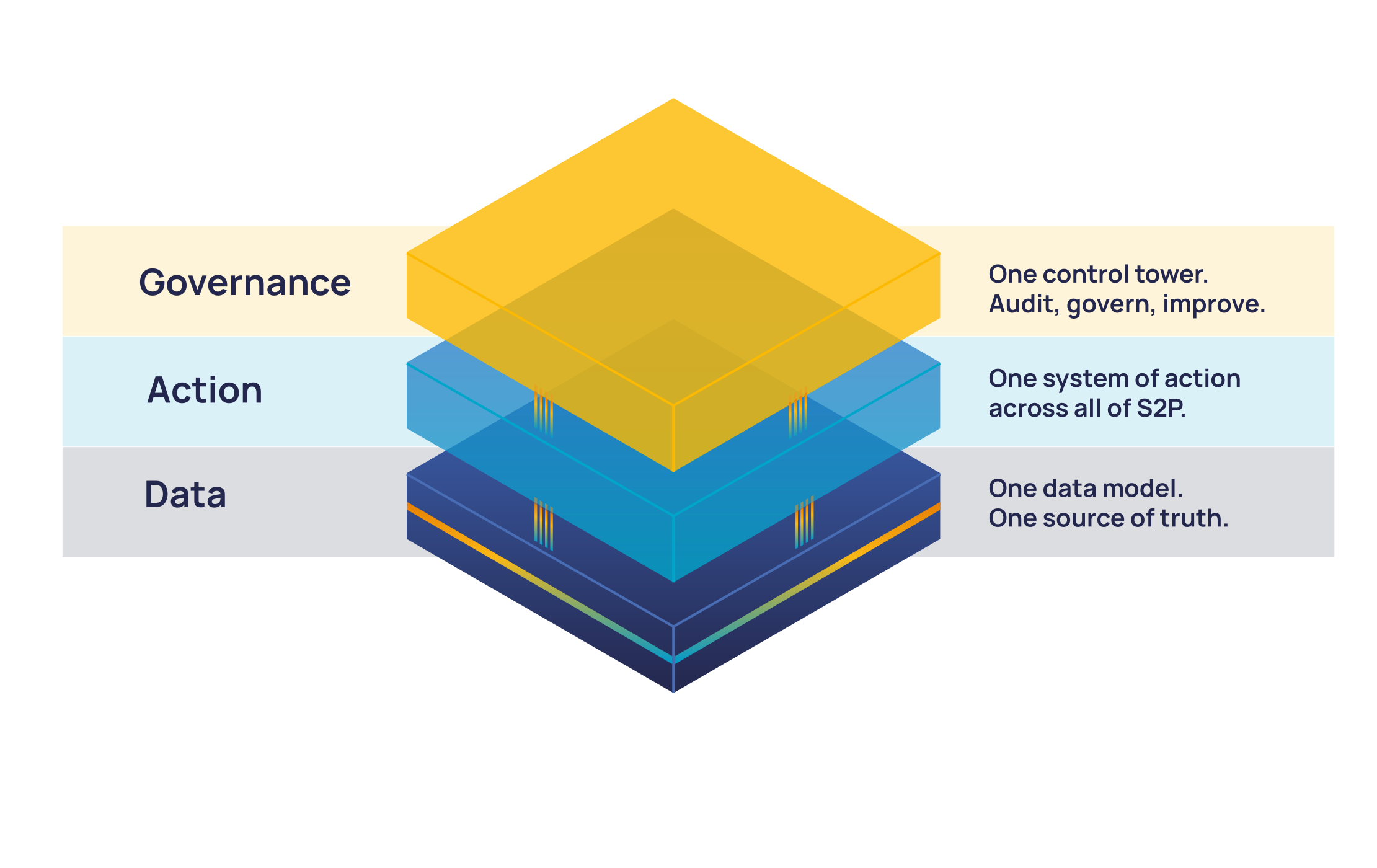
Governing GenAI responsibly requires moving from isolated controls to a structured, organization-wide approach. AI safety must be embedded into every policy, workflow, and technology decision.
Aligning AI To Enterprise Governance
Effective AI and procurement governance should be tightly integrated with risk practices across IT, security, and compliance teams, creating a unified governance framework of shared rules, controls, and escalation paths for using AI.
Ivalua is the natural starting point, as it centralizes procurement policies, approvals, and rule logic, and can be used to embed and enforce enterprise-level AI governance across sourcing, contracting, and supplier management.
With Ivalua, you can establish a consistent governance framework that aligns with your organization’s broader risk programs, while supporting the responsible adoption of GenAI.
Establishing Human Oversight Where It Matters
High-risk procurement workflows must be run by humans. In fact, human-in-the-loop oversight is a foundational requirement for any GenAI deployment.
To that end, strong guardrail design is critical to clearly define which decisions and recommendations AI is allowed to make, and which decisions it must never execute without human validation.
Ivalua supports human-in-the-loop oversight by enabling you to integrate human approvals in the workflow at any point to help ensure GenAI enhances efficiency without bypassing critical judgment points around supplier evaluations, contracting, or policy-sensitive decisions.
Mapping Risks To Your S2P Workflows
Risk assessment for GenAI must be workflow-specific, because processes like contract analysis leveraging AI, supplier risk reviews, and onboarding carry far higher exposure than low-impact tasks.
Each workflow should be scored for AI risk based on data sensitivity, decision criticality, and compliance requirements.
With Ivalua’s fully configurable Source-to-Pay workflows, procurement teams can assign different AI controls to each process, for example, tight oversight for strategic sourcing or contracts and lighter controls for low-risk tasks. This helps to ensure GenAI is used only where the risk is low and governance is strong.
Ensuring Vendor And Model Accountability
In addition to your workflows, it’s also important to evaluate the AI risks of your vendors. You should establish clear expectations around model transparency, documentation, and audit readiness as the basis of strong vendor risk oversight. Setting such requirements is essential for effective model governance.
Ivalua stores all supplier data, contract documents, and workflow records internally, so your teams have full visibility and control over what information AI can access. This strengthens vendor accountability and model transparency.
Now let’s explore the foundational elements required to make AI safe and effective in procurement: data quality and orchestration.
Building A Foundation For Trusted Automation
Fragmented or inconsistent data increases AI risk because it fuels hallucinations, bias, and misinformation. This can distort supplier evaluations and impact a supplier’s overall risk profile.
That’s why unified data is essential. When procurement teams work from a single, integrated source of truth, AI models are grounded and provide outputs that reflect accurate supplier performance data.
In other words, consolidating data reduces error rates and ensures AI recommendations are aligned with real operational realities.
How Orchestration Reduces AI Risk
In modern procurement, it’s not the LLM itself that determines AI reliability. Rather, it’s orchestration.
Effective orchestration governs how data is routed, how outputs are validated, and how multi-model logic is applied to keep every AI action grounded in the right context. This aligns with emerging agentic AI procurement practices.
Ivalua’s workflow engine orchestrates each AI action with the correct context, policies, and data sources, providing a layer of control and helping to ensure GenAI and Agentic AI models operate within safe, pre-defined procurement boundaries.
Making Agentic AI Safe In Real Procurement Workflows
Agentic AI brings powerful multi-step autonomy to AI agents in procurement and e-sourcing. However, that autonomy introduces new risks if there’s no human oversight.
Unsupervised agents may trigger unintended supplier communications, change contract data, or score risk assessments incorrectly. By embedding strict constraints, permission models, and data validation checks, you can ensure every action executes according to policy.
Ivalua provides the right guardrails, including role-based permissions, structured data, validation steps, and workflow constraints, enabling Agentic AI in procurement to automate multi-step procurement tasks without operating outside approved boundaries.
Let’s take a look at a real-world example of how an organization can improve global risk management leveraging unified data as the foundation for AI in procurement.
Balancing Innovation and Compliance: How Körber Minimizes Procurement AI Risks at
Global technology group Körber minimizes AI risks within its procurement operations by prioritizing ethical use, transparency, and cross-stakeholder alignment.
To safely govern these initiatives, the company established an Ethics Council and implemented a formal AI guiding principles that provide strict guardrails for responsible innovation. Furthermore, Körber maintains trust and compliance by focusing on business-led, bottom-up AI use cases, ensuring artificial intelligence delivers real-world value without compromising corporate responsibility.
For us, it’s crucial that we develop our organization into an AI-capable organization.
Michael Schürmann
EVP & CPO
Responsible GenAI Gives Procurement A Competitive Edge
Responsible AI is not only achievable; it’s highly valuable when you proactively manage risk through strong governance, unified data, and disciplined orchestration. But it’s up to procurement leadership to enable safe, transparent, and controlled AI adoption that supports true procurement transformation.
With the right foundation in place, you can unlock efficiency and insight, without compromising compliance or customer trust.
Explore how Ivalua can support generative AI procurement transformation in your organization and help you establish the governance, data integrity, and workflow controls needed for a safe and scalable AI journey.
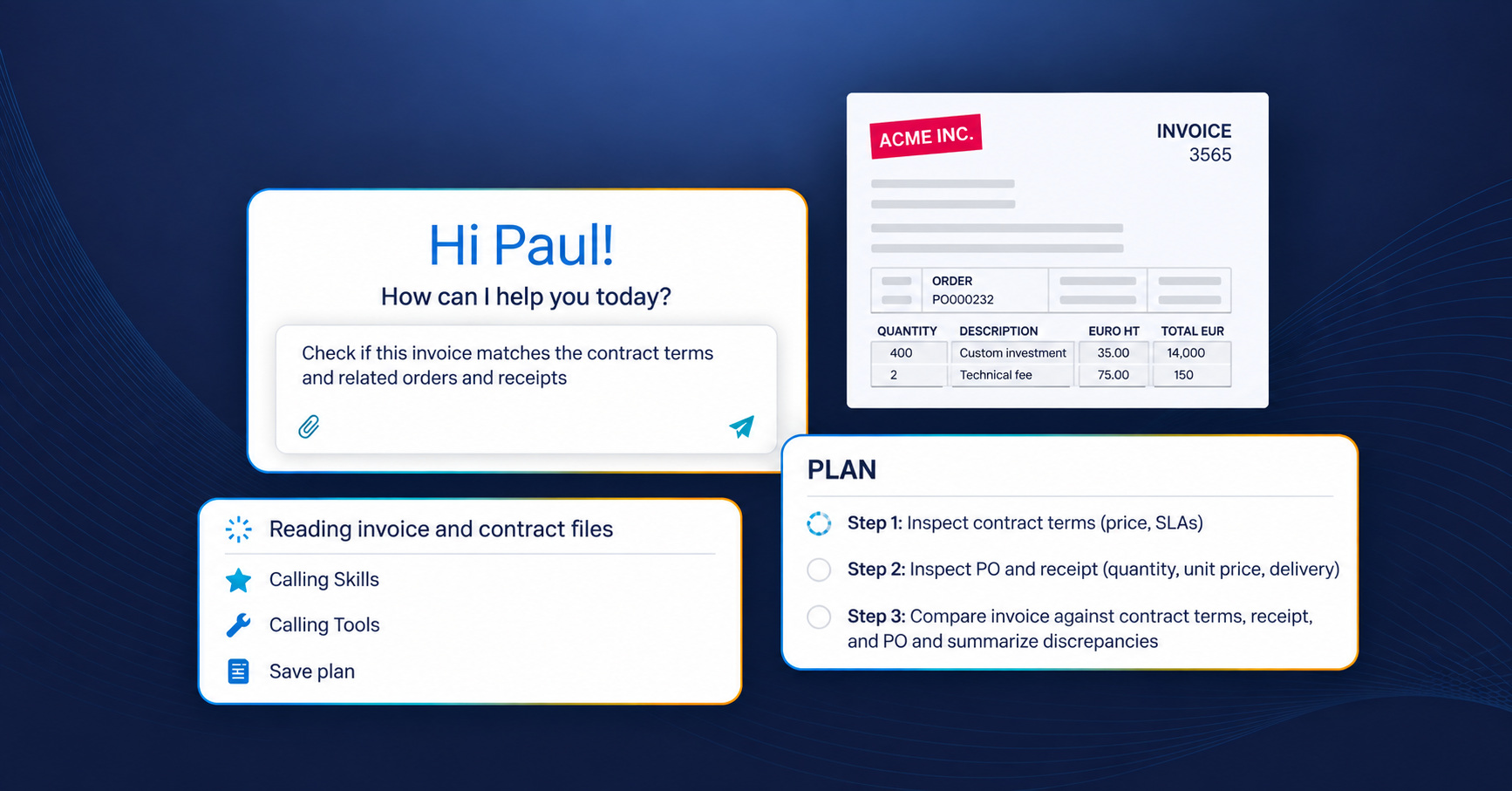
Experience for yourself how Ivalua’s Intelligent Virtual Assistant can transform procurement in your organization.
FAQs
Generative AI can support supplier communications, but only within strict governance controls such as template-based messaging, approval steps, and audit logs. High-risk or legally binding interactions should remain human-reviewed to ensure accuracy, compliance, and tone alignment.
Training should focus on data privacy rules, appropriate use cases, oversight requirements, and recognizing when AI outputs need deeper validation. Teams should also learn how to flag risky prompts, verify responses, and follow organizational AI governance procedures.
Highly sensitive data such as supplier financials, contract drafts, proprietary pricing, banking details, and compliance investigations should never be exposed to external GenAI models. This information should remain in secured, governed systems with strict access controls.
Assess vendors based on model transparency, permission controls, data retention policies, auditability, and compliance with frameworks like NIST AI RMF, ISO 42001, and the EU AI Act. Vendors should clearly document what data the model accesses and how risks are mitigated.
Frequent hallucinations, inconsistent outputs, unexplained decision paths, and rising manual correction rates signal governance gaps. Additional red flags include unclear data lineage, lack of auditability, or users bypassing required approval steps.
Measure ROI through cycle-time savings, improved insights, reduced manual effort, and increased compliance, while tracking risk indicators like error rates, audit findings, and data incidents. True value comes from combining efficiency gains with safer, more controlled operations.