

Autonomous procurement is AI-powered procurement that executes sourcing, purchasing, and supplier management tasks with minimal human intervention. Because it’s driven by AI, it can use intelligent systems to analyze data, make decisions, and trigger actions in real time.
This blog explains what autonomous procurement is, how it works, its benefits and use cases, and where the technology is heading in 2026 and beyond.
Key Takeaways
- In autonomous procurement, intelligent AI-powered agents analyze data, make decisions, and execute sourcing, purchasing, and supplier management actions.
- Companies that adopt advanced procurement AI practices see up to 393% ROI and 80% faster supplier onboarding.
- For autonomous procurement to work, you need to have a strong digital foundation, which includes unified data, automated workflows, and end-to-end procurement visibility.
What Is Autonomous Procurement
Autonomous procurement employs AI agents that are capable of autonomous decision-making. It takes a very different approach from conventional procurement automation, which typically uses predefined rules to trigger approvals, route invoices, or send reminders automatically.
AI-powered systems analyze real-time data to evaluate trade-offs and execute sourcing, purchasing, and supplier management actions with little to no human intervention. This evolution is powered by agentic AI.
Agentic AI enables systems to learn from patterns, and adapt to changing conditions dynamically across all processes. However, the word “autonomous” doesn’t mean “unsupervised” – humans are still needed to define policies and thresholds, while AI executes within those defined guardrails.
Gartner predicts that by 2030, 50% of cross-functional supply chain management solutions will use AI agents to execute decisions in the ecosystem autonomously. But for this to happen, organizations must unify their data and embed AI in procurement, which requires an intelligent procurement platform such as Ivalua’s Source-to-Pay solution.
In the next section, we explore the measurable value enterprises are realizing with autonomous procurement.
Benefits of Autonomous Procurement
Research and real world deployments have validated that organizations using autonomous procurement report tangible gains in operational efficiency and significant cost savings. Let’s explore them in greater detail and take a look at some real-world deployments that have led to significant improvements.
Operational Efficiency Gains
Autonomous procurement accelerates cycle times dramatically by reducing the manual effort needed for procurement processes. By embedding AI into procurement process automation, you can shorten supplier onboarding from weeks to hours, accelerate sourcing events, and automate invoice validation and exception handling – all without constant human intervention.
For example, Ivalua customer CACI reduced supplier onboarding time from 21 days to under 24 hours with digitization and process automation. Using Ivalua, they freed up teams from administrative work so they could focus on improving the supplier experience.
McKinsey estimates that AI agents could make procurement functions 25 – 40% more efficient, while shifting team activity from routine tasks to strategic decision-making. Instead of chasing approvals or correcting invoice errors, your team can focus on collaborating with suppliers, lowering risk, and creating value.
Measurable Cost Reduction
Organizations can realize significant cost savings and reduce operating expenses with successful digital procurement transformation, thanks to automation, better processes, and improved visibility. In fact, Forrester found that Ivalua customers realized a 393% ROI, $25.5 million in net present value, and payback in under six months. Moreover, they saw a 20 – 30% reduction in procurement and AP operating costs.
Customers also achieved 2.25 – 2.35% annual procurement cost savings on total spend, as a result of improved sourcing outcomes and compliance, and reduced revenue leakage. These results demonstrate that autonomous capabilities can generate material financial returns, when built on a unified platform like Ivalua.
Strategic Transformation
When AI manages routine approvals, supplier matching, and compliance checks, procurement leaders can shift their focus to improving supplier relationships, mitigating risk, and generating long-term value. Ultimately, they can implement more strategic decision-making at the enterprise level.
That truth plays out at the executive level. McKinsey cites two-thirds of procurement leaders now reporting directly to the CEO or CFO, demonstrating the growing strategic influence of the procurement function.
CACI, for example, scaled revenue from $3 to $8 billion without proportionally increasing procurement headcount. The flexibility of Ivalua’s platform enabled them to expand operations efficiently through automation, while maintaining unified visibility
The benefits are compelling, but understanding how autonomous procurement works requires a closer look at the underlying technology and operating model.
How Autonomous Procurement Works
AI can’t deliver reliable outcomes without clean, connected, contextualized data. Three elements are essential:
- Unified data
- Automated workflows
- End-to-end visibility across the Source-to-Pay process
Underlying all of these elements is a unified supplier data within a single, centralized source of truth. This ensures that all AI-driven decisions are based on accurate, consistent information.
An effective autonomous procurement platform integrates spend data, supplier profiles, contracts, risk signals, and transactional workflows into a single system. Ivalua provides this procurement orchestration through its unified Source-to-Pay platform and centralized supplier data architecture.
Unified Data as the Foundation
AI is only as effective as the data that feeds it. That’s why supply chain optimization and autonomous decision-making need accurate, accessible, and unified data for suppliers, contracts, spend, and risk signals to work properly.
Industry research confirms that procurement AI effectiveness depends heavily on a unified S2P data model, and that fragmented data severely degrades output quality. That’s why companies that operate across six or more disconnected tools aren’t succeeding with autonomous procurement.
Ivalua customer Honeywell struggled with this issue, so they established a centralized “Golden Record” of supplier data and created a single source of truth through Ivalua’s platform.
“Ivalua allows us to meet our ever-changing business needs across all of our organizations, and deploy solutions both on our regionality and the needs of our business users going forward.”
– Steven Velte, Senior Director of Procurement Transformation at Honeywell
Without unified data, autonomy stalls. Now let’s look at how AI orchestration enables automated workflows.
Automated Workflows and AI Orchestration
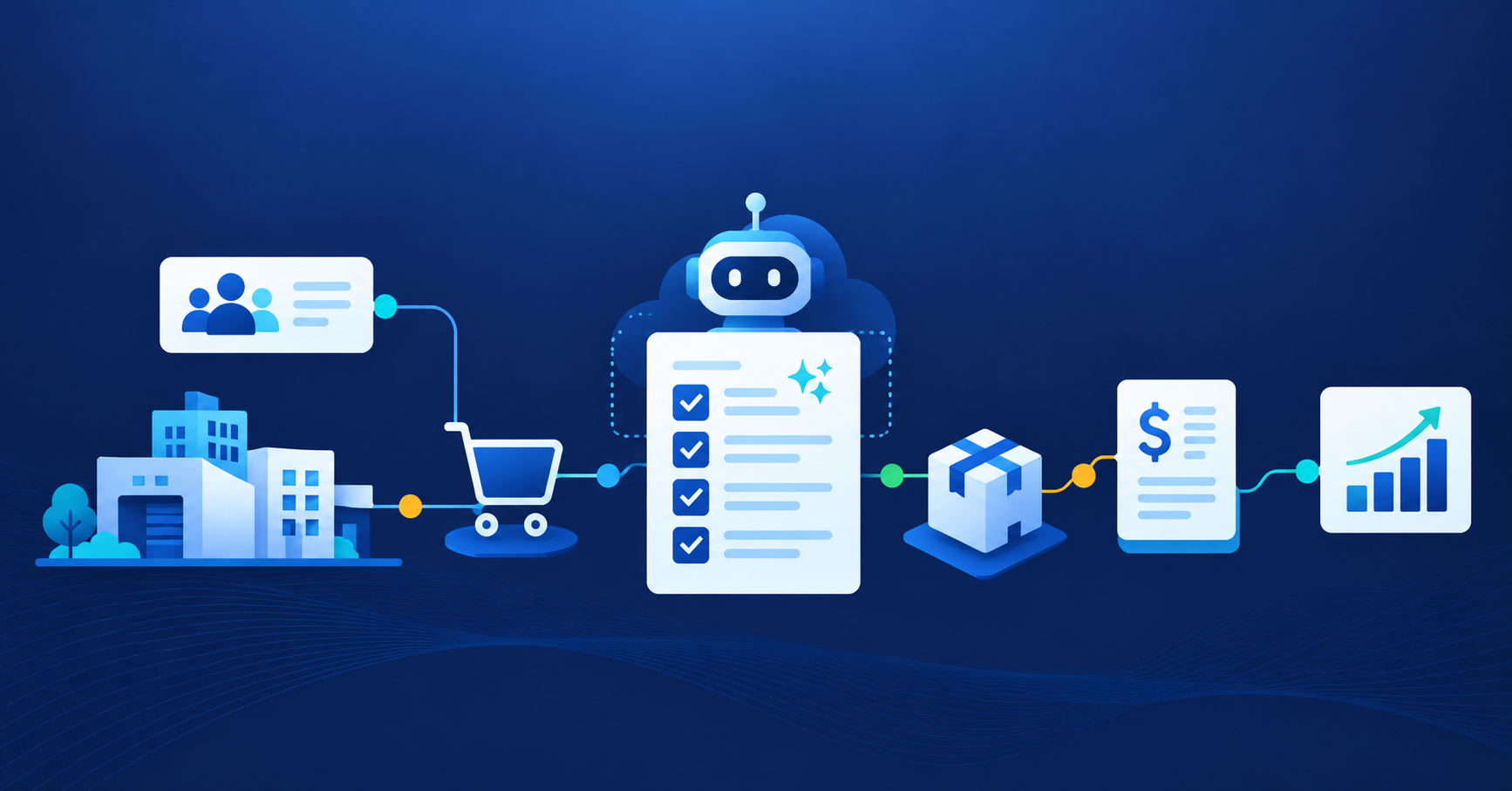
In autonomous procurement, the AI orchestration layer makes and executes decisions by managing data retrieval, optimization, large language model (LLM) selection, and quality validation before triggering any actions. Machine learning algorithms and predictive analytics power the system, which continuously evaluates outcomes and learns from results.
AI orchestration is the result of five generations of evolving AI maturity in procurement – from basic automation to fully autonomous, multi-step agent execution.
At the highest level, AI agents independently complete tasks, escalate exceptions, and make decisions within defined guardrails. Ivalua’s agentic AI in procurement capabilities ensures that autonomy operates according to embedded governance and enterprise-grade quality control.
End-to-End Visibility
Autonomous capabilities depend on full visibility across suppliers and performance metrics. AI can’t make responsible sourcing decisions without transparency into metrics such as delivery performance, financial stability, compliance status, and sustainability data. This data is particularly useful when augmented and analyzed with real-time market intelligence.
For example, IKEA leveraged Ivalua’s platform to increase supply chain transparency and make more informed and accountable procurement decisions. Better transparency was essential to strengthening oversight and collaboration across its supplier ecosystem.
With unified data visibility embedded in the Ivalua platform, AI-driven execution was not only faster, but more resilient and responsible.
“Ivalua was instrumental in creating transparency for the whole supply chain.”
– Slawomir Peter, Supply Chain Development Area Manager, IKEA
Understanding how autonomous procurement works raises the next question: where can you apply it today for meaningful results?
Autonomous Procurement Use Cases
Use cases for autonomous procurement span supplier management, contract lifecycle management, and spend optimization. However, in leading organizations, AI hasn’t been deployed all at once. Adoption has progressed through stages of a maturity journey that started with enhancing procurement automation.
By implementing an autonomous sourcing solution, you can expand AI capabilities progressively as your data and governance models mature. Ivalua supports this phased approach with modular deployment options, which we’ll describe next.
Intelligent Supplier Onboarding and Management
In autonomous supplier management, AI automates supplier discovery, onboarding validation, policy compliance checks, ongoing supplier risk management, and performance tracking. AI can be used to continuously monitor financial health, ESG metrics, contract compliance, and delivery performance, and flag issues in real time. It can then recommend corrective actions.
For example, using Ivalua, Hiscox increased spend under management from less than 20% to 58% while rationalizing its supplier base from more than 10,000 to around 3,000. By centralizing data and automating supplier controls, they strengthened data visibility, reduced risk exposure, and gained more leverage with suppliers.
AI-Powered Contract Management
Autonomous capabilities in contract lifecycle management accelerate drafting, standardize clauses, track compliance obligations, and surface hidden value leakage. AI agents in procurement can review terms against policy guidelines and recommend better language, and they can reconcile invoices with the terms of the contract to prevent overpayments.
CACI, for example, leveraged Ivalua’s AI-powered contract management solution to improve contract terms by at least 3%.
What’s more, McKinsey cited a global pharmaceuticals company that built an AI-based invoice-to-contract reconciliation tool in just four weeks. They used it to surface more than $10 million in value leakage.
Automated Procure-to-Pay
An autonomous purchasing system extends intelligence into Procure-to-Pay (P2P) with touchless invoice processing, automated approvals, and integrated payments. These capabilities help to reduce cycle times and manual errors significantly.
With advanced Procure-to-Pay process automation, companies have achieved up to 90% invoice automation. AI increases accuracy and staff can spend their time on high-value strategic work.
These use cases demonstrate what is possible today. Next, let’s talk about where procurement is heading and how you can get ready for what’s next.
Future of Autonomous Procurement
In the future, autonomous procurement will encompass multi-agent AI systems coordinating decisions in real time for sourcing, risk, logistics, and finance. In fact, by 2030, half of cross-functional supply chain management solutions will incorporate agentic AI capabilities, according to Gartner, and multi-agent AI systems powered by GPT-5 or Llama 4 have been shown to cut total supply chain costs by as much as 67% compared to human teams.
Keep in mind, as autonomy increases, oversight is essential. Security and compliance require LLM policy alignment, data-privacy controls, human-approval checkpoints, and role-based restrictions for high-risk tasks.
Ivalua solutions are instrumental in how AI agents are reshaping procurement. By embedding security and governance directly into procurement workflows, the company is helping to make the case for agentic AI, enabling intelligence and autonomy in procurement with the right level of control.
If your organization is ready to move beyond basic automation, it’s time to explore how agentic ai in procurement can help you accelerate your transformation.
See AI-Powered Procurement in Action With IVA
Frequently Asked Questions About Autonomous Procurement
FAQs
In the debate around autonomous procurement vs. RPA, the key difference is intelligence: RPA relies on rule-based automation to execute predefined tasks, while an AI-powered procurement platform uses intelligent agents to analyze data and make context-aware decisions. Traditional procurement automation follows scripts, but autonomous procurement adapts in real time, learning from outcomes and acting within governance guardrails.
An autonomous procurement implementation typically begins with an S2P deployment and expands through a phased rollout, depending on data readiness and organizational maturity. A full procurement digital transformation timeline can range from several months for foundational capabilities to longer-term expansion as intelligent execution scales across the enterprise.
Common autonomous procurement challenges include poor data quality procurement standards, fragmented systems, and resistance to change. Successful procurement technology adoption requires strong AI governance, clear change management strategies, and executive alignment to ensure trust and accountability.
Leading autonomous procurement industries include manufacturing procurement, government contracting, and retail supply chains where complexity and compliance demands are high. However, any large-scale enterprise procurement environment can benefit from intelligent automation that improves visibility, risk management, and cost control.
Modern procurement skills must combine commercial expertise with AI procurement management capabilities and strong data literacy. As strategic procurement roles evolve, teams focus on oversight, governance, and value creation, ensuring effective human oversight AI within transformed procurement organizations.
Measuring autonomous procurement ROI requires tracking procurement cost savings metrics, operational efficiency gains, and improvements in core procurement KPIs such as cycle time and spend under management. Organizations should also evaluate total cost of ownership and broader procurement efficiency metrics to link intelligent execution directly to financial and strategic outcomes.
Further Reading
- Part 2: Implementing AI Agents in Procurement: Best Practices & Strategies
- AI Agents in Procurement: The Ultimate Guide
- Part 1: The Arrival of AI Agents in Procurement – Understanding the Basics
- Part 3: Making the Case for Agentic AI in Procurement
- Implementing AI Procurement Software: Automation, Governance and Risk Management
- Procurement Automation: The What, Why and How