

Procurement teams are increasingly responsible for controlling costs, reducing supplier risk, improving compliance and sustainability, and business resilience – and they’re finding that fragmented tools and disconnected processes are insufficient. Why? Because they limit visibility and make decision-making slow and difficult.
As a result, many organizations are turning to B2B procurement platforms, which can help organizations manage the entire Source-to-Pay (S2P) lifecycle within a single, connected environment.
However, it’s essential to choose a platform that unifies supplier, spend, contract, and transactional data across the enterprise while supporting scalable workflows, automation, and analytics.
In this guide, we explore key components of a modern B2B procurement platform and how it’s different from point solutions and ERP-native tools. We also provide 6 clear steps for evaluating your options.
Key Takeaways
- Unified B2B procurement platforms bring together sourcing, suppliers, purchasing, invoicing, and payments on a single model.
- Unified platforms provide visibility into spend, suppliers, contracts, and risk while supporting robust governance and compliance.
- AI and automation deliver the greatest value when they are built on a single source of truth for procurement and supplier data.
- To choose the right platform, consider user adoption, integration requirements, and its ability to scale with your organization over the long term.
What Is a B2B Procurement Platform?
A B2B procurement platform manages the entire Source-to-Pay (S2P) lifecycle while unifying data, workflows, and analytics. It helps improve efficiency and strengthen compliance, and provides transparency into spend and supplier performance.
Many organizations currently struggle with fragmented technology and loosely integrated products with separate data models. “Suite-in-a-Box” solutions can create data silos and limit visibility, making it difficult to scale processes.
By contrast, a modern procurement platform is built on a shared architecture and data foundation. Key characteristics include:
- System of Record: A single source of truth and unified data model for supplier, spend, contract, and transaction data improves reporting accuracy and provides a trusted foundation for AI-driven insights and decision-making.
- Embedded AI and automation: AI uses a common data foundation when orchestrating workflows and automating tasks to accelerate decision-making across the S2P process.
- Built-in Governance: Low-code/no-code configuration capabilities enable you to adapt workflows and maintain audit trails, without relying heavily on IT.
These characteristics enable greater agility and more strategic procurement outcomes.
A Unified Source-To-Pay Layer That Connects Procurement and Supplier Processes End-To-End
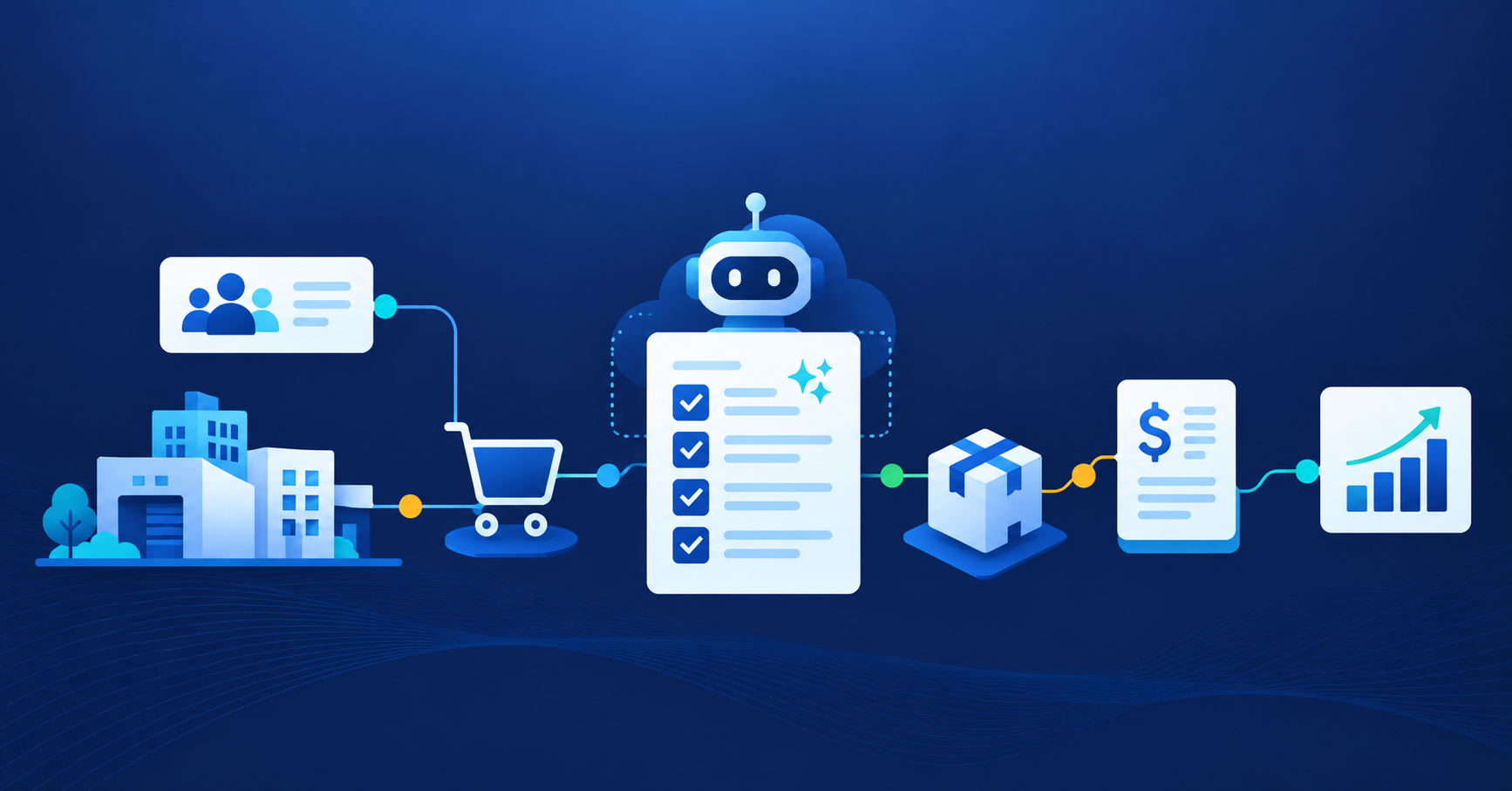
A unified B2B procurement platform connects every stage of the procurement process, with data workflows and insights flowing seamlessly:
- Sourcing: Identifying suppliers, running RFPs and sourcing events, and negotiating pricing and terms.
- Contracts: Creating, managing, and monitoring contracts to ensure negotiated terms are captured and enforced.
- Buying: Managing requisitions, catalogs, approvals, purchase orders, and day-to-day procurement activities through a streamlined procure-to-pay process.
- Invoices and Payments: Automating invoice processing, matching, approvals, and payment readiness to improve efficiency and reduce errors.
- Performance and Risk Management: Continuously monitoring supplier performance, compliance, sustainability metrics, financial health, and risk factors throughout the supplier relationship.
The unification of these processes differentiates true procurement platforms from a collection of point solutions, providing:
- Consistent workflows connecting sourcing, contracting, purchasing, invoicing, and supplier management activities.
- Cross-process reporting and analytics for greater control across Source-to-Contract (S2C) and Procure-to-Pay (P2P) processes.
Unified platforms enable teams to work from the same supplier and spend data – for instance, a sourcing manager can view supplier performance and risk data before awarding business. Or, accounts payable teams can view contract terms when processing invoices.
Unified Procure-to-Pay solutions support standardization as well as flexibility, enabling you to establish common processes and reporting standards. Your eProcurement software should also accommodate regional regulations and business requirements.
How It Differs from Point Tools and ERP-Native Procurement
While point solutions and ERP-based procurement tools can address specific needs, they usually don’t provide end-to-end transparency or consistent governance. Let’s look closer at how the two approaches differ.
Point Tools: Strong in One Area, Weak Across the Process
Point solutions solve a specific procurement challenge (i.e. sourcing, contract management, or invoicing). However, they can create data silos when used next to other standalone tools. Common challenges include:
- Multiple supplier records across systems
- Inconsistent workflows and approval processes
- Limited visibility across the Source-to-Pay lifecycle
- Disconnected reporting and spend analytics
- Manual effort required to reconcile data between applications
As you add tools, you may find yourself spending a lot of time managing integrations and re-entering data.
ERP-Native Procurement: Transactional Strength, Limited Orchestration
While ERP systems are good for executing and recording transactions, modern procurement teams need a more complete solution. A unified procurement platform outperforms ERP systems by providing:
- Consistent supplier records across business units and geographies
- End-to-end transparency from sourcing through payment
- Unified compliance management and policy enforcement
- Cross-functional spend analytics and reporting
- Flexible workflows that adapt to evolving business requirements
Procurement Platforms: Unifying Processes Across the Enterprise
Modern procurement platforms create a unified layer that sits above ERP solutions and connects procurement activities. This approach is a cornerstone of digital procurement initiatives, helping organizations be more agile and data-driven.
The landscape of procurement technology options is growing quickly. Next, we will take a look at how the market has evolved and which solutions are best equipped to address enterprise-scale procurement challenges.
Why Enterprises Invest in Procurement Platforms Now
Today’s procurement teams are expected to deliver greater strategic value while managing significantly more spend with leaner teams.
According to McKinsey, procurement spending managed per full-time employee has increased by 50% over the past five years, while two-thirds of Chief Procurement Officers now report directly to the CEO or CFO. These figures underscore procurement’s expanding influence on business performance.
At the same time, organizations are looking to automation and AI to help procurement do less manual work and focus more on higher-value activities, such as supplier collaboration and risk management.
The business case for digital procurement has become increasingly compelling, as well. A Forrester Total Economic Impact™ study found that organizations using Ivalua’s Spend and Supplier Management Platform achieved a 393% return on investment over three years, generating $25.5 million in net present value with payback in less than six months.
Greater automation and process standardization also delivered annual procurement efficiency savings of 2.25% to 2.35%, creating approximately $24.2 million in value over three years.
Similarly, McKinsey found that separating strategic and transactional procurement activities can reduce costs by up to 11%, while freeing teams to focus on strengthening supplier relationships and generating more value from them. Yet despite all of this evidence, adoption remains relatively low, with only 60% of large organizations and 30% of smaller organizations having implemented Procure-to-Pay (P2P) solutions.
The takeaway? You simply can’t meet growing business demands with disconnected tools. A unified procurement platform helps automate routine work and improve control across spend and suppliers, while setting the stage for more strategic procurement operations.
Unification Delivers Measurable ROI: Fragmentation Leaves Money on the Table
A unified procurement platform delivers value in terms of operational and performance improvements. Take a look at some recent statistics:
- Forrester reported that organizations using Ivalua’s Spend and Supplier Management Platform achieved an ROI of 393% over three years, a net present value (NPV) of $25.5 million, with payback in under six months.
- Annual procurement efficiency savings were 2.25% – 2.35% thanks to greater automation and process standardization. These efficiency gains generated about $24.2 million in value over three years.
- McKinsey found organizations that separate strategic and transactional procurement activities can reduce costs by 10% – 11%, and free up procurement to spend more time improving supplier relationships and creating value.
Despite evidence that P2P solutions can reduce costs by 2% to 5%, only 60% of large organizations and 30% of small organizations have implemented procurement systems.
AI Amplifies the Unified Platform Advantage
AI is quickly becoming a competitive differentiator in procurement, but only when you have the right foundation in place:
- AI agents can improve procurement productivity by 25% to 40% by automating repetitive tasks and engaging digital coworkers on higher-value activities.
- Forty percent of procurement organizations have already implemented or piloted generative AI. Early adopters report savings potential of up to 20% from AI-powered analytics – one pharmaceutical company uncovered $10 million in value leakage through AI-driven invoice-to-contract reconciliation in just four weeks.
- Gartner projects the Source-to-Pay technology market will grow at a 16.3% CAGR, reaching $18.7 billion in annual spend by 2029.
How does AI differ from traditional automation?
- AI that operates across the entire S2P lifecycle, rather than within a single process.
- AI has a shared data model for analyzing supplier, contract, sourcing, purchasing, and payment information in context.
- Pre-built agents accelerate adoption and deliver value without extensive custom development.
- Strong governance and privacy controls provide transparency into how AI uses data to make decisions.
But without a unified data foundation for all supplier records, spend data, contracts, and transactions, AI may generate insights that are difficult to trust or act on.
In short, AI doesn’t replace the need for a unified procurement platform; it amplifies it. Establishing a common data foundation today will position you to increase efficiency and take advantage of the opportunities AI promises to deliver.
S2P Is Mainstream; Differentiation Is in Unification and Adoption
According to PwC’s Digital Procurement Survey 2024, 94% of organizations already use Source-to-Pay solutions. Respondents expect their procurement processes to be nearly 70% digitalized by 2027.
As digital procurement matures, success increasingly depends on unification and usability.
The B2B Procurement Platform Landscape: Understanding Your Options
In this section, we look at Gartner’s Magic Quadrant, which evaluated 13 Source-to-Pay vendors across Completeness of Vision and Ability to Execute.
Gartner Magic Quadrant: 13 Vendors Evaluated, 6 Leaders
According to Gartner, six vendors have achieved leader status. These leaders demonstrate market-defining vision, proven execution, and robust AI strategies.
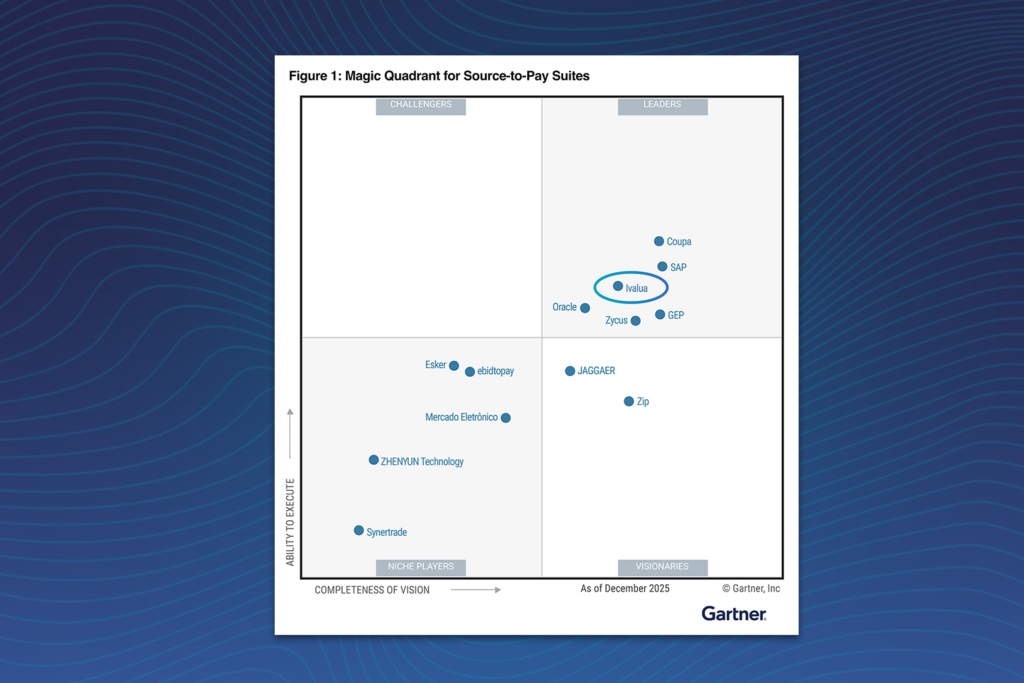
Gartner Magic Quadrant for Source-to-Pay Suites, January 2026
What Sets Leaders Apart
While features are important, the strongest solutions share the following characteristics:
- Agentic and Generative AI: AI is embedded directly into procurement workflows, helping to automate routine tasks and enable users to use natural language to interact with agents.
- Intake and Orchestration Capabilities: Guided intake, intelligent routing, and workflow orchestration help users navigate complex processes and get what they need quickly, while remaining compliant.
- Configurable, No-Code Flexibility: They enable users to change workflows, policies, forms, and approval processes to adapt to changing business needs, without extensive coding.
- Strong User and Supplier Experience: Ease of use for both internal stakeholders and suppliers is critical for driving adoption, improving data quality, and maximizing ROI.
- End-to-End Integration Across Source-to-Pay: Data flows seamlessly across sourcing, contracts, suppliers, purchasing, invoicing, and payments – eliminating silos and providing a complete view of supplier and spending activity.
- Unified Supplier Collaboration: Centralized supplier networks and collaboration capabilities support onboarding, document exchange, performance management, risk monitoring, and ongoing communication from one location.
With these characteristics in mind, let’s review why Ivalua continues to rank as a leader in Gartner’s report.
Ivalua’s Leader Position
According to Gartner, several factors sets Ivalua’s Source-to-Pay platform apart from its competitors:
- A Truly Unified Platform: Unlike solutions that have been pieced together through acquisitions, Ivalua is built on a single codebase and shared data model, which helps to eliminate silos and simplify administration.
- Exceptional Customer Experience: Ivalua achieved the shortest average support ticket resolution time (well under a day) and the highest overall contract retention rate among all vendors Gartner evaluated.
- Deep Commitment to AI Innovation: Ivalua has made agentic AI a strategic priority, including appointing its founder as Chief AI Officer. It supports a bring-your-own-LLM approach, so you can leverage other models such as OpenAI, Gemini, Claude, or Mistral while maintaining control over your data.
- Ivalua’s IVA (Intelligent Virtual Assistant), now powered by IVA Studio, is a fully agentic system that can execute any Source-to-Pay process from day one, and automate any procurement workflow.
Because it operates on a unified Source-to-Pay platform and as a single agent for procurement, it can reason across a single data model rather than pulling information from disconnected point solutions. - Configurability Without Upgrade Tradeoffs: With Ivalua, you can configure workflows, processes, and business rules to meet your organization’s unique requirements while still benefiting from regular platform upgrades.
- Enterprise-Grade Flexibility and Compliance: Multiple deployment options, strong data privacy controls, and support for regional regulatory requirements make Ivalua particularly attractive for global organizations and highly regulated industries.
While market recognition validates solutions like Ivalua, selecting the right procurement platform ultimately depends on which capabilities will drive the greatest business outcomes for your organization.
Core Capabilities in a B2B Procurement Platform: What to Look for
As you evaluate procurement platforms, focus on the capabilities that directly impact business outcomes.
Beyond Indirect: Direct Materials & BOM Lifecycle
Many procurement platforms were built primarily for indirect spend. However, your organization may also need support for direct materials, where supplier decisions can have a direct impact on product cost, quality, and availability.
Look for a platform that provides visibility into the BOM throughout the product lifecycle. For example, Ivalua’s BOM Lifecycle Manager helps teams understand how selecting certain suppliers can affect finished product costs, from new product introduction (NPI) through production.
Conversational “Intake-to-Pay”
AI-driven intake capabilities guide users through the request process – even those without procurement expertise – helping them find approved suppliers, products, and workflows through a simple, conversational experience. It helps prevent maverick spend and compliance risks, as well, since users are more likely to follow the standardized process when it’s easier.
End-to-End S2P Coverage That Matches Your Scope (S2C + P2P)
Strong Source-to-Pay platforms replace disconnected tools with a platform that covers the full Source-to-Pay lifecycle, including sourcing (RFX), contract lifecycle management, purchase requests, purchase orders, catalog management, goods receipts, invoice processing, and exception handling.
Supplier Management + Supplier Collaboration Portal
Leading supplier management platforms provide supplier onboarding, data validation, document exchange, performance tracking, corrective action management, risk monitoring, and ongoing collaboration through a centralized supplier portal. This minimizes use of old, error-prone methods such as email and spreadsheets.
Spend Analytics and Real-Time Reporting Across Processes
Procurement leaders need real-time visibility into spending patterns, compliance issues, and performance metrics, and an effective platform can deliver. Some offer spend classification, dashboards, policy compliance auditing, and insights into exception hotspots across procurement activities.
Most importantly, analytics should be connected to operational processes. While a standalone reporting tool can highlight problems, a unified platform with spend analytics enables immediate action.
Workflow Configuration That Keeps Policy Changes Out of IT
Procurement policies and compliance requirements are constantly evolving, and if IT is required to support every change, your team can’t adapt quickly. The best platforms allow you to configure approvals, segregation of duties (SoD) controls, audit trails, and automation workflows using low-code or no-code tools.
Integration with ERP That Supports Multi-ERP Reality
When you have multiple ERP systems across regions or business units, flexible APIs, prebuilt connectors, robust data mapping capabilities, and clear master data management strategies, are essential requirements. You need to be able to identify and resolve issues quickly while maintaining a consistent view of suppliers, spend, and transactions across systems.
Once you’ve evaluated the capabilities of potential platforms, the next step is to understand how it works in the real world.
How to Choose the Right B2B Procurement Platform
Use the following framework to evaluate procurement automation software based on business outcomes and long-term success.
Step 1 — Anchor on the Operating Model
Before evaluating vendors, align stakeholders on the scope of the procurement process you need to support. Leverage Gartner’s definition of Source-to-Pay as an end-to-end process, and map where information must flow across all S2P activities. Then, identify the systems, teams, and suppliers involved to create a shared understanding of what the platform must support and where data continuity is essential.
Step 2 — Start with Outcomes, Not Modules
Identify the two or three business outcomes that matter most to your organization, such as:
- Improve spend visibility across business units
- Increase policy compliance
- Reduce procurement cycle times
- Improve supplier onboarding quality
For each outcome, establish a baseline and a target metric. This helps you avoid evaluating platforms on features alone.
Step 3 — Test What Must Be Unified vs. What Can Remain Integrated
Decide which data and processes should be shared across the S2P lifecycle. Consider unifying:
- Supplier master data
- Spend taxonomy and classification
- Procurement policies and workflows
- Cross-process reporting and analytics
Other systems can be integrated, such as:
- ERP transaction processing
- Finance and accounting systems
- Specialized third-party data sources
A useful test is whether the platform can maintain one supplier record and continuously enrich it with onboarding, risk, performance, contract, and transaction data in real time. If duplicate records, conflicting information, or “zombie” supplier profiles persist, it may not actually be a unified platform.
Step 4 — Use a Platform Fit Scorecard
Once you’ve established your requirements, create a weighted scorecard to compare vendors and help evaluation teams focus on what will drive long-term success. Although the exact weighting may vary by organization, the following framework provides a good starting point:
| Evaluation Criteria | Example Weight |
|---|---|
| Unification & Data Model | 25% |
| Integration & Architecture | 20% |
| Workflow Configurability | 15% |
| Analytics & Visibility | 15% |
| Supplier Management Depth | 10% |
| Adoption & User Experience | 10% |
| TCO & Rollout Risk | 5% |
Focus on the evidence, not the vendors’ claims. Request a demo and customer references, and ask for real-world examples that validate how the platform performs against your criteria. A structured scorecard can help everyone align on priorities.
Step 5 — Run Workflow Demos That Prove Reality (Not Slides)
The best way to evaluate a procurement platform is to ask vendors to demonstrate real-world workflows. Consider testing the following scenarios:
- Supplier Onboarding: A new supplier submits required documentation, completes validation checks, and moves through an approval process before becoming eligible for sourcing and purchasing activities.
- Guided Buying: An employee requests a product or service and receives policy-compliant recommendations, approved suppliers, and relevant risk or compliance information at the point of purchase.
- Invoice Exception Handling: An invoice fails matching rules, triggers an exception workflow, routes to the appropriate stakeholder, and maintains a complete audit trail throughout resolution.
- Cross-process Supplier Insights: A procurement user accesses a single supplier profile showing contracts, spend history, performance metrics, risk indicators, and active sourcing events in one place.
- Workflow Modification: A procurement administrator updates an approval rule, policy requirement, or workflow step without custom development or IT intervention.
These exercises quickly reveal whether a platform is truly unified, configurable, and user-friendly.
Step 6 — Model Total Cost of Ownership and Rollout Risk
The lowest-cost platform is not always the least expensive. It’s important to evaluate both TCO and implementation risk to understand the true business impact of Source-to-Pay tools. Consider the following:
- Licensing costs for the platform and any required modules
- Implementation costs (configuration, data migration, and testing)
- Integration costs for ERP, finance, supplier, and third-party systems
- Administrative overhead required to maintain workflows, users, and configurations
- Consolidation savings from replacing multiple tools and reducing manual processes
- Change management costs for training and process transformation
You should also evaluate what’s required for long-term success:
- Data Quality: AI, purchasing automation, analytics, and automation workflows are only as reliable as the data behind them. Before implementing a platform, be sure to prioritize supplier, contract, and spend data quality.
- An Ecosystem Mindset: Invest in a platform that connects people, processes, suppliers, and systems, and provides a foundation for scaling procurement’s impact over time.
The final step is validating your shortlist against independent benchmarks and customer outcomes. Next we cover some questions you should ask during your evaluation process.
The “Tough Questions” Framework: Exposing “Suite-in-a-Box” Chaos
To determine whether a solution is built for long-term scalability, ask vendors to demonstrate the following:
- “Is this built on a single codebase, or is it a collection of acquired products?”
- “Can you show me a sourcing event moving to a purchase order without switching modules or interfaces?”
- “How easily can we update workflows, approval rules, or ESG data fields without custom code or IT involvement?”
- “Is AI embedded directly into procurement workflows, or is it a separate, bolted-on tool?”
Their answers will reveal a lot about whether their solution is just a “suite-in-a-box” or a unified platform that has the architecture and flexibility to support future innovation.
Customer Story: How ADAC, Europe’s Largest Automobile Association, Harnesses a Unified Platform for its Diverse Supplier Networks
ADAC was struggling with fragmented procurement processes spread across multiple applications. Meanwhile, manual supplier onboarding, risk management, and compliance activities were creating inefficiencies and increasing administrative burden.
By implementing Ivalua’s unified Source-to-Pay platform, the company standardized procurement processes and improved transparency across suppliers, while establishing a scalable framework for ongoing improvement. They also reduced operational workloads, so teams can focus on strategic sourcing and supplier management. According to COO Thomas Germer, “Ivalua is the prerequisite to unburden the team from the more operational P2P work, and actually be able to free capacity for real sourcing and strategic work.”
Read the full ADAC case study.
Moving from Evaluation to Action: Your Next Steps
Choosing the right B2B procurement platform starts with defining desired outcomes and evaluating vendors through a structured process that includes a scorecard, demonstrations, and TCO discussions.
As you create a shortlist, look for platforms that can unify data, processes, suppliers, and stakeholders on a single data foundation while supporting future growth and innovation.
See How Ivalua Simplifies Enterprise Procurement
FAQs
A B2B procurement platform is software that helps organizations manage sourcing, supplier management, purchasing, invoicing, and payments within a unified environment. Unlike standalone tools, a modern B2B procurement platform connects data, workflows, and analytics across the entire Source-to-Pay lifecycle.
You may be wondering what is eProcurement versus P2P or Source-to-Pay. eProcurement focuses on the purchasing experience, including requisitions, catalogs, approvals, and purchase orders. Procure-to-Pay (P2P) extends that process through invoice processing and payment, while Source-to-Pay (S2P) encompasses the full procurement lifecycle, including sourcing, contracts, supplier management, purchasing, and payment.
The most important procurement software capabilities include end-to-end process coverage, supplier management, spend analytics, workflow automation, AI-enabled insights, and flexible integration capabilities. Enterprise teams should also prioritize usability, configurability, and the ability to operate from a single source of truth across procurement processes.
Modern procurement platforms use APIs, connectors, and integration frameworks to exchange data with ERP, finance, and operational systems. Effective integration with ERP ensures consistent supplier, contract, and transaction data while allowing organizations to maintain visibility across multiple systems and business units.
Evaluating total cost of ownership requires looking beyond licensing fees to include implementation, integrations, administration, training, and change management costs. Organizations should also factor in potential savings from improved business spend management, process automation, supplier consolidation, and reduced operational overhead.
Implementation timelines vary based on scope, integrations, data quality, and organizational complexity, with most enterprise deployments occurring in phases rather than a single rollout. A modern cloud procurement platform can often accelerate deployment and time-to-value by simplifying upgrades, configuration, and ongoing administration.