

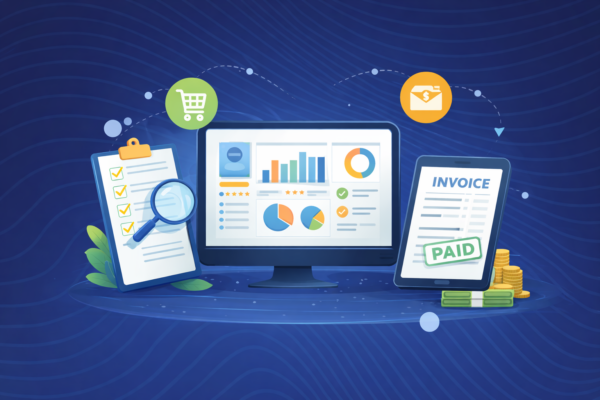
Enterprise spend management is the strategy, processes, and technology organizations use to manage direct materials, indirect purchasing, and services spend across multiple business units, entities, currencies, and suppliers, extending and orchestrating (not replacing) your Enterprise Resource Planning (ERP) solution.
As agentic AI reshapes procurement in 2026, this guide explains how enterprise spend management is evolving from a collection of transactional tools into an intelligent operating model that improves visibility, collaboration, decision-making, and business outcomes across the entire spend lifecycle.
In this guide, you’ll learn what enterprise spend management is, how agentic AI is changing the way organizations manage spend, and the key capabilities to evaluate in a modern platform.
Key Takeaways
- Enterprise spend management is a visibility problem, which is why connecting the entire source-to-pay lifecycle delivers greater control than isolated reporting tools.
- Agentic AI can coordinate work and execute approved actions across the spend lifecycle within business policies.
- A unified data model is the foundation of trustworthy AI, connecting sourcing, contracts, suppliers, and spend data.
What Enterprise Spend Management Covers Beyond Cards and T&E
Enterprise Spend Management provides visibility and control over organizational spend, including direct materials, indirect purchasing, and services spanning business units, legal entities, currencies, and ERP systems. It encompasses the entire Source-to-Pay lifecycle.
When people talk about enterprise spend management, they usually focus on corporate cards, travel and expense (T&E), or employee reimbursements. Some think spend management software just consists of procurement dashboards that categorize historical spending after transactions have already occurred.
While these capabilities are important, they are only a small part of the whole picture. Modern spend management platforms help you reduce enterprise spend and guide employees toward preferred suppliers and negotiated contracts. Additionally, they help identify policy violations before purchases are approved, identify risks, and help prevent spend leakage.
Realizing the capabilities of a modern spend management platform requires a foundation that connects spend to sourcing events, supplier information, contracts, and purchasing workflows. These functions have to share a common data model to support every decision with the appropriate context.
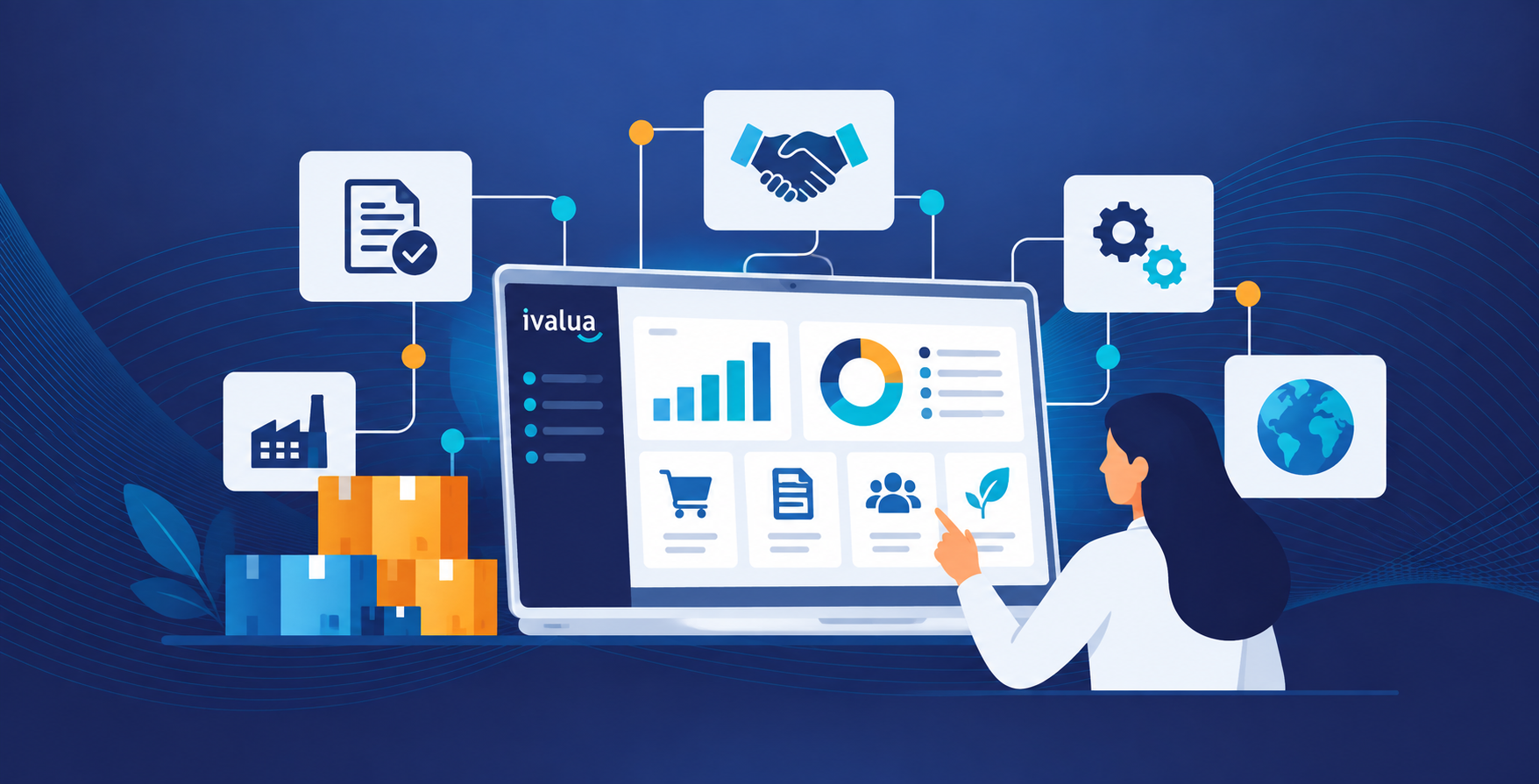
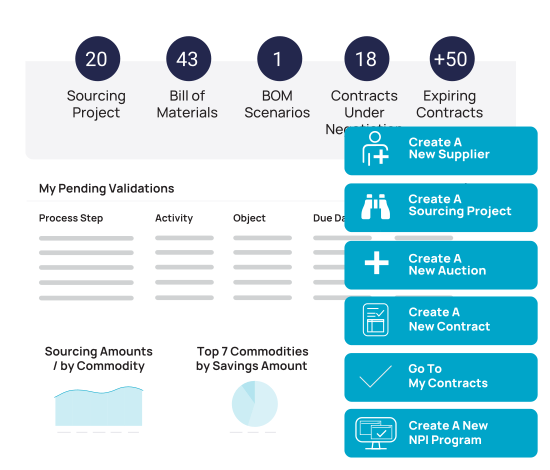
Ivalua’s unified Source-to-Pay platform and spend analysis solution manage all spend and all suppliers on a single data model. Capabilities cover the entire cycle, from spend analysis through payment, bringing together invoices, purchasing cards, travel expenses, AP vouchers, and other spend data into a single analytical workbench.
What Enterprise-Grade Spend Visibility Looks Like In 2026
Enterprise-grade business spend management and visibility means maintaining a single, current view of spending across every business unit, legal entity, category, currency, and ERP system. It provides procurement teams with the context to act while decisions are still being made, whether the goal is to reduce maverick spend and tail spend, increase spend under management, or surface off-contract purchases.
That level of visibility depends on three capabilities:
- Spend data must share a common data model with suppliers, contracts, purchase orders, and sourcing events, so transactions are made using business context.
- Spend classification must keep pace with incoming transactions rather than relying on monthly or quarterly refresh cycles.
- Teams need to take action within the same system where the data resides. They need to be able to do things like route purchases and investigate anomalies, without switching between applications.
This connected foundation becomes even more important for manufacturers managing direct vs indirect spend. It’s critical to have shared visibility into all cost drivers and supplier performance, so procurement, engineering teams, and suppliers can work together to make better decisions and improve product outcomes.
According to McKinsey, procurement organizations manage about 50% more spend per full-time employee than they did five years ago. What’s more, 55% of procurement leaders report flat or shrinking budgets despite higher savings expectations. Better data and automation will help improve productivity, without adding significant cost. That’s why conversational access to spend analytics and insights is now leading priorities for procurement leaders.
Ivalua’s Spend Analysis solution ingests AP vouchers, invoices, purchasing card transactions, travel expenses, and other spend data in their native formats, so it can classify spending on-demand. Standard and custom taxonomies and visible classification logic can be continuously refined, helping procurement understand the data. With everyone sharing the same, accurate data, teams move from insight to action within the same workflow.
From Dashboards To Agents: The New Operating Model For Spend Management
The emerging model for enterprise spend management is agentic AI – intelligent agents that own specific business outcomes within human-defined guidelines. Instead of generating reports, AI agents understand context and can coordinate work across Source-to-Pay. They can even take action when required or escalate exceptions for human review.
This new operating model can only operate if you’ve established the following three pillars:
- Trusted System of Record: A single, unified data model spanning sourcing, suppliers, contracts, purchasing, and spend so every recommendation and action is based on complete, current information.
- Coordinated System of Action: Enables agents to execute work across end-to-end business procurement management instead of automating isolated tasks.
- Adaptive System of Governance: Transparency and control, and an understanding of why an agent provided a recommendation. Governance helps define the boundaries within which AI can operate and ensure the right balance of automation vs. human oversight.
McKinsey estimates AI can improve procurement productivity by 25% to 40%, especially if they execute end-to-end workflows while keeping humans accountable for strategic decisions. And Hackett projects that AI-enabled procurement teams can automate up to 80% of transactional work, so they can focus on strategy and innovation, as well as on meeting savings targets.
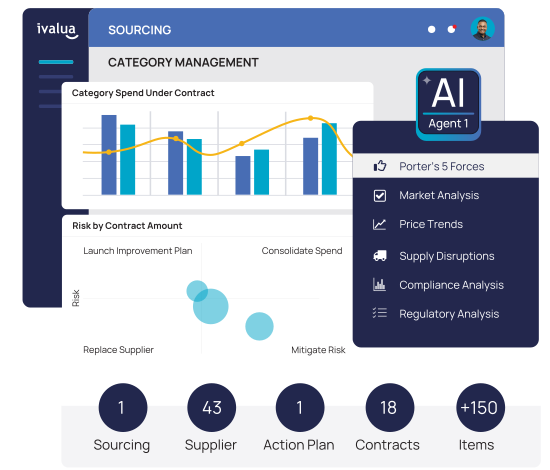
Ivalua’s Intelligent Virtual Agent (IVA) provides a single agent with full platform access across the entire S2P process. Because the platform itself is IVA’s toolset, organizations can take advantage of Agentic AI from day one across the entire S2P lifecycle.
Why The Architecture Underneath The Agent Decides Whether Spend Management Scales
As explained in Ivalua’s Agentic AI in Procurement: A Practical Guide (3rd Edition), Agentic AI only works on a unified data foundation with the right governance layer. That’s why leveraging AI is increasingly becoming a conversation about architecture.
The most advanced organizations are using the human+agentic AI model to manage virtually 100% of spend. AI agents take care of the long tail of tactical buying, allowing category managers to spend more time on supplier relationships, negotiations, innovation, and risk management. This requires using the three-pillars explained previously: a Trusted System of Record, a Coordinated System of Action, and an Adaptive System of Governance. Layering AI on top of fragmented systems will only make data and process problems worse.
This architectural approach also addresses a growing challenge: multi-agent sprawl. Instead of deploying a separate AI agent for every procurement task, a skills-based model equips one AI agent with multiple capabilities. When a sourcing event begins, the agent can call the appropriate skills dynamically, leveraging shared context throughout the workflow. This improves governance and decreases complexity.
With each generation, Agentic AI evolves. Once only capable of helping draft contracts or other documents, they can now conduct a full sourcing event from start to finish. But an agent’s output quality is determined on the context, accuracy and accessibility of the data it uses – not the LLM. That’s why an LLM-agnostic platform that can route tasks to the best-possible model is essential.
IVA was designed around this architecture. Built on a unified Source-to-Pay platform, it combines trusted data with adaptive governance and end-to-end workflows on a single AI foundation. Composable skills enable one agent to access the platform and work across the S2P lifecycle. This provides a scalable foundation for enterprise AI.
Where Agentic AI Acts Across The Enterprise Spend Lifecycle
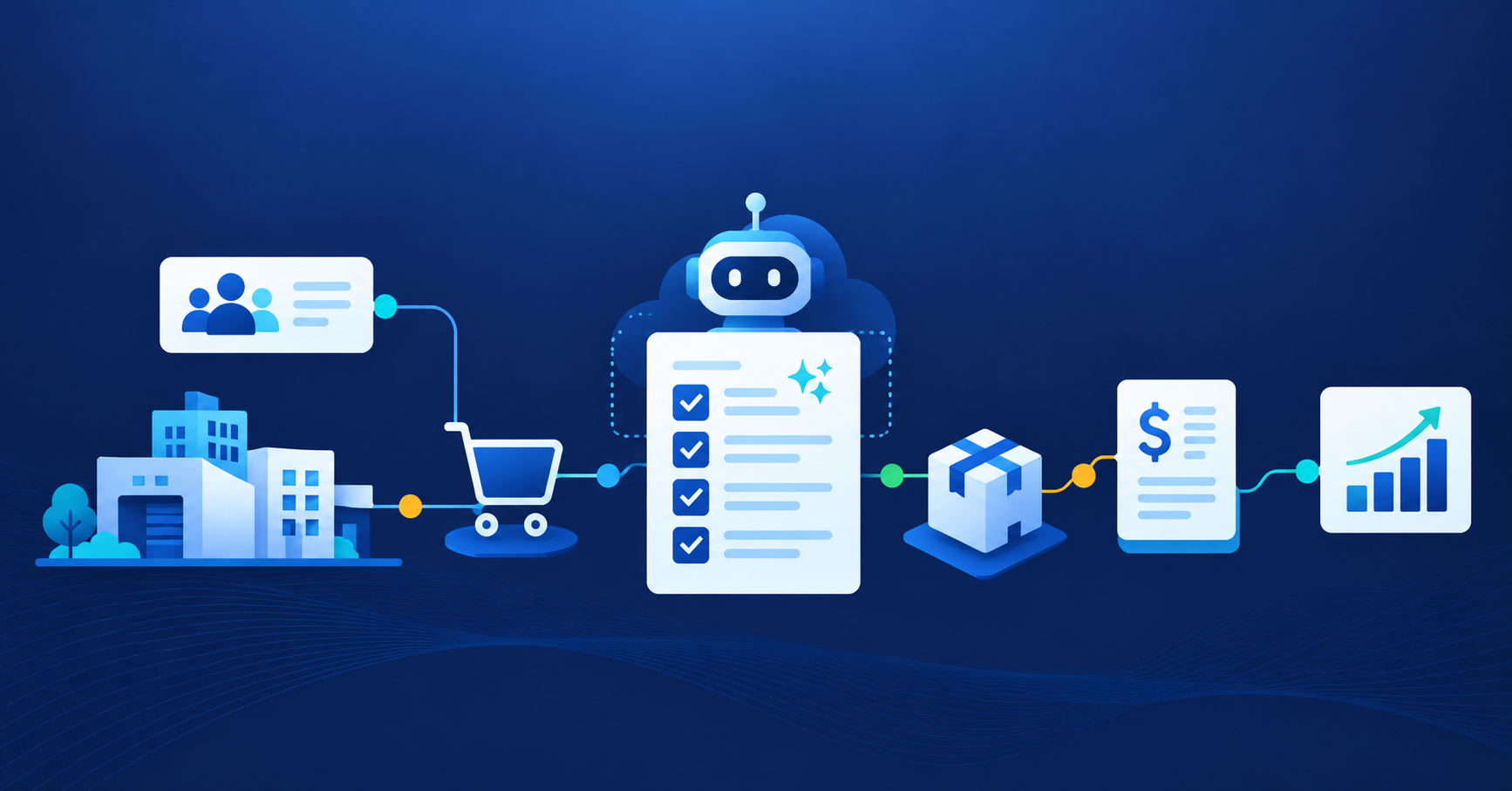
A capable AI agent isn’t confined to a procurement solution module. Instead, it works wherever spend decisions need to be made. It carries context from one stage of the S2P process to the next, connecting data across sourcing, contracts, suppliers, purchasing, and invoicing. Because it works within a unified procurement platform, it’s able to make decisions that isolated applications simply can’t.
The table below outlines how Agentic AI works in each stage of the S2P lifecycle.
| Stage | What IVA does | Example prompt | Governance checkpoint |
|---|---|---|---|
| Intake & requisition | Full intake management: finds the contracted catalog item, checks compliance, applies coding/cost allocation, routes for approval; requisitioning becomes conversational | “I need 50 standing desks for the Austin office by end of Q3” | Warns the approver before the PO is created if it pushes a cost center over budget; flags non-compliant purchases before submission |
| Sourcing | Researches internal + external supplier data, benchmarks pricing against historical awards, shortlists stronger suppliers, analyzes bids across cost/risk/performance | “Shortlist suppliers for [category] and benchmark current pricing against our last three awards” | IVA recommends; the buyer reviews and makes the award decision |
| Contracting | Performs contract lifecycle management: surfaces contracts expiring/auto-renewing on unfavorable terms; compares negotiated terms against actual purchasing to flag off-contract buying | “Flag contracts expiring in the next 90 days that will auto-renew, and compare their terms to what we’re actually buying” | Human approves any renewal or renegotiation; IVA only surfaces and proposes |
| Purchasing / eProcurement | Steers requisitioners to preferred supplier payment terms and contracted items, reducing maverick spend; checks requisitions against supplier risk, contract status, and performance in the background | “Is there a contracted supplier for this and is it the best price?” | IVA inherits the user’s permissions; it can’t approve anything the user couldn’t |
| Invoicing & payment | Matches invoice to PO, contract, and receipt; validates hard-to-enforce terms (SLA, warranty, delivery); flags duplicates/anomalies; surfaces early-payment-discount opportunities | “Match this invoice against the contract, PO, and receipt and flag anything off” | Exceptions routed to a person; payment release requires an authorized approver |
| Analysis | Lets users query spend across the unified data model conversationally; surfaces classified spend on demand using Ivalua’s Spend Analysis workbench (on-demand classification across native data formats, no batch refresh required), with every figure traceable back to the underlying classification rule. | “Show me all spend with [supplier] across business units this year and where we’re off-contract” | Clear-box transparency; Spend Analysis exposes the full classification rule set in a simple UI; every figure traces back to source data and the rule that produced it. |
McKinsey notes that autonomous AI agents preparing tenders, prequalifying suppliers, and analyzing bids can deliver 20% to 30% higher productivity and capture 1% to 3% more value on consumables. By automating routine work, procurement teams can focus on supplier strategy and negotiations – but they need the right foundation.
Because IVA runs on a unified data model with full platform access, it can act across sourcing, contracts, suppliers, purchasing, and invoicing. IVA Studio provides the governance layer and reusable skills that extend IVA’s capabilities over time, while its LLM-agnostic architecture gives you the flexibility to use leading AI models without vendor lock-in.
Keeping Humans In Control: Governed Autonomy Across Source-To-Pay
The biggest barrier to enterprise agentic AI is trust. Can you trust AI to make sourcing recommendations or approve routine work? Are you confident an AI agent can coordinate business-critical workflows without human intervention?
With strong governance, trusting AI becomes a bit easier. Governed Autonomy means you define the policies, permissions, and approval thresholds that govern how AI operates. Agents can only execute tasks within those boundaries, while people remain responsible for oversight.
Governed autonomy requires three capabilities, which IVA provides:
- Permission Inheritance: IVA only carry out actions that users have authorized them to perform. Permissions are enforced by the platform itself and can’t be bypassed by AI.
- Clear-box Transparency: With IVA, every recommendation, decision, and action is traceable to the underlying procurement data, with complete audit trails explaining the reasoning.
- Centralized Governance. IVA Studio provides one place to define what AI can do, what systems it can access, and how it behaves.
This governance foundation is critical today, since 74% of organizations expect to deploy agentic AI within the next two years. Yet only 21% have a mature governance model for AI agents. With adoption accelerating faster than enterprise controls, governance is one of the defining challenges for scaling enterprise AI.
Built for people AND AI, Ivalua gives organizations Governed Authority by architecture, via centralized control. IVA executes work across Source-to-Pay within clearly defined guardrails, so your people are always in control. IVA works with them, not around them.
How Covéa Gave Requesters Full Procure-to-Pay Autonomy While Staying Compliant with DORA and the AI Act
Covéa, one of France’s largest insurance groups, was having trouble scaling procurement processes. Even routine purchases such as a €350 order required multiple approvals and manual intervention. This resulted in delays for employees and procurement teams, and the organization struggled to quantify procurement’s financial contribution on individual sourcing initiatives.
To make matters worse, evolving regulations such as the AI Act and DORA introduced new compliance requirements for supplier relationships and contract management.
Ivalua’s unified Source-to-Pay platform with IVA helped Covéa transform the user experience and Procure-to-Pay operations. Employees can now complete routine purchasing requests from intake through contract and order generation with minimal intervention, while regulatory controls for DORA and the AI Act are embedded directly into procurement workflows. A new performance module measures procurement’s financial contribution on every file and makes procurement savings visible to leadership. Additionally, better data quality helps streamline collaboration and day-to-day operations.
“Today, we have requesters who can complete this [Procure-to-Pay] process entirely autonomously, said Jérôme Lamoureux, Purchasing Director at Groupe Covéa, “It’s a real gain in efficiency.”
Read the full Covéa case study.
What To Ask Before You Trust AI With Enterprise Spend Management
As agentic AI becomes a core part of procurement transformation, asking the right questions will reveal whether a platform is truly built for enterprise-scale spend management. Start with these:
- Does our spend data live in one model with our contracts, suppliers, and purchase orders, or is it stitched together from separate systems?
- How does AI steer a requisition to a contracted supplier before the purchase order is created.
- When a contract is about to auto-renew on unfavorable terms, how does the platform identify it, and who approves the next step?
- What can AI do without human approval, and where are the permission boundaries enforced?
- How does the system explain decisions? Is every AI recommendation and action traced back to the underlying source data?
- How quickly does AI deliver value across spend categories – from day one, or months later?
The answers to these questions will reveal the architecture behind the AI.
In 2026, enterprise spend management is defined by whether spend, sourcing, contracts, suppliers, and purchasing operate on a single data model that gives AI the context to make accurate decisions and the governance to execute them safely. This is the foundation of a modern Source-to-Pay platform.
An AI agent is only as capable as the platform underneath it, and the greatest value comes when AI can work across the entire procurement lifecycle. Ivalua brings this approach together through its unified platform, IVA, and IVA Studio. The solution combines Trusted Data, Governed Autonomy, and a single-agent approach to help organizations manage all spend and suppliers with confidence.
See How Ivalua Simplifies Enterprise Spend Management.
Frequently Asked Questions About Enterprise Spend Management
FAQs
Enterprise spend management is the discipline of managing and controlling all organizational spending across the entire Source-to-Pay lifecycle. Unlike standalone spend management software focused on expense management or purchasing cards, enterprise platforms connect sourcing, contracts, suppliers, procurement, invoicing, and payments to provide end-to-end visibility and control.
Traditional procurement automation follows predefined rules to complete individual tasks. Agentic AI in procurement goes further by understanding context, coordinating work across multiple Source-to-Pay processes, and taking approved actions within human-defined guardrails. The goal of AI spend management is not simply to automate tasks, but to improve business outcomes across the entire spend lifecycle.
Spend analysis focuses on understanding historical spending patterns, identifying trends, and uncovering savings opportunities. Enterprise spend management uses that insight to influence future spending by connecting spend visibility with sourcing, contracts, suppliers, approvals, and purchasing workflows so organizations can prevent issues before they occur.
Successful agentic AI in procurement relies on governance. Organizations define what AI can do, enforce role-based permissions, maintain complete audit trails, and keep human-in-the-loop oversight for strategic decisions and exceptions. This allows AI to execute routine work while people remain accountable for procurement outcomes.
Yes. Because agentic AI operates at the point of decision, it can guide employees toward preferred suppliers and negotiated agreements before purchases are made. This helps reduce maverick spend, improve contract compliance, and prevent spend leakage before invoices reach accounts payable.
The most important characteristic of a modern spend management platform is a unified Source-to-Pay foundation. Look for a platform that connects spend, suppliers, sourcing, contracts, purchasing, and payments on a single data model, provides transparent AI governance, and enables agentic AI to work across the full procurement lifecycle rather than within isolated applications.