

You’re ready for AI in procurement, but are your workflows? Does intake happen in emails and chats or via rogue forms? Do approvals stall in inboxes? Are policies often bypassed?
If your organization is like most, your processes and workflows may be fragmented, manual, and increasingly unmanageable.
That’s why AI procurement orchestration is no longer optional. It’s the connective layer that drives action across functions – sourcing, legal, risk, and finance. Without it, things start to fall apart.
While automated procurement is the end goal, AI can’t operate in chaos. It needs a foundation of clean data, seamless workflows, and policy-driven logic to work optimally. Processes must be unified and auditable before AI can work its magic.
In this blog, we examine why AI pilots in procurement often stall and outline our framework for orchestration maturity that helps ensure scalable success. We also explain how agentic AI is enabling systems that not only automate tasks but make governed, intelligent decisions. A and how Ivalua can help you adopt true autonomy in procurement.
Key Takeaways
- AI success in procurement depends on orchestration maturity – structured workflows, clean data, and policy governance that enables AI to deliver consistent value.
- Agentic AI works well with embedded guardrails that define roles, approvals, and thresholds that minimize risk.
- “Orchestration Before Intelligence” is a strategic mindset that procurement teams should adopt, so they can unify intake, standardize workflows, and enforce policies before implementing AI tools.
AI Delivers When Procurement Is Structurally Aligned
AI in procurement must be grounded in a structured, well-orchestrated environment. Unfortunately, most AI pilots fail because the supporting workflows are fragmented and manual, not to mention poorly governed.
A solid orchestration layer enables AI-powered tools and systems to operate reliably and deliver consistent value. This is particularly true for agentic AI in procurement, which requires connected, seamless processes to make policy-driven decisions autonomously.
For example, if intake management is ad hoc or data is fragmented across silos, the AI tools won’t have the information they need to work properly.
Procurement orchestration maturity is made up of these four dimensions:
- Intake governance: You’ve set up a clear, consistent way to receive requests and route them to the right place automatically.
- Policy enforcement: You have embedded rules and thresholds to help meet service-level agreements (SLAs).
- Data unification: You have linked supplier, contract, and spend data across all of your systems.
Role clarity: You have clearly defined who is responsible, accountable, consulted and informed (RACI), and determined escalation processes for exceptions.
AI Needs Structured Intake, Not Spreadsheets and Email Chains
When intake happens through disconnected sources like emails, Slack messages, or Excel files, ambiguity is inevitable. Requests may be incomplete, misrouted, or fall outside of policy, forcing teams to manually intervene.
Broken intake and orchestration processes makes Procure-to-Pay automation impossible, because AI and contract management workflow tools need structured input data to function properly. In other words, an AI-driven procurement orchestration platform requires centralized intake channels, standardized forms, and automated routing – otherwise, the entire process falls apart.
Workflow Governance Enables Intelligent Automation at Scale
Intelligent automation starts with pre-defined workflows that are built using clear rules and role assignments. When you have solid workflows in place, AI can execute tasks, make smart decisions, and escalate exceptions autonomously, all while complying with policy.
In this environment, AI can do what it’s supposed to do – accelerate execution while allowing you to maintain control.
Let’s dig a little deeper into why governed workflows are so critical to autonomous procurement.
Governed Workflows Make Autonomous Procurement Possible
While traditional automation accelerates tasks such as routing approvals or creating purchase orders, agentic AI systems can act independently within defined boundaries for true purchase order automation.
According to Deloitte, Generative AI is already reshaping sourcing and procurement by automating document creation, negotiation, compliance scanning, and predictive risk monitoring. However, these capabilities only deliver value when embedded in structured workflows.
With agentic AI in Procurement, tools apply policy and make sourcing decisions autonomously. They can also initiate next steps without human interaction. This can only work when workflows are fully governed: roles are clearly defined and policies are automatically enforced.
That’s why a high level of orchestration maturity is essential. Implementing intake management software and workflows and establishing RACI clarity from the start creates a solid foundation for generative AI in procurement.
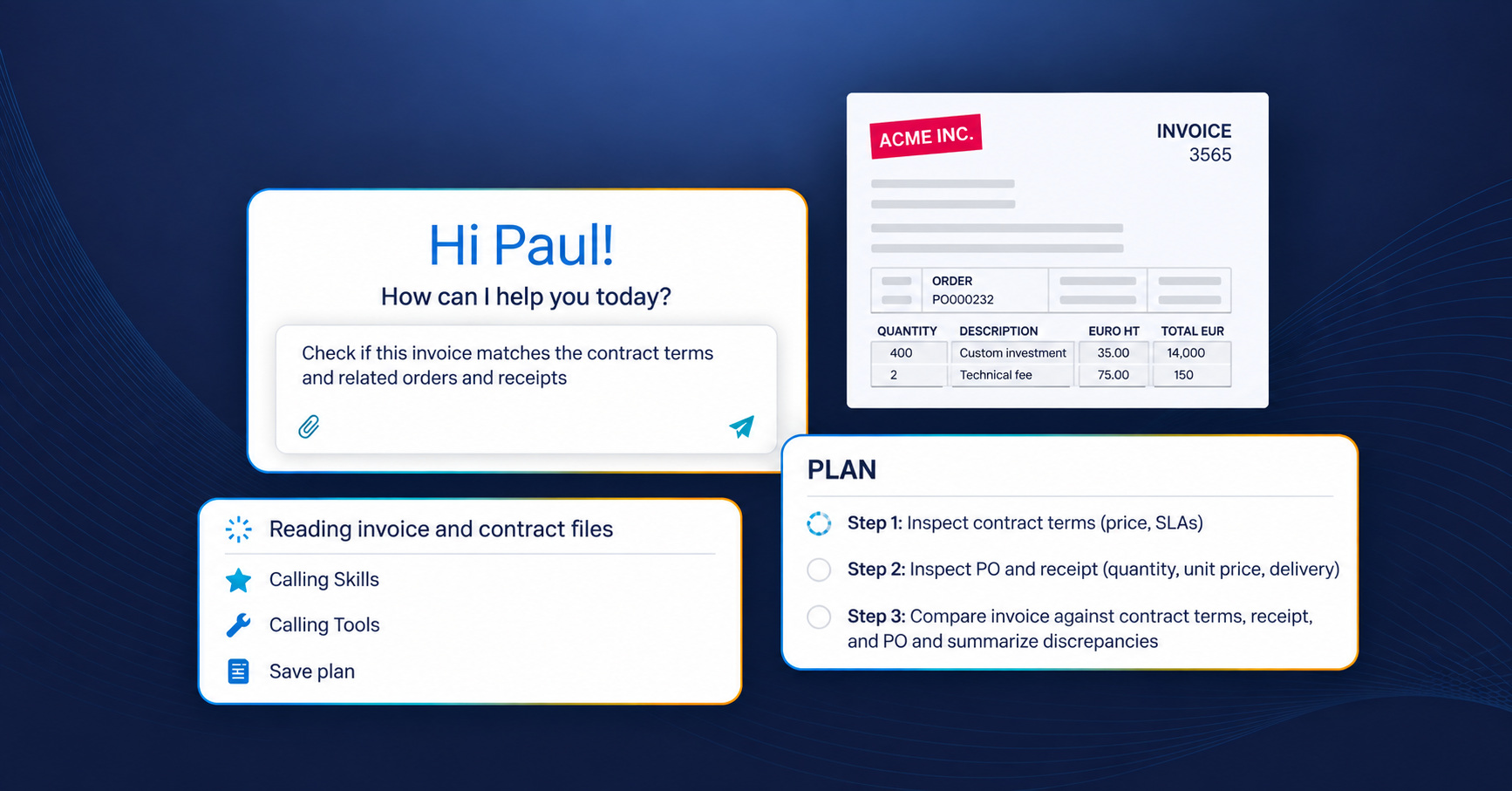
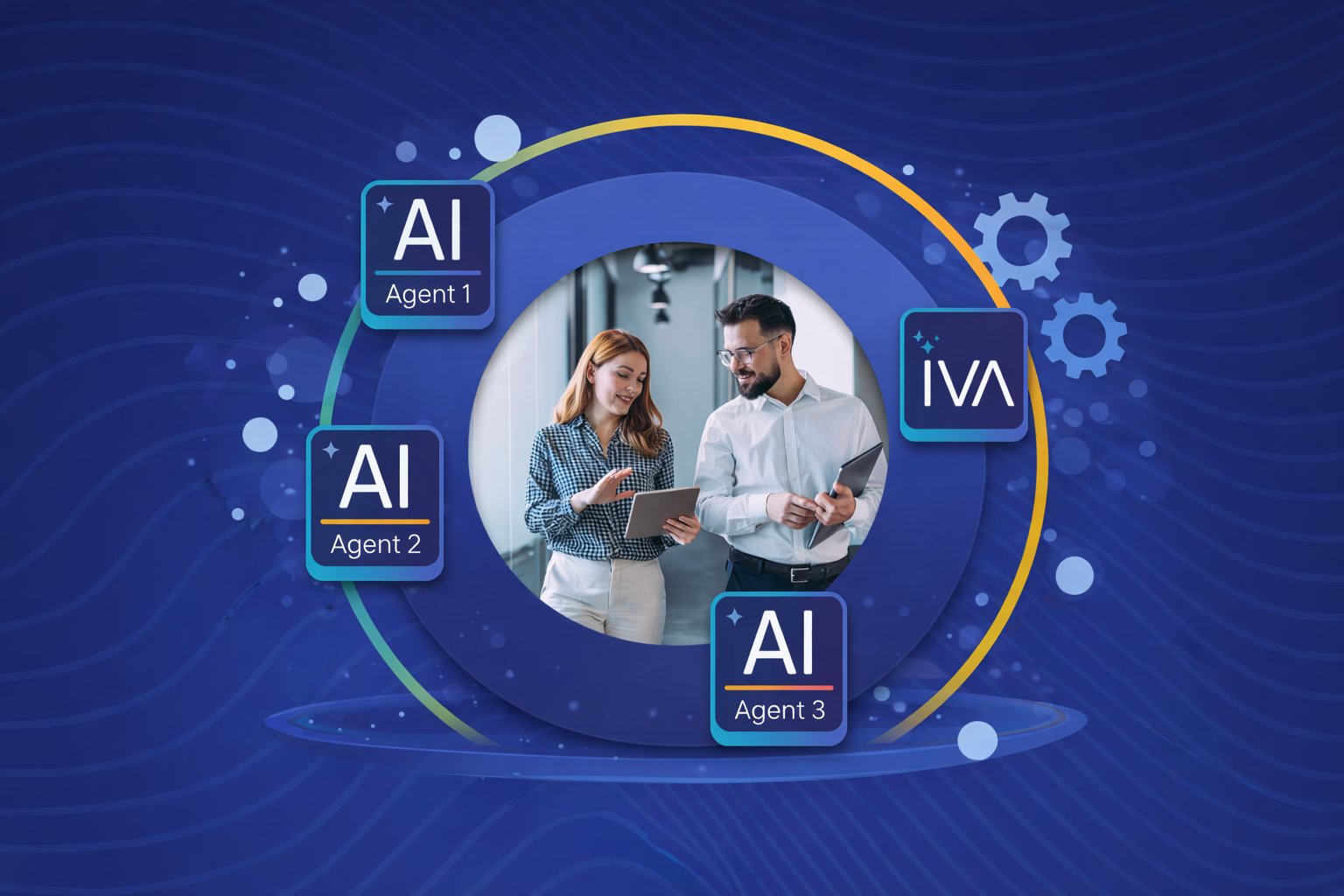
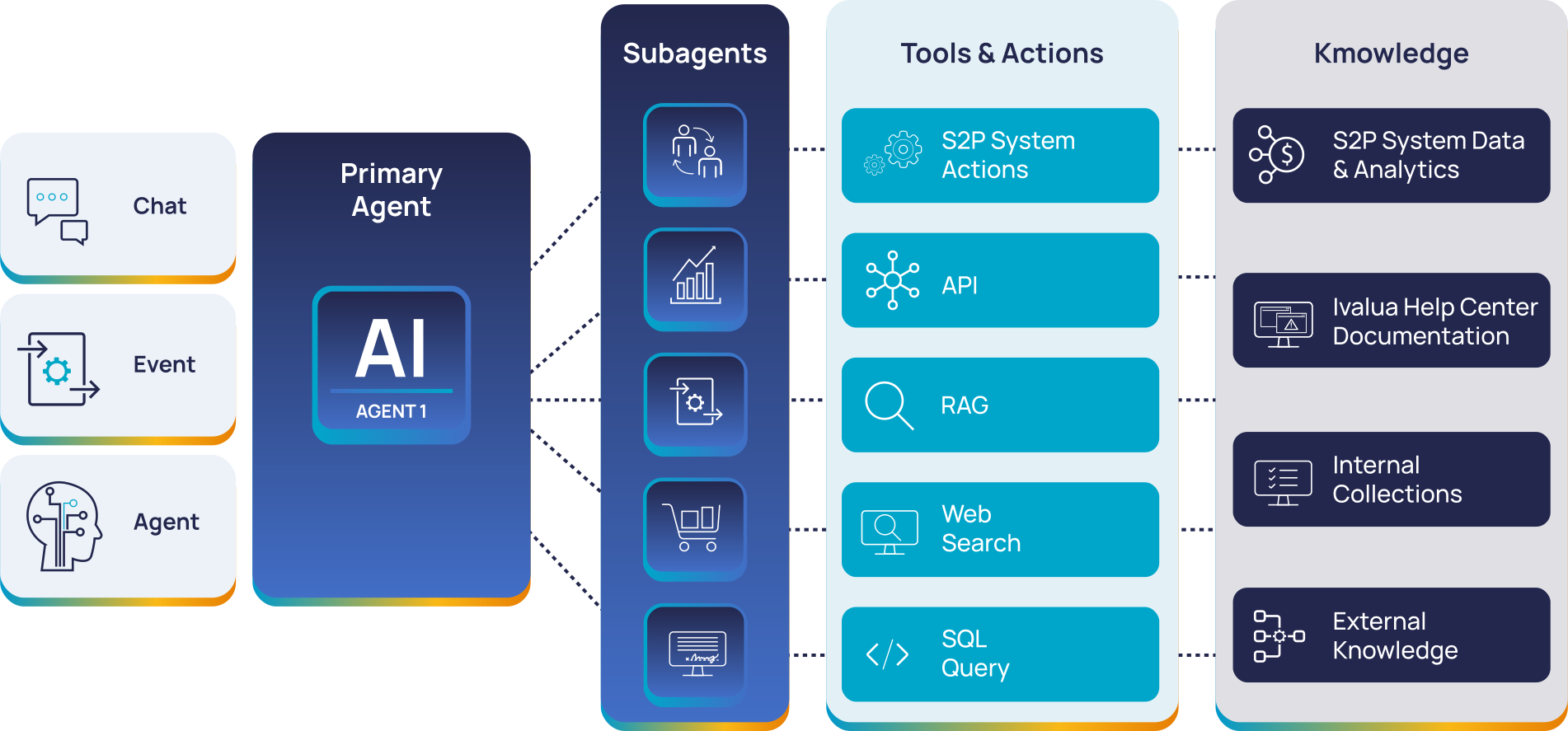
Ivalua brings agentic AI in procurement to life through the Ivalua Virtual Assistant (IVA). Built on the same orchestration backbone as the Ivalua platform, IVA enables autonomous, policy-driven behaviors across sourcing, contracting, and supplier management: triggering actions, making recommendations, and escalating only when needed. It’s not just automation – it’s the next step to transforming procurement.
Agentic AI Is Built To Act — But Only Inside Defined Boundaries
Traditional automation follows rigid rules: when X happens, do Y. While this method is fast, it’s limited, because it can’t adapt or make nuanced decisions.
By contrast, agentic AI is able to understand context and apply policies. It can take the next best action based on interpreting the rules and thresholds you set. It interprets unstructured data and assesses risk automatically, and it operates within governed workflows, role permissions, and policy thresholds – guardrails you define to prevent any overreach or missteps.
In short, agentic AI enables a smarter, more flexible autonomous system that operates safely, even in complex environments typical of procurement.
Workflow Discipline Creates The Conditions For Safe Autonomy
Since workflows must be structured and predictable for agentic AI to work like it’s supposed to, implementing role-based routing and embedded policies is critical:
- Role-based routing ensures every action or decision flows to the right stakeholder based on responsibility and authority.
- Embedded policies define thresholds for sourcing events, risk triggers, contract terms, and approval requirements.
When these rules are continually enforced, they’re not optional. AI can act with confidence – without any human intervention – and every action it takes is compliant with enterprise policies. Once this structure is in place, AI can deliver tremendous value across the enterprise.
In the next section, we explore the key benefits of orchestration AI in procurement.
AI Drives Impact When Procurement Moves Beyond Manual Control
When procurement workflows are well‑governed and fully orchestrated, procurement AI software can deliver significant procurement process improvements, including faster cycle times, higher levels ofautomation, and consistent compliance.
In fact, research from McKinsey & Company confirms that companies using advanced predictive analytics and AI in a mature procurement setting have increased their pipeline of value‑creation initiatives by up to 200 %.
In practice, AI in sourcing and procurement can provide intelligent procurement processes for activities like contract drafting, approval routing, and appropriate escalations when sourcing requests, contracts, supplier onboarding, and risk workflows are standardized and embedded in a single platform.
That’s orchestration maturity – and it’s essential for reducing cycle time, leveraging automation at scale, and meeting evolving compliance requirements.
Intelligent Intake Agents Route Requests In Real Time
Once the infrastructure is solid, AI agents can get to work streamlining procurement. They classify and route requests based on roles and policy thresholds because they understand the nature of each request – without any manual triage.
Additionally, AI will know who should approve what and be able to flag exceptions for escalation, when necessary. This intelligent insight means faster approval workflows and fewer delays – and ultimately less friction for requesters and approvers.
Supplier Engagement Is Streamlined Through Autonomous Agents
In a mature procurement ecosystem, procurement workflow automation enables AI to handle low‑risk supplier interactions. For example, it can handle simple onboarding data requests or follow up on credentials easily, taking busy work off the procurement team’s plate.
The system can verify documentation during supplier onboarding and automatically send reminders for missing data, or flag anomalies for review.
This hands‑off approach reduces manual labor and time to onboarding suppliers. With streamlined intake management and orchestration, purchase order automation isn’t a pipe dream. It becomes a reality and paves the way for a level of transparency and speed not previously possible.
Risk And Compliance Are Monitored Continuously, Not Periodically
AI-driven compliance automation enables teams to continuously monitor transactions, supplier activities, and contracts in real time. When it’s built into your workflows, AI can identify unauthorized vendors or expired credentials before they pose a problem downstream.
Instead of relying on periodic audits, AI can apply pre-set embedded rules on the fly. Role-based thresholds and routing logic can trigger alerts so you can intervene immediately. Overall, manual work is minimized, and you can be confident that you’re ready for an audit at any time, because every supplier interaction has been governed (automatically) by policies and regulations.
Deploying AI-driven technologies in procurement requires some preparation. In the next section, we provide a checklist to get you started.
Scalable Procurement Starts With Unified, Visible Workflows
Before deploying intelligent agents, ask yourself the following questions:
- Do you have unified intake management across all channels such as forms or portals?
- Are approvals policy-based, with thresholds and routing logic, rather than manual or ad hoc?
- Is your supplier data centralized, accurate, and consistently used across systems?
- Do you have clearly defined roles and responsibilities (RACI) for all procurement actions?
- Are risk and compliance orchestration rules embedded into your workflows?
- Can you trace every decision made by a system or human across the Source-to-Pay process?
If you answered “no” to any of these questions, your organization might not be ready for AI.
Why AI Fails without Visibility
Without mature orchestration processes, AI becomes a black box. It may make decisions that violate policy, create procurement compliance risk, or bypass necessary reviews, all without clear accountability.
That’s why visibility and control are non-negotiable in procurement management. Build the orchestration layer first, then implement autonomous AI agents.
Unified Intake-To-Pay Orchestration Eliminates Process Gaps
Having a single front door for procurement intake ensures that all requests for goods, services, or supplier actions come in through a structured channel, and enables you to track and govern every step, from the initial request through payment.
Eliminating fragmentation (emails, spreadsheets, chat messages, and other ad hoc communications) ensures AI benefits from full visibility across sourcing, contracting, approvals and invoicing. It can make confident, rule-based decisions, automate routine tasks, enforce thresholds, and flag exceptions with accuracy.
Embedded Controls Enforce Policy Without Creating Friction
When you have built-in guardrails, you minimize friction, as well. Automated approvals, policy thresholds, and logic-based routing enable you to act quickly with far less risk.
Whereas manual reviews slow things down, real-time AI-driven policy enforcement provides both speed and control, reducing delays and minimizing non-compliance risk. You’ll also have less maverick spend and audit exposure.
AI Enhances Strategic Decision-Making With Real-Time Insight
AI can eliminate the need to dig through spreadsheets and quarterly reports by providing real-time insights that enable you to be proactive, not reactive. You benefit from ongoing visibility into supplier performance trends, cost benchmarks, and early risk signals – when you need them.
AI can flag pricing outliers, suggest alternate vendors, highlight contract deviations, and detect shifts in supplier risk profiles – all in the background – allowing your team to focus on strategy and supplier relationship management instead of manual data gathering.
By surfacing intelligence directly within your sourcing workflows, AI empowers you to make faster, smarter decisions.
Now that you understand the benefits of AI in procurement, let’s take a look at how one Ivalua customer is using it to scale strategic sourcing across categories.
How Federated Co-operatives Limited Structured For AI Before Scaling It
Federated Cooperatives Limited (FCL) was struggling with fragmented procurement workflows and slow user adoption, which made it difficult to scale sourcing effectively. Plus, it was building a team from scratch during the COVID pandemic. To navigate these challenges, the company needed a system that users would embrace and leaders could trust.
Focusing on federated orchestration, FCL leveraged Ivalua to implement centralized governance and a user-friendly experience for teams and business units. Ivalua’s intuitive interface, configurable workflows, and embedded policy controls enabled them to get users up and running quickly.
With that orchestration maturity in place, FCL began integrating AI through the Ivalua Virtual Assistant (IVA), which helped to automate routine procurement tasks, streamline sourcing decisions, and lay the foundation for intelligent, autonomous workflows.
“ We’re able to take on more sourcing events, be a lot more efficient and have a lot more spend under management because of this efficiency that we were able to build into our processes.” —Tanya Roach, Director of Procurement
Read the full FCL case study.
Procurement Success With AI Starts With Workflow Discipline
AI amplifies the structure you already have in place, so defined roles, structured policy-compliance, and enforceable workflows are essential. Otherwise, AI is just another disconnected tool in an already fragmented environment.
That’s why “Orchestration Before Intelligence” isn’t just a catchphase. At Ivalua, we see it as a strategic mindset needed to achieve AI maturity in procurement. When processes are unified and driven by policy governance, AI can safely accelerate decision-making, automate routine tasks, and flag risk in real time.
Before piloting AI Source-to-Pay tools or deploying autonomous procurement agents, be sure to assess your organization’s orchestration readiness: Are workflows structured, visible, and rule-based? Do your systems have embedded guardrails?
That’s where you need to begin – because orchestration maturity is key to getting the most value from AI.
Enable Agentic Autonomy With Governed Workflows
FAQs About AI in Procurement Orchestration
AI can operate autonomously within standardized, data-rich and compliant procurement workflows. It needs structure: process maps, supplier and spend data, integrated systems (ERP, P2P, CLM, risk tools), and well‑defined exception paths are essential.
You must also put in place guardrails, escalation policies, and auditability, so that AI can take actions that are both transparent and traceable.
Look for these signs:
- Standard intake and routing logic (not ad‑hoc emails and spreadsheets)
- Clear approval matrices and risk rules
- Centralized supplier, contract, and spend data
- KPIs already tracked across the intake‑to‑pay process
In short, if your processes run reliably without constant human intervention, you’re well‑positioned for AI‑driven orchestration.
Orchestration Before Intelligence is a strategic approach to implementing AI that ensures intake, routing, approvals, and data flow across procurement, legal, finance, and risk teams in a consistent, structured way. Once processes are orchestrated end‑to‑end, you can layer AI on top to automate decision‑making and accelerate workflows.
Traditional automation follows pre‑defined rules: if X happens, do Y. While it can accelerate tasks, it can’t adapt to changes or think on its own.
By contrast, agentic AI can interpret unstructured requests and policies, trigger actions across systems, make decisions with confidence thresholds, and learn from outcomes.
Yes. AI strengthens compliance and reduces risk by enforcing policies automatically and flagging anomalies. AI can match requests against approved categories, validate vendor credentials, cross‑check risk data, and ensure contracts meet regulatory and internal policy requirements. AI also provides audit trails, explains decisions, and reduces manual error, so you can maintain consistent, scalable governance.
According to research from Wharton, AI in procurement has the potential to unlock 6–10% in total spend savings, with the exact impact depending on how mature and well-orchestrated the procurement processes are.
As agentic AI matures, leading organizations can realize 25–60% process acceleration, 30–50% reduction in manual workload, and significant improvements in compliance and spend visibility. AI also frees procurement from manual tasks so they can make strategic decisions, which leads to even more ROI.