

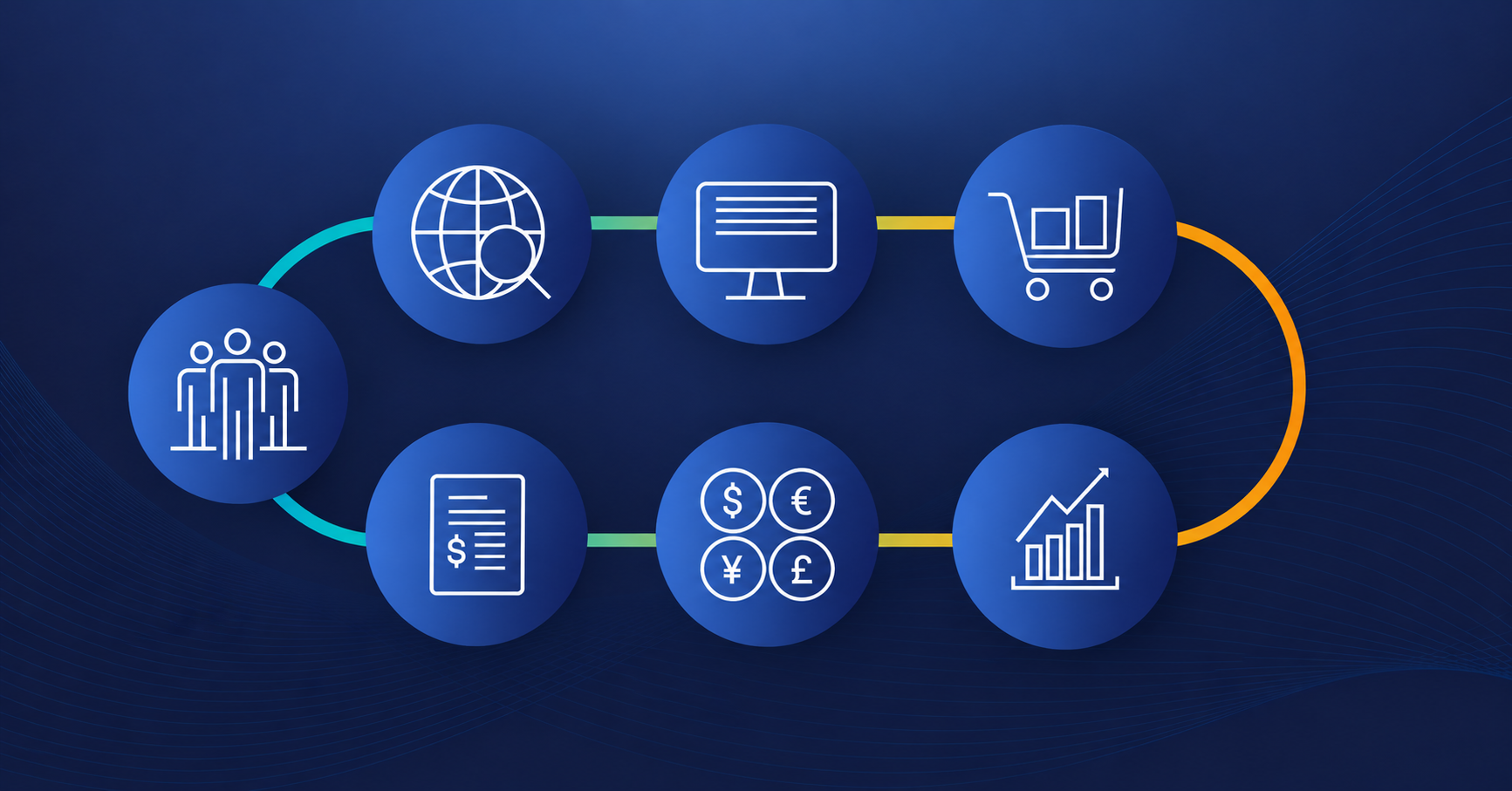
Source-to-Contract (S2C) is the upstream portion of the procurement lifecycle, from spend analysis through contract execution. While most guides on S2C describe a flat sequence of steps, we think it’s more productive to organize steps into three dimensions.
In this blog, we explore each stage of the Source-to-Contract process, outlining who owns it, how to measure it, and how AI accelerates it.
So, let’s dive in!
Key Takeaways
- S2C spans the procurement lifecycle from spend analysis and sourcing through supplier selection, negotiation, and contract execution.
- Leading organizations define clear ownership and success metrics at every stage of S2C.
- AI can accelerate S2C processes, helping organizations save time and money, and maximize ROI.
- Best-of-class procurement teams combine process, governance, and AI to drive faster decisions and better supplier outcomes.
What Is The Source-to-Contract (S2C) Process?
S2C is the strategic upstream half of procurement that covers everything from analyzing spend through executing supplier contracts. It includes spend analysis, sourcing strategy, supplier identification, RFx management, supplier evaluation and selection, negotiation, contract execution, and performance monitoring.
S2C ends where Procure-to-Pay (P2P) begins.
- S2C handles the strategic decision-making (who to buy from, on what terms)
- P2P handles the transactional execution (requisitions, orders, invoices, payments)
Source-to-pay (S2P) covers both halves end to end.
About 88% of enterprises recognize that contract management excellence drives performance, but only 10% have a plan for the quality and direction of their contract management function. This gap highlights a common challenge: organizations understand the importance of S2C processes but lack a clear framework for managing, measuring, and improving them.
This guide addresses that gap by examining not only the eight stages of the S2C process – who owns what, how success is measured, and where AI helps.
The 8 Stages of the Source-to-Contract Process
Most organizations follow the same eight stages:
- Spend Analysis
- Sourcing Strategy
- Supplier Identification
- RFx Management
- Supplier Evaluation & Selection
- Negotiation
- Contract Execution
- Performance Monitoring
While this flow appears linear, each stage depends on the data and decisions that came before it. You are likely to achieve the best results when spend data, supplier records, sourcing events, and contracts are all managed on a single platform instead of disconnected tools.
Ivalua’s Strategic Sourcing software and broader Source-to-Pay platform help connect every stage of the strategic procurement lifecycle. This ensures decisions at each stage are informed by what happened in the previous one.
Source-to-Contract Vs Source-to-Pay Vs Procure-to-Pay
Procurement leaders often use the terms S2C, S2P, and P2P interchangeably, but they describe different portions of the procurement lifecycle.
- Source-to-Contract (S2C): Covers the upstream strategic stages: spend analysis, sourcing strategy, supplier identification, RFx management, supplier selection, negotiation, and contract execution.
- Source-to-Pay (S2P): Extends S2C through downstream transactional activities: purchasing, invoicing, and payment.
- Procure-to-Pay (P2P): Focuses only on transactional stages: requisition and purchasing, invoice processing, and payment.
Understanding the difference between Source-to-Pay vs. Procure-to-Pay is critical because the largest savings, supplier innovations, and risk-reduction opportunities occur upstream during sourcing and supplier management—not downstream during transaction processing.
This distinction is reflected in performance data. According to Ardent Partners, organizations manage an average of 70.8% of spend through procurement, while Best-in-Class organizations achieve 91.7% spend under management. Much of that gap is driven by stronger sourcing, supplier management, and contract governance capabilities in the upstream S2C process.
Organizations that only automate P2P miss the upstream stages where the largest savings and risk reduction occur. The distinction also affects platform architecture — S2C on a separate point solution creates a data handoff gap at exactly the point where contract terms should flow into purchasing compliance.
Eight Stages Of The source-to-contract Process
The following source-to-contract process steps and best practices are mapped across four dimensions: what happens at each stage, who owns it, how success is measured, and how AI can accelerate outcomes.
Stage 1 — Spend Analysis: Build Visibility Before You Source
Spend analysis is the foundation of the source-to-contract process. During this stage, procurement teams aggregate, cleanse, and classify spend data from ERP systems, AP platforms, purchasing cards and external sources to create a unified view of enterprise spending.
- Who Owns It: Procurement analytics; Finance provides ERP and AP data; business stakeholders validate category classifications; IT support data integration and governance
- How to Measure It: Spend under management, percentage of spend classified, number of active suppliers per category, and time required to produce spend reports. Most organizations have an average of 70.8% spend under management, while best-in-class organizations achieve 91.7%.
- How AI Accelerates It: AI-powered spend analysis automatically classifies transactions, identifies anomalies, and surfaces savings opportunities. Spend Analysis software with conversational analytics tools such as IVA allow users to query spend data using natural language. This helps procurement teams uncover any compliance risks as well as sourcing opportunities without manual reporting.
The goal during this stage is to identify savings opportunities, supplier consolidation candidates, maverick spending, and compliance gaps.
Stage 2 — Sourcing Strategy: Define Category Priorities And Approach
The strategic sourcing process combines spend insights, market intelligence, supplier performance data, and business requirements to determine the best sourcing approach.
Depending on the category, the strategy may include competitive bidding, supplier consolidation, framework agreements, sole-source relationships, or other eSourcing strategies.
- Who Owns It: Category managers, working closely with business stakeholders to define requirements and priorities. Procurement leadership reviews category plans, approves sourcing strategies, and allocates resources.
- How To Measure It: Percentage of addressable spend that is competitively sourced and realized savings rates. Typical organizations competitively source 49.7% of addressable spend, while leading organizations source 67.4% and achieve 8.0% average savings, compared to 6.4% for all others.
- How AI Accelerates It: AI agents analyze spend patterns, market conditions, supplier performance, and supply base risks to identify sourcing opportunities and potential dependencies before they become problems. They also automate initial RFx generation, proposal analysis, supplier comparisons, recommendation development, and other time-consuming activities.
Ivalua’s Program Management capabilities connect suppliers, sourcing events, contracts, Procure-to-Pay activities, and spend data within an eSourcing platform, providing an end-to-end view of procurement initiatives. AI-assisted category intelligence helps teams continuously monitor price trends and compliance risks, so that sourcing strategies are aligned with business objectives.
Stage 3 — Supplier Identification: Find And Qualify The Right Suppliers
Next comes researching potential suppliers, referencing existing supplier networks and databases then conducting initial qualification assessments. Suppliers are screened against a variety of factors, including financial stability, certifications, production capacity, sustainability performance and more.
- Who Owns It: Sourcing teams lead supplier identification efforts, while supplier management teams conduct risk, compliance, and qualification reviews. Business stakeholders provide technical specifications and operational requirements.
- How to Measure It: Number of qualified suppliers available for each sourcing event, time required to qualify a new supplier, and supplier diversity participation.
- How AI Accelerates It:
- Automatically enrich supplier profiles using OCR to extract information from supplier documents
- Identify duplicate records and use natural language processing to monitor global news sources for adverse media, sanctions, financial concerns, or other emerging risks
- Enable more proactive risk management through predictive risk scoring
- Identify patterns associated with future disruptions to effective supplier lifecycle management and help prevent potential issues from impacting the business.
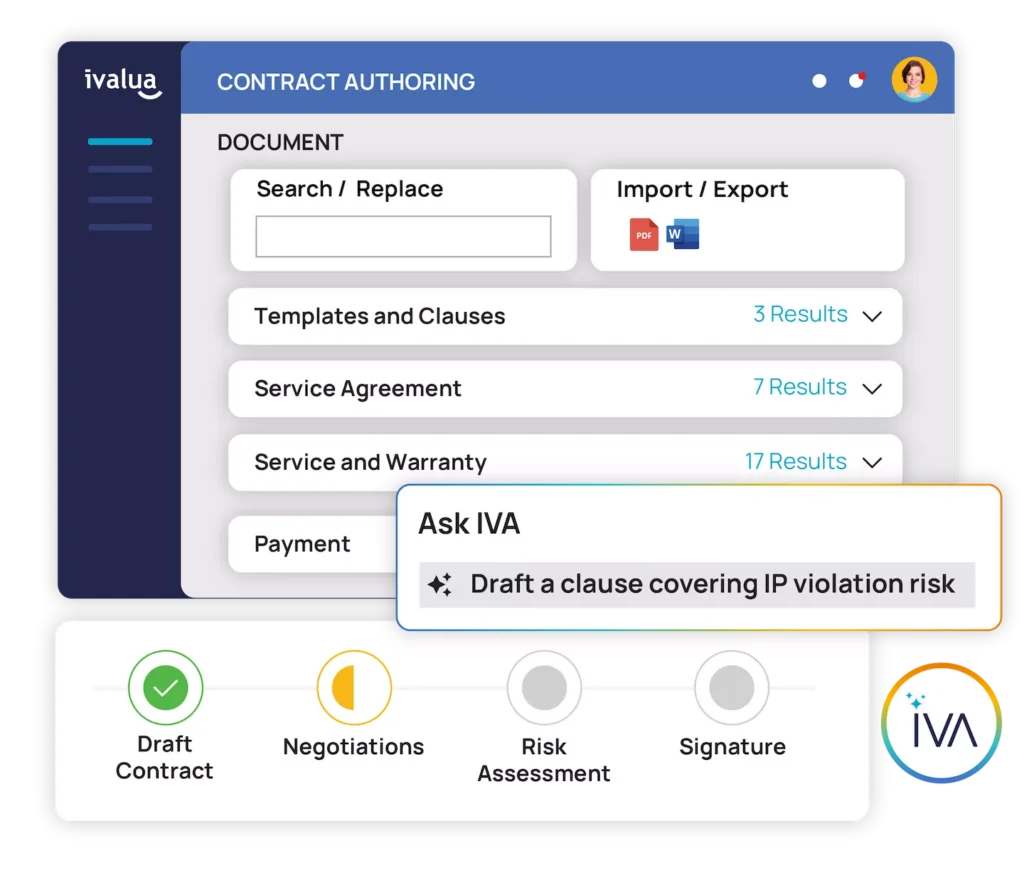
Unlike point solutions that evaluate suppliers in isolation, Ivalua’s unified data model connects supplier information directly to sourcing history, contract terms, spend activity, risk assessments, and transactional performance. Because IVA has access to data across the entire procurement lifecycle, it can generate richer insights and more accurate risk assessments.
Stage 4 — RFx Management: Structure The Competitive Bidding Process
Depending on the sourcing objective, procurement teams may issue different types of RFx documents.
- Request for Information (RFI): Gathers market intelligence and identify potential suppliers
- Request for Proposal (RFP): Evaluates supplier capabilities and proposed solutions
- Request for Quotation (RFQ): Focuses on comparing pricing and commercial terms
Effective RFx management ensures suppliers receive consistent requirements, evaluation criteria, and timelines.
- Who Owns It: Sourcing and category managers. Business stakeholders provide technical requirements and scoring criteria, while Legal may review terms and conditions for strategic or high-risk categories.
- How to Measure It: RFx response rates, average number of bids received per event, RFx cycle time, and bid-to-award ratios.
- How AI Accelerates It: AI saves teams time by automatically generating RFx documents from templates, historical sourcing events, and category-specific requirements. Ardent reports that 30.5% of organizations now use GenAI for RFP development, while 30.9% use AI-enabled eSourcing capabilities.
Once they receive responses, procurement teams can use Ivalua to evaluate them faster and more objectively. Ivalua’s Sourcing Decision Center helps compare scenarios and recommend award decisions based on cost, risk, capacity, sustainability goals, and other priorities.
For a deeper look at selecting the right RFx approach, see our guide to RFI, RFP, and RFQ Differences and Strategic Use Cases in Procurement.
Stage 5 — Supplier Evaluation And Selection: Score, Compare, And Award
A comprehensive supplier evaluation and vendor selection process evaluates quality, risk, capacity, sustainability performance, innovation potential, and total cost of ownership.
Award scenarios may be used to model different supplier allocations and determine the optimal balance between cost, resilience, and business objectives before selecting suppliers for final negotiations.
- Who Owns It: Category managers, supported by cross-functional stakeholders from business units, finance, quality, operations, sustainability, and risk management. Procurement leadership may provide final approval.
- How to Measure It: Total cost of ownership accuracy, number of evaluation criteria considered, time from bid close to award decision, and stakeholder satisfaction with supplier selections.
Organizations that excel at procurement decision-making consistently outperform their peers. According to Deloitte, 84% of Digital Masters met or exceeded their business objectives, compared to just 59% of followers. - How AI Accelerates It: AI helps procurement teams evaluate suppliers more consistently and objectively by analyzing proposals across multiple dimensions simultaneously. Advanced optimization models can assess thousands of potential award scenarios, balancing cost, risk, capacity, sustainability requirements, and supplier diversification goals to identify the best overall outcome.
AI also strengthens risk management during supplier selection. For example, IVA can flag problematic bids by comparing proposed pricing against supplier risk factors and market benchmarks. All of the data resides in Ivalua’s unified platform, so AI can work from an accurate and complete set of data. This results in smarter award decisions and fewer disruptions.
Stage 6 — Negotiation: Secure Terms That Protect Value
During negotiation, teams determine pricing, payment, service-level agreements (SLAs), performance guarantees, risk allocation, and other key terms. Sometimes, reverse auctions are held to drive additional savings before finalizing contract terms.
- Who Owns It: Senior sourcing managers and category leaders typically lead supplier negotiations, supported by Legal, Finance, and business stakeholders. Legal reviews risk, intellectual property, and liability provisions, Finance evaluates payment terms and working capital implications, and business units validate service levels and operational requirements.
- How to Measure It: Negotiated savings versus initial supplier bids, improvements in payment terms, number of negotiation rounds, and time from supplier selection to final agreement. Organizations should also track savings leakage caused by contract noncompliance and maverick buying.
- How AI Accelerates It: AI combines historical sourcing data, contract intelligence, supplier performance information, and external market benchmarks to help with negotiations. Teams can ask GenAI tools to recommend preferred contract language, and AI-powered price benchmarking can help validate supplier proposals against current market conditions.
Stage 7 — Contract Execution: Draft, Review, And Activate Agreements
Contract execution is where negotiated value turns into enforceable business commitments. However, some organizations struggle with governance at this stage.
During execution, procurement and legal teams work together to draft contracts based on approved templates and clause libraries. Then they conduct legal reviews, route agreements through approvals,and activate contracts within the organization’s system of record.
Effective contract lifecycle management helps teams capture negotiated terms accurately and monitor them throughout the contract lifecycle.
- Who Owns It: Contract managers or procurement leaders, with help from legal to oversee redlining, clause management, and risk reviews. Finance validates commercial and payment terms, business stakeholders approve scope and service levels, and executives may provide final approval for high-value agreements.
- How to Measure It: Contract cycle time, percentage of contracts using approved templates, clause compliance rates, and overall contract compliance. The average organization achieves only 62.2% contract compliance, while leaders reach 79.5%. That gap matters: every dollar spent outside negotiated contracts costs 12–18% more than contracted spending.
- How AI Accelerates It: Agentic CLM transforms the contract approval workflow through automation – drafting clauses, suggesting approved language, editing, summarizing changes, and routing agreements for reviews.
IVA, powered by IVA STUDIO™, lets users query contracts using natural language to quickly understand obligations, risks, renewal terms, and compliance requirements. AI can be used to extract obligations, track compliance milestones and requirements, and alert stakeholders automatically when action is required. This helps organizations move from passive document storage to active contract compliance monitoring.
Learn more about Ivalua’s Contract Lifecycle Management Software and how organizations are modernizing contract management with AI-driven automation and compliance monitoring.
Stage 8 — Performance Monitoring: Track Compliance And Drive Continuous Improvement
During performance monitoring, teams measure supplier performance against agreed SLAs, KPIs, quality standards, and contractual obligations. Performance insights inform future sourcing decisions and contract renewals.
- Who Owns It: Supplier relationship management (SRM) leads performance tracking and governance, gathering feedback from business stakeholders on service quality and operational outcomes. Category managers incorporate supplier performance data into sourcing strategy reviews, while leadership monitors performance trends.
- How to Measure It: Common metrics include supplier on-time delivery rates, supplier scorecard performance, contract compliance, savings realization, and overall procurement ROI. Sustained performance management is key; the Hackett Group found Digital World Class procurement organizations achieve 2.6X more ROI than peers.
- How AI Accelerates It: AI-driven anomaly detection can identify significant changes in supplier KPIs before they become operational problems. Sentiment analysis of stakeholder feedback uncovers recurring issues that may not be reflected in traditional scorecards. AI-generated performance summaries can be used to identify trends and recommend corrective actions.
This represents one of the largest opportunities for improvement across the source-to-contract lifecycle. Only 11% of procurement organizations have mostly or fully automated supplier performance management processes – the lowest level of automation across all S2C stages.
By combining AI-powered insights with strong governance, procurement teams can improve supplier performance management and maximize the long-term value of every supplier engagement.
How Navy Federal Credit Union Modernized source-to-contract with AI-enabled procurement
Navy Federal Credit Union struggled with fragmented procurement systems, manual sourcing and contracting processes, and limited visibility into enterprise spend. Strict cybersecurity and compliance requirements also made supplier onboarding and qualification slow and resource-intensive.
“Another metric that’s really important to us is spend analytics. So we leverage spend analytics to inform category management, consolidate suppliers and get the best deals.”
— Carl Schwab, VP, Procurement and Vendor Management, Navy Federal Credit Union
By unifying spend analysis, sourcing, supplier management, and contracts on a single AI-enabled platform, Navy Federal gained real-time visibility across the source-to-contract process. The result was faster, more informed sourcing decisions, improved supplier management, and significant ROI from procurement transformation.
Read the full case study.
Build Your Source-to-Contract Process on a Unified Foundation
The eight stages of the source-to-contract process are well understood. What differentiates top-performing organizations is clear ownership, meaningful performance metrics, and the effective use of AI at every stage.
When all eight stages run on unified source-to-contract software, accountability becomes clearer, reporting becomes easier, and AI-powered procurement automation becomes more effective. With a single data model connecting spend, suppliers, sourcing, contracts, and performance, organizations can make faster decisions, improve compliance, and drive greater value from procurement.
Take Back Control of Your Source-to-Contract Process
FAQs About The source-to-contract Process
The source-to-contract process is the strategic portion of procurement that covers spend analysis, sourcing, supplier selection, negotiation, and contract execution. Its purpose is to identify the best suppliers, secure favorable terms, and establish contracts that support business objectives.
The primary source-to-contract process steps are spend analysis, sourcing strategy, supplier identification, RFx management, supplier evaluation and selection, negotiation, contract execution, and performance monitoring. Together, these stages help organizations move from procurement planning to supplier governance and value realization.
In the S2C vs. S2P comparison, source-to-contract focuses on upstream sourcing and contracting activities, while source-to-pay extends through purchasing, invoicing, and payment. Understanding source-to-pay vs. Procure-to-Pay is also important because P2P covers only the downstream transactional stages of procurement.
Responsibility for the strategic procurement lifecycle is shared across procurement, sourcing, supplier management, legal, finance, and business stakeholders. Ownership varies by stage, but successful organizations clearly define accountability and performance metrics throughout the process.
AI-powered procurement automation helps teams classify spend, identify sourcing opportunities, discover suppliers, evaluate bids, analyze contracts, and monitor supplier performance more efficiently. AI also improves decision-making by surfacing risks, trends, and opportunities that may be difficult to identify manually.
Key metrics include spend under management, sourcing savings, supplier performance, contract cycle time, and supplier risk indicators. Organizations should also track contract compliance monitoring metrics such as compliance rates, savings realization, and adherence to negotiated terms.