


Supplier master data management (SMDM) refers to processes and technologies procurement uses to create and maintain a single, authoritative record for every supplier used by teams across the company.
It ensures that supplier information such as identities, banking details, risk indicators, and performance data is accurate and accessible across systems. In general, SMDM helps to eliminate duplication and uncertainty in supplier data.
SMDM has become an operational must-have because it helps organizations determine whether they can deploy AI effectively. Additionally, it supports early fraud detection and supplier performance monitoring, while improving resiliency in face of supply disruptions.
With 74% of procurement leaders reporting that their data isn’t AI-ready, and more than a quarter of organizations losing over $5 million annually due to poor data quality – inaccurate data is a huge liability. That’s why SMDM is now foundational to operations.
This guide takes a deep dive into SMDM and its role in modern procurement. It also outlines five core processes that sustain it and what to look for in an SMDM solution.
Key Takeaways
- SMDM is foundational to procurement operations today, enabling AI adoption and fraud detection, and helping companies manage geopolitical risk.
- SMDM should be an ongoing activity shaped by five governed processes that work together to improve data accuracy.
- With AI and agentic workflows, SMDM is evolving into a continuously self-correcting practice that enables sustainable data governance.
What is Supplier Master Data Management?
Supplier master data management is a framework of processes and technologies that helps companies create and maintain a single, authoritative supplier record. It helps companies control how supplier data is validated and shared across departments, and ensures it’s stored and used in a standardized way.
What kind of supplier data does it govern? Legal entity information, banking details, tax IDs, contact data, certifications, compliance documentation, category classifications, performance history, risk profiles and more.
This is data that would otherwise be quickly fragmented across systems, introducing errors and blind spots that could impact everything from payments to risk visibility.
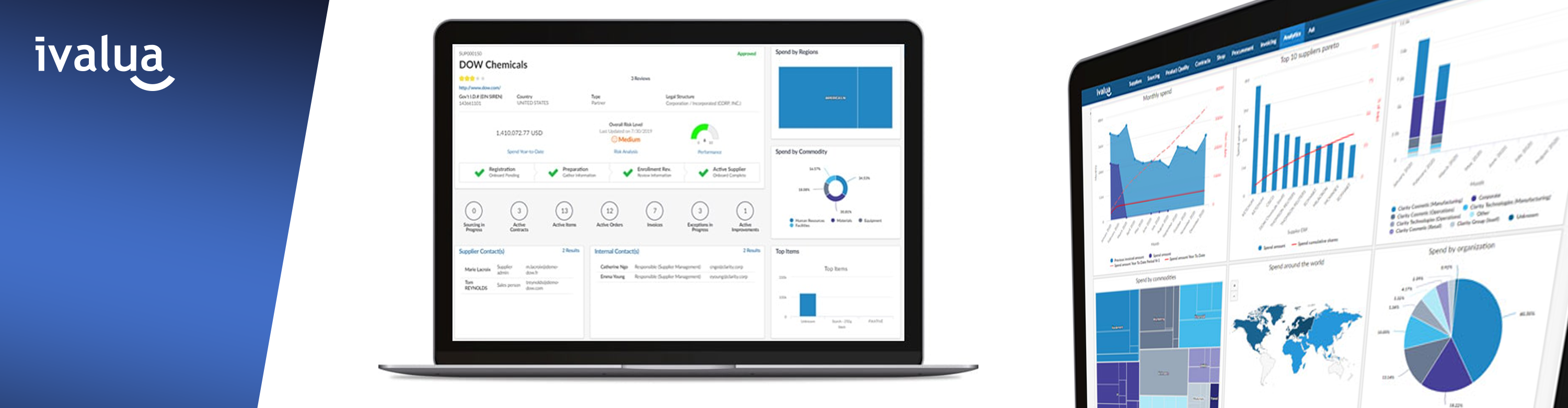
SMDM requires a persistent layer of control, which is what enables supplier management platforms like Ivalua provide. including supplier performance tracking, risk monitoring, and collaboration on innovation.
Built on a single codebase and data model, valua’s unified Source-to-Pay platform enables the supplier master record to be shared across sourcing, contracts, and payments.
It creates a true system of record, eliminating silos and supporting data-informed decision-making throughout the procurement lifecycle.
Next we take a look at why SMDM has become so important today.
Why Supplier Master Data Management Matters More Now Than Ever
For years, supplier data management was framed as a back-office initiative, centered around reducing errors. While accurate data is still imperative, today, it’s become clear that SMDM is essential for AI adoption, fraud protection, and resiliency.
AI Readiness Depends on Data Readiness
If supplier data is incomplete or inaccurate, AI in procurement initiatives may stall, because AI models and agentic workflows are dependent on high quality data. When supplier records contain duplicates or outdated information, the outputs are unreliable – or even hallucinated.
This has the C-suite on edge: 43% of chief operations officers say data quality is their top data priority. What’s more, 45% of business leaders cite data inaccuracy as the leading barrier to AI adoption.
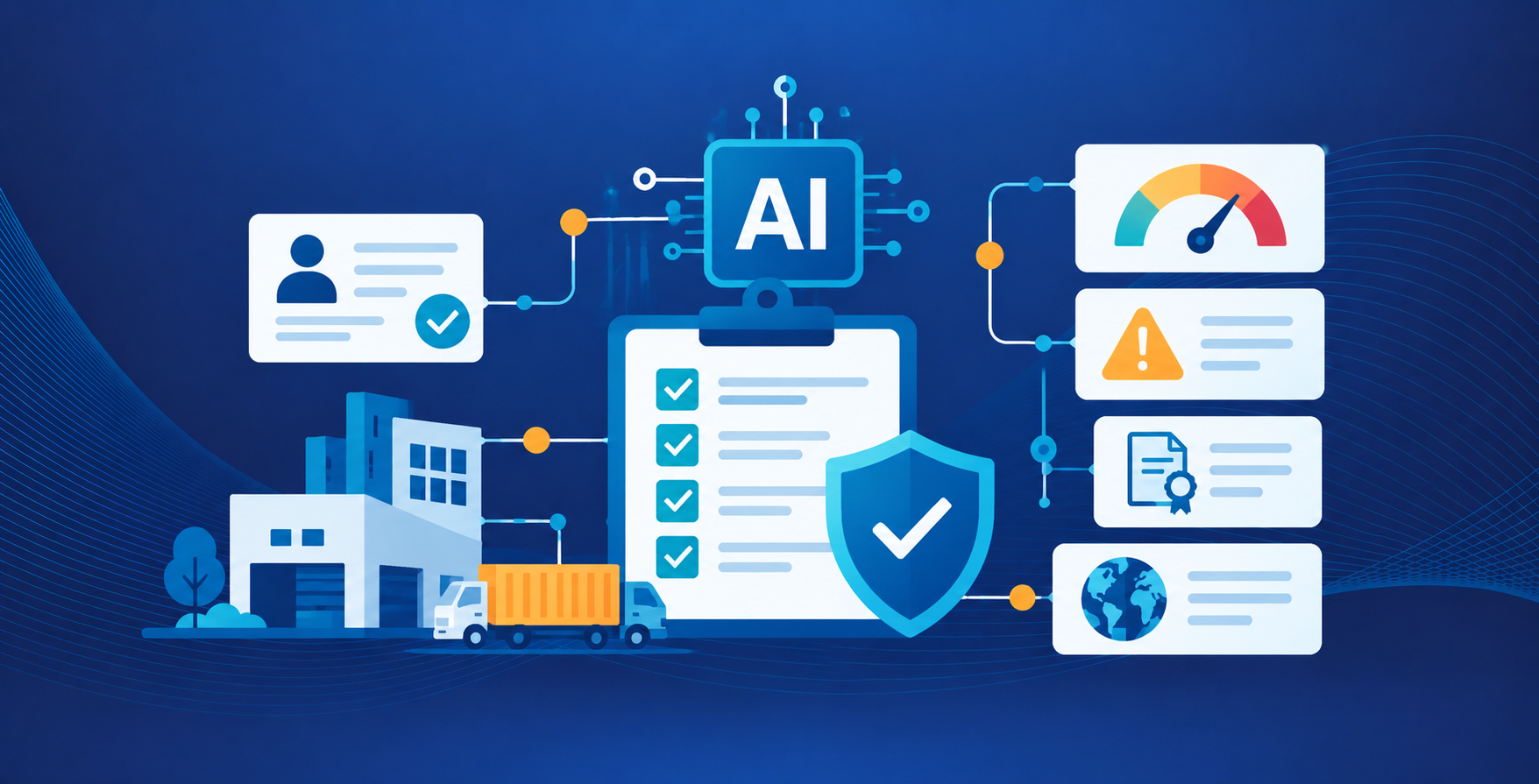
SMDM is therefore a prerequisite for AI. Ivalua’s Intelligent Virtual Assistant (IVA) is grounded in a Golden Supplier Record, ensuring the agent operates from the same authoritative and accurate data. Learn more by downloading the Supplier Information Management Data Sheet.
Dirty Data is a Fraud Vector
A poor supplier master helps fraud thrive. When vendor records are fragmented across systems with no single source of truth, red flags like duplicate bank accounts or suspicious invoice patterns sneak under the radar.
A SAS study of a large enterprise found that 7,216 vendors with different names shared an address, 4,745 vendors shared a bank account, and 788 employees shared a bank account with a vendor.
These are clear indicators of hidden risk. At the same time, Ardent Partners reports a post-pandemic spike in fraud, making accurate, up-to-date supplier data critical for compliance and risk mitigation.
Ivalua consolidates and governs supplier data in a single Golden Record for Suppliers with built-in duplicate detection and third-party enrichment.
It surfaces anomalies at onboarding rather than after losses occur, helping to strengthen supplier risk management and make fraud signals visible before serious financial exposure.
Reglobalization Demands Complete, Current Supplier Records
Geopolitical disruption is forcing organizations to actively restructure their supply chains. Gartner identifies four “reglobalization” approaches for CPOs in 2025: divesting, decoupling, diversifying, and doubling down on existing supply networks. Every strategy depends on reliable supplier master data to execute.
Without clean, complete supplier master data, procurement teams can’t accurately assess which suppliers to retain or replace, or what new markets to enter. Ivalua is purpose-built for global, multi-ERP enterprises that need to centralize and govern supplier data across regions and business units using a single platform.
Next, we break down the five core processes that make supplier master data management work in practice.
The Five Core Supplier Master Data Management Processes
Supplier master data management consists of five core processes that govern how you create, validate, maintain and use supplier data. Each stage has its own controls and failure points.
Create (Supplier Onboarding)
This process establishes a new supplier record from scratch. It involves collecting supplier information such as legal entity data, bank details, tax IDs, certifications, and compliance documents through a governed supplier onboarding process.
The most common failure mode is skipping validation because of time constraints and allowing incomplete records to enter the system. These errors are extremely costly to correct later on.
Extend (Adding New Business Relationships)
When a supplier already exists in the system but a new business unit, region, or entity needs to engage with them, the Extend process comes into play. Instead of creating a new record, the existing supplier profile is extended to reflect the new relationship. The most common failure mode is duplication.
Update (Maintaining Accuracy Over Time)
Supplier data decays as bank details change and certifications expire. Keeping supplier data accurate requires scheduled refreshes and data updates, often supported by automated data enrichment.
The most common failure mode is treating data updates as optional or batch-only, which may enable outdated or incomplete records to stay in the system.
Block and Deactivate (Removing Inactive Suppliers)
It’s important to block or deactivate inactive suppliers to maintain control over the supplier base. Blocking is a temporary restriction that prevents transactions, while deactivation permanently retires the supplier record.
The most common failure mode is when dormant suppliers are left as “active.” This makes it seem like there are more vendors available while increasing exposure to unauthorized transactions and fraud.
Reactivate (Bringing Suppliers Back)
Reactivation is necessary if an inactive supplier becomes active again. Supplier data, certifications, and compliance documents may have changed during the dormant period, so they should be re-validated.
The most common failure mode is simply reactivating the record without verification, reintroducing outdated or noncompliant data into active systems.
Ivalua’s configurable workflows support all five of these key processes natively. They embed automated validation checks, approval routing, and third-party data enrichment at each stage to ensure consistent governance at every transition point.
The five processes only work well when managed effectively – and AI is reshaping what’s possible. In the next section, we explore best practices you can follow to make the most of your SMDM solution.
Best Practices for Supplier Master Data Management
The difference between organizations that struggle with supplier data and those that scale it effectively is in how they handle SMDM. Treating it as a one-time data cleansing exercise can provide temporary gains, but in the long term, data will decay.
Best practices for SMDM include standardizing supplier master data, organizing supplier information and consolidating supplier data within governed workflows. Let’s dine into each of these best practices in greater detail.
Enforce a Single Front Door for All Supplier Data
Decentralized data entry across business units is the root cause of inconsistencies and compliance gaps, which is why every new record and change should come through a single, governed entry point or “front door.” This helps to ensure no supplier record is created or modified outside of your controlled workflows.
Invest in Continuous Data Enrichment, Not One-Time Cleanses
While data cleansing eliminates inaccuracies in your database, continuous and ongoing data enrichment is also essential. Use third-party data sources to validate bank details, tax IDs, sanctions status, and other changes automatically to keep records up to date.
Remember that annual cleansing projects deliver only temporary improvements before data begins to degrade again. Continuous enrichment helps to sustain data quality so you can eliminate frequent cleanups.
Assign Clear Data Ownership and Stewardship Roles
Effective SMDM programs assign data stewards at the category- or business-unit level. These people are responsible for keeping supplier records accurate and complete.
According to Gartner, you should tailor training for this responsibility for each role – change leaders, data creators, and data consumers, so that each group gets what they need to be effective.
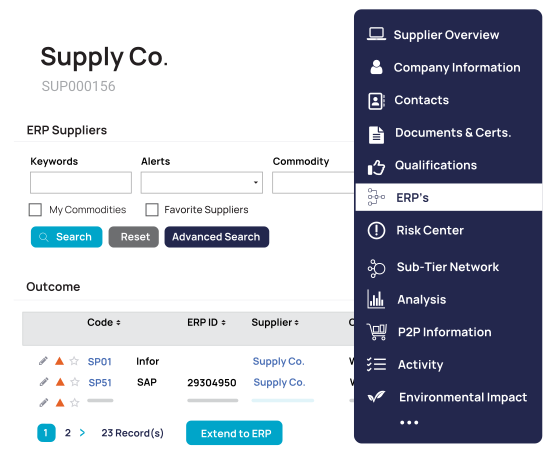
Ivalua’s supplier information management solution supports system-specific approval workflows, so each connected ERP or vendor management system can have its own governance rules, approvers, and compliance requirements.
Every change to the Golden Record is tracked, measured, and auditable at the individual system level, enforcing data stewardship structurally rather than through manual oversight.
While best practices establish the governance model, today, AI is redefining what’s operationally possible within that frameworkHow AI and Agentic Workflows Are Transforming Supplier Master Data Management
AI is fundamentally changing how supplier master data management operates by removing manual processes and providing automation and greater control.
Traditionally, supplier master data software is layered on top of ERP systems, making data governance reactive. If an issue occurs, teams work to correct it through cleansing projects or audits.
With AI, agentic workflows to validate, enrich, and monitor supplier data in real time. They flag duplicates as soon as they’re created and detect anomalies as they emerge. Governance is embedded and continuous, and as a result, SMDM becomes a self-correcting system.
Automated Data Validation and Enrichment at the Point of Entry
Agentic workflows validate supplier data when it’s created rather than after it enters the system. It checks incoming records against third-party databases to verify bank details, tax IDs, and sanctions status, while enriching missing fields and flagging inconsistencies automatically.
At the same time, AI can route exceptions to human reviewers for approval to make sure only accurate data enters the system. This “shift-left” approach aligns with IBM’s guidance to push detection and remediation closer to data creation.
Agentic Workflows for Ongoing Supplier Data Governance
Agentic workflows enable continuous, automated oversight of supplier data. They scan for data decay triggers such as an expiring certification or outdated bank details while another cross-references external risk.
Furthermore, they help generating a plan of action or routing tasks to the appropriate data stewards.
Ivalua’s IVA can coordinate these agentic workflows across the supplier management lifecycle. It enables data retrieval, record validation, anomaly identification, generates insights, and propose actions that are underscored by a Golden Supplier Record.
Using IVA Studio, teams can configure and refine governance workflows without development, while pre-built skills handle common SMDM workflows such as enrichment, questionnaires, and supplier improvement plans out-of-the-box.
See how IVA can help turn Supplier Master Data into Competitive Advantage
As an example, let’s look at how Körber is employing IVA to handle agentic workflows.
How Körber Turned Supplier Master Data into AI Momentum
Operating across five business areas and over 100 global locations with a heterogeneous IT structure, Körber selected Ivalua to consolidate its direct and indirect procurement. This central platform globally harmonized supplier master data into a single point of truth, creating 360-degree visibility across all vendors. Uncompromising supplier master data quality, secure orchestration, and visible governance provided the essential baseline for the company’s broader digital transformation.
Building on this data foundation, Körber launched its AI journey by deploying 12 initial use cases within the Ivalua ecosystem. Rather than enforcing top-down mandates, the organization invited users to propose new AI applications, validating each against strict governance requirements to ensure accountability and auditability. This trust-driven adoption strategy, anchored in accurate supplier master data, enabled Körber to confidently expand its AI capabilities and scale agentic workflows across global operations.
What to Look for in a Supplier Master Data Management Solution
Choosing the right supplier master data software requires aligning the solution to how SMDM actually operates in practice. Evaluation criteria should check for continuous data governance, cross-system integration, and lifecycle-based workflows.
Effective supplier master data management software must support how data is created, validated, maintained, and used across the enterprise, because that is what ultimately determines whether it delivers lasting value.
Can It Serve as the Supplier System of Record Across Multiple ERPs?
Large enterprises typically operate multiple ERP systems across regions and business units, which fragments supplier data. An effective SMDM solution consolidates and governs supplier records across all systems, while synchronizing updates back to each ERP. If the platform can only operate within a single ERP environment, data silos will persist, limiting visibility, control, and the effectiveness of broader strategic sourcing initiatives.
Does It Support the Full Supplier Lifecycle, Not Just Onboarding?
Many solutions focus heavily on onboarding but fall short on the ongoing processes that actually sustain data quality. Find out whether the platform you’re evaluating supports all stages of supplier lifecycle management (extension, updates, deactivation, and reactivation) with configurable workflows, automated triggers, validation rules, and full audit trails. Without end-to-end lifecycle support, data quickly degrades.
Is It Built to Support AI and Agentic Capabilities?
Your chosen platform’s data model and architecture determine whether AI will work reliably and at scale. Evaluate whether AI is grounded in the supplier master record and whether agentic workflows can be configured without developer involvement. Also, determine if the governance model provides clear-box transparency into how decisions are made. For a concrete example, see the Supplier Information Management data sheet.
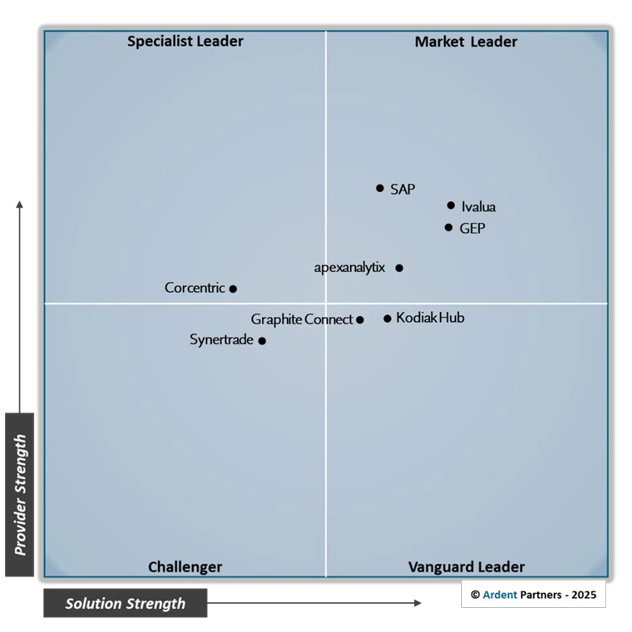
Notably, Ardent Partners’ 2025 report ranked Ivalua as market-leading in governance, data enrichment, and integration – all key enablers of trustworthy AI.
Supplier Master Data Management is the Foundation
By supporting operations,SMDM helps you successfully deploy AI, detect fraud, restructure supply chains, and measure supplier performance – and it’s critical that you treat the practice as a strategic priority.
It can help you scale AI adoption and strengthen supplier relationship management and supplier performance management by avoiding data quality failures.
As agentic AI becomes standard across procurement operations, the quality of the supplier master record will be the single greatest determinant of success.
Improve Supplier Master Data Management with Ivalua
FAQs About Supplier Master Data Management
Supplier master data management governs the core, authoritative supplier record (vendor master data), ensuring consistency and control across systems. Supplier information management is broader, focusing on collecting and using procurement data, with SMDM providing the data governance foundation.
Implementation timelines for supplier master data management vary based on data complexity, ERP systems, and the scope of data migration and data cleansing. Initial deployment may take months, but full adoption across supplier onboarding and governance processes typically occurs in phases.
Supplier master data in SAP environments often suffers from duplicate records, inconsistent formats, and incomplete fields due to decentralized ERP systems. Weak data validation allows these issues to persist, degrading data quality and visibility over time.
Supplier data management focuses on centralizing supplier data and maintaining accurate vendor master data, while spend analytics analyzes that data to improve procurement efficiency. SMDM ensures data quality, while spend analytics depends on it to generate reliable insights.
Effective supplier master data management requires defined data stewardship roles supported by governance solutions across business units. These teams are responsible for organizing supplier information, maintaining data quality, and enforcing standards.
ROI for supplier master data software is measured through improved data quality, reducing errors, and increased procurement efficiency. Key metrics include duplicate elimination, faster onboarding, improved spend visibility, and stronger vendor management outcomes.