

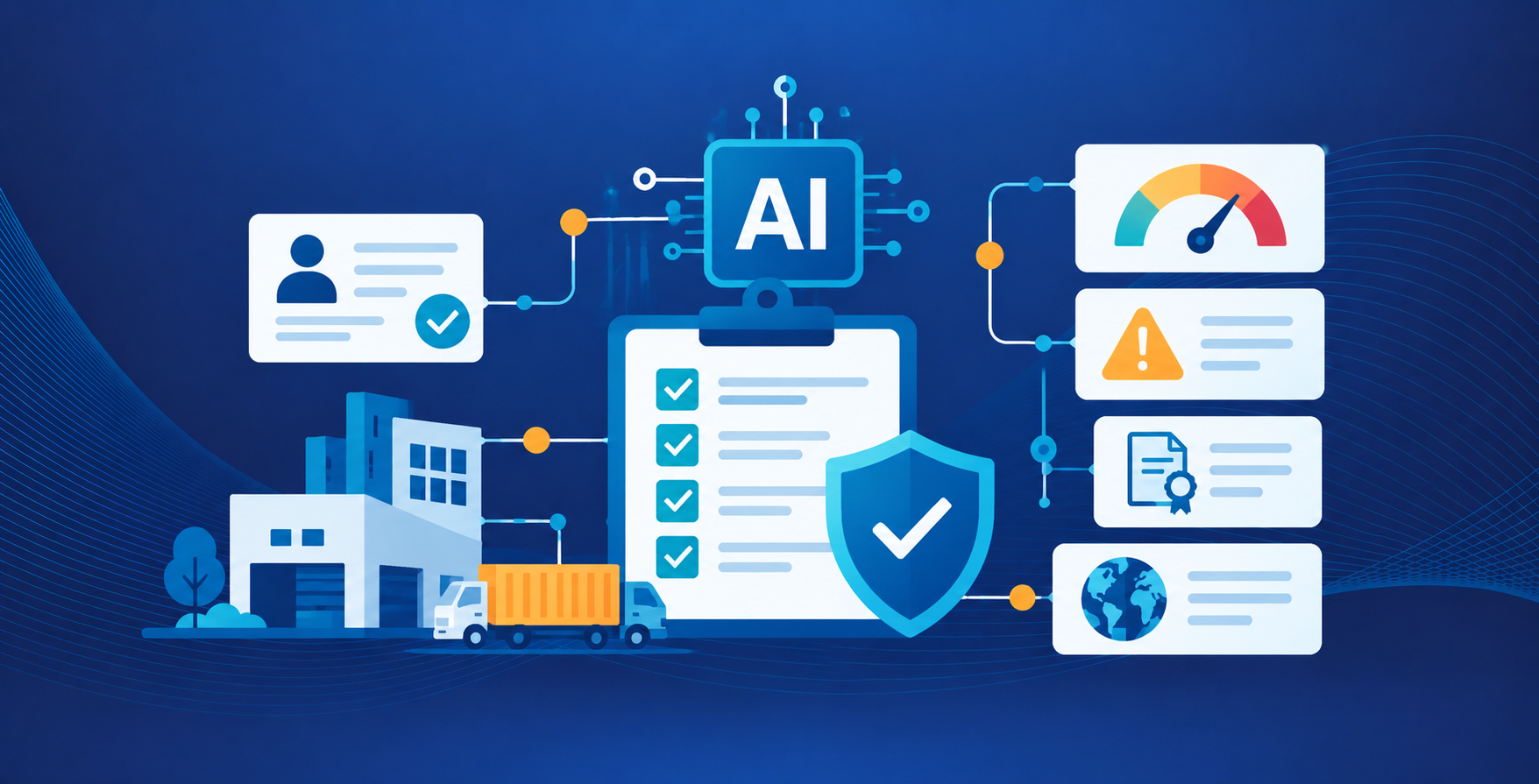
A vendor risk assessment is the structured process of evaluating the financial, operational, compliance, geopolitical, and ESG risks that third-party vendors can potentially introduce to the procurement lifecycle. The goal is to identify and mitigate these risks before they disrupt operations or expose your organization to financial and reputational harm.
This guide covers what to include in your vendor risk assessment, and how to build and score assessments within a procurement operating model. You’ll also learn how agentic AI accelerates the process, and what regulatory frameworks like Digital Operational Resilience Act (DORA) mean for assessment methodology.
Key Takeaways
- Vendor risk assessment should be a continuous procurement capability, not a one-off compliance exercise.
- The most resilient organizations evaluate financial, operational, regulatory, cybersecurity, ESG, and geopolitical risk together rather than separately.
- A connected Source-to-Pay platform with agentic AI enables procurement teams to identify and respond to supplier risk before disruptions occur.
What Is a Vendor Risk Assessment?
Assessing vendor risk effectively requires a structured process of identifying, evaluating, scoring, and monitoring potential risks that third-party vendors may introduce to the S2P lifecycle. It’s one component of risk management.
Risk assessment refers to a methodology, while vendor risk management covers the broader lifecycle: onboarding, contracting, continuous monitoring, remediation, and offboarding. Organizations with mature vendor management practices embed risk assessments throughout the supplier lifecycle.
Assessing risk is critical – KPMG’s 2026 Global Third-Party Risk Management Survey revealed that a third of organizations suffered monetary loss or reputational damage from third-party issues over the past three years, and nearly as many experienced supply chain disruptions.
While cybersecurity and data privacy controls are critical components of risk mitigation, it’s also critical to evaluate financial stability, supply continuity, geopolitical exposure, ESG performance, and regulatory compliance.
Next, we’ll cover six risk factors you should watch out for.
Six Risk Dimensions Every Vendor Assessment Should Cover
Here are the six risk dimensions you need to evaluate and why they matter.
1) Financial Stability and Creditworthiness
This dimension includes credit ratings, revenue trends, profitability, debt levels, and payment history. If a supplier is not financially stable, supply continuity and contract performance are at risk.
2) Operational and Supply Continuity Risk
Supply chain risk management requires knowing how your vendors can continue delivering supply during disruptions. Evaluate production capacity, geographic concentration, logistics dependencies, and business continuity planning.
3) Regulatory and Compliance Risk
Noncompliant suppliers can expose organizations to supply disruptions, legal liability, penalties, and reputational damage. Evaluate supplier compliance with regulations and industry requirements, such as DORA, GDPR, CSRD, sanctions screening, anti-bribery rules, and sector-specific mandates.
4) Cybersecurity and Data Privacy Risk
Weak security controls at a vendor can expose your organization to data breaches and service disruptions. Be sure to assess security controls such as access management, encryption, incident response capabilities, and certifications like SOC 2 and ISO 27001 to reduce data and operational risk.
5) ESG and Sustainability Risk
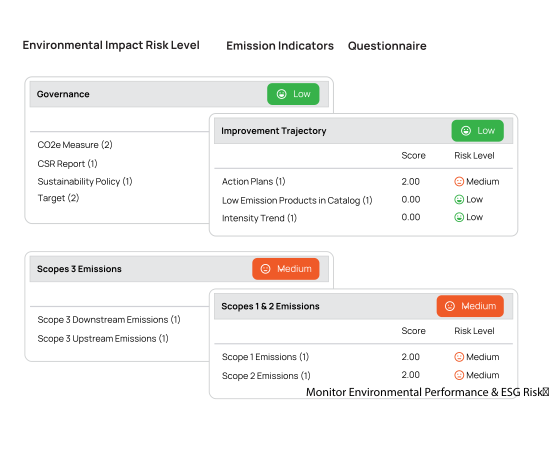
Regulations such as CSRD and CSDDD are making ESG a contractual and compliance requirement. To that end, assess environmental performance, labor practices, human rights, governance, and supplier transparency. Keep in mind, strong supply chain collaboration can improve your visibility beyond tier-one suppliers.
6) Geopolitical and Concentration Risk
Be sure to evaluate exposure to tariffs, sanctions, regional instability, and over-reliance on suppliers in a single geography. Understanding geographic concentration can help you build more resilient supply chains and reduce the impact of global disruptions.
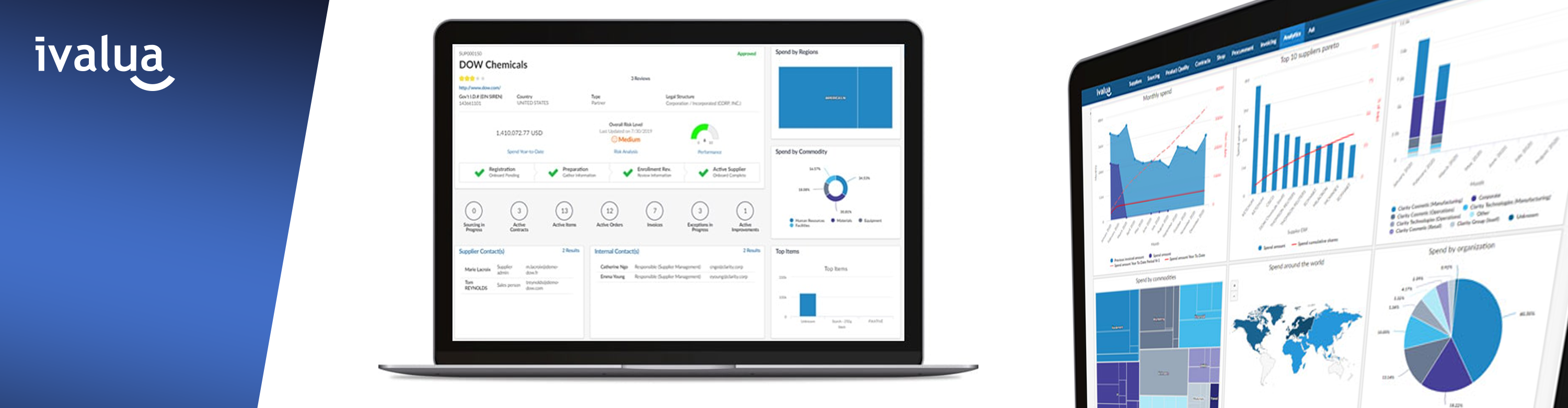
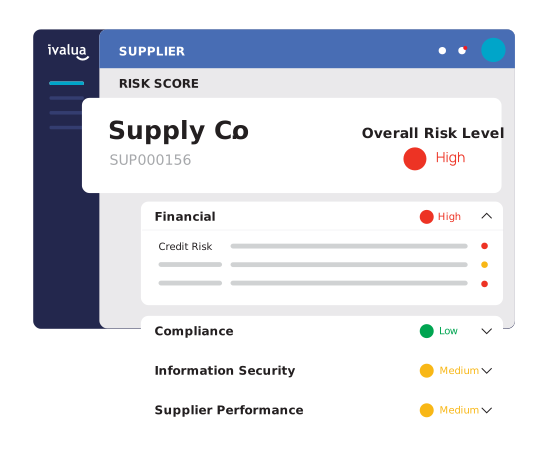
As part of its AI-powered supplier management capabilities, Ivalua continuously monitors risk across suppliers, sub-tier networks, and individual contracts via its Risk Center, using internal assessments and third-party data sources such as D&B, EcoVadis, and Prewave. It automatically updates risk scores across all sources of risk, and alerts you of any significant changes that require immediate response. Beyond flagging risks, Ivalua’s Intelligent Virtual Agent IVA can help create mitigation plans and risk management programs.
Once you’ve defined what to evaluate, the next step is establishing a repeatable process that applies those criteria consistently across your supplier base. But first, let’s review how DORA may impact that process.
What DORA Means for Vendor Risk Assessment in Financial Services
For financial institutions operating in the European Union, DORA raises the bar for vendor risk management by making third-party oversight a regulatory requirement. Ivalua’s DORA guide highlights six implications for procurement and finance leaders:
- Procurement and Finance own compliance. DORA positions vendor risk assessment as a core procurement discipline instead of an IT-only responsibility.
- Third-party risk management is a core DORA requirement. Organizations must perform due diligence on third-party providers, establish appropriate contractual controls, and continuously monitor supplier performance and ICT risk throughout the relationship.
- Digital repositories are a must. DORA requires a digital repository built around 15 relational templates linked through standardized identifiers such as contract, supplier, legal entity, business function, and ICT service identifiers.
- Supplier visibility beyond Tier 1 is non-negotiable. Financial institutions must understand their ICT supply chain down to Tier N subcontractors, including each subcontractor’s role and position within the service chain.
- Compliance requires connected procurement processes. At a minimum, organizations need integrated Supplier Risk and Performance Management, Sourcing, and Contract Lifecycle Management capabilities to manage DORA obligations across the supplier lifecycle.
- A unified data model is a competitive advantage. Ivalua’s single data model supports DORA’s required data structures, identifiers, and multi-level reporting without relying on disconnected systems, satisfying complex reporting requirements while helping you manage suppliers through a single Source-to-Pay platform.
With this information in mind, we offer five steps for building a vendor risk assessment. The next section walks you through them.
How to Build a Vendor Risk Assessment Process in Five Steps
Building a vendor risk assessment is a straightforward process that involves the following 5 steps.
Step 1 — Inventory and Tier Your Vendor Base by Criticality
Strong supplier management begins with understanding which suppliers matter most. That’s why the first step in building your vendor risk assessment should be to create a complete inventory of third-party vendors and classify them by how critical they are to your business:
- Critical vendors support essential operations, handle sensitive data, or present significant operational or regulatory risk.
- Important vendors have meaningful spend or business impact but lower overall exposure.
- Standard vendors are lower risk and more easily replaced.
Creating these tiers helps you focus resources where they’ll deliver the greatest value.
Step 2 — Define Risk Criteria and Scoring Methodology
Next, establish a consistent scoring model across the various types of risk, and weight each category based on business priorities. Then, define thresholds that determine whether a vendor is approved, approved with conditions, monitored, escalated, or rejected.
Ivalua’s Risk Center supports configurable, multi-dimensional scoring models that combine qualitative assessments with quantitative data. You can create reusable scoring templates and automatically update scores as new information becomes available.
Step 3 — Conduct Due Diligence and Collect Evidence
The next step is to collect evidence needed to validate each vendor’s risk profile. This can include questionnaires, certifications, financial statements, and regulatory documentation, among other documents. The depth of the assessment should align with the vendor’s risk tier. Learn more about integrating risk into procurement risk management.
Step 4 — Embed Risk Controls in Contracts and Onboarding
Risk assessment results should directly influence onboarding and contracting, with high-risk findings requiring additional approvals and contractual safeguards. Connecting assessments to contract management helps you to identify risks and enforce the appropriate controls.
Step 5 — Monitor Continuously and Reassess
Vendor risk changes over time, so continuous monitoring is essential. Consider combining internal performance metrics with external signals such as financial and regulatory changes, geopolitical events, and ESG updates, then reassess vendors accordingly.
KPMG’s 2026 Global Third-Party Risk Management Survey found that only 15% of organizations have high confidence in the data supporting their third-party risk programs. Be sure the data you use to assess risk is accurate and up to date.
To help strengthen ongoing supplier performance management, Ivalua connects risk scores directly to supplier performance, contracts, transactions, and third-party data feeds on a single platform. This way, you always have a current view of risk throughout the supplier lifecycle.
Once you’ve built a structured vendor risk assessment process, the next opportunity is to automate repetitive work using Agentic AI and continuously monitoring supplier risk as conditions change.
How Agentic AI Accelerates Vendor Risk Assessment
According to Deloitte’s 2025 Third-Party Risk Management Flash Survey, 93% of organizations remain in the earliest stages of AI maturity for third-party risk management, using mostly manual methods such as questionnaires, spreadsheets, and point-in-time reviews. Only about one in five have leveraged AI for inherent risk determination and due diligence.
However, Gartner found that changes in operating models driven by AI and agentic AI are expected to have the biggest impact on supply chain performance over the next two years.
Ivalua offers AI-assisted risk management with its Intelligent Virtual Agent (IVA), which enables you to streamline, automate, and manage your Third Party Risk Program (TRPM) all in one place: . With Ivalua, you can:
- Automate Document Validation and Evidence Collection: IVA streamlines due diligence by validating supplier documents, including certifications, policies, financial statements, and questionnaire responses. It extracts relevant information, flags missing or inconsistent data, and pre-populates assessment fields, reducing manual effort while improving consistency across reviews.
- Enrich Supplier Profiles with External Data: IVA continuously enriches supplier profiles with intelligence from third-party providers such as D&B, EcoVadis, and Prewave, along with relevant news and regulatory sources. As new information becomes available, risk scores update automatically.
- Run Risk Scoring Campaigns at Scale: IVA can orchestrate assessment campaigns across the supplier base by distributing questionnaires, collecting responses, scoring results, and routing exceptions to appropriate reviewers. You can run campaigns on a scheduled cadence or when triggered by events such as contract renewals or spend thresholds.
- Keep Humans in Control Through Governed Autonomy: IVA operates within procurement-defined guardrails, enabling Governed Autonomy rather than unrestricted automation. Thus IVA automatically applies your companies rules and policies and never operates outside its scope as it inherits a user’s permissions.
For example, you can have low-risk activities such as document extraction or risk score updates run automatically while high-impact decisions like remediation approvals or contract escalation will require human review. IVA records every action with its inputs, sources, and reasoning, to provide clear-box transparency. - Use the Best LLMs: Because IVA is LLM-agnostic and configured through IVA Studio, organizations can use the best model for each task while connecting IVA to external agents and tools through an MCP-compatible architecture.
Organizations are already taking advantage of these capabilities. Let’s review how one Ivalua customer is controlling supplier risk.
How Konica Minolta Modernized Procurement and Supplier Risk With Ivalua
Global manufacturer Konica Minolta set out to modernize procurement by replacing manual, paper-based processes with a connected digital platform. They wanted to accelerate supplier onboarding and unify procurement data that was spread across multiple ERP systems. Additionally, limited reporting was making it difficult to monitor contract compliance or measure supplier performance, and they lacked a complete view of spend and vendor risk.
Ivalua’s unified Source-to-Pay platform helped Konica Minolta improve spend visibility, consolidate contract compliance reporting, and create a single entry point for procurement requests. The company was able to digitize the invoicing process with a goal of receiving 85% of invoices electronically and worked closely with Ivalua to continuously refine Intake Management based on user feedback. As a result, they transitioned to a more data-driven procurement organization.
“It’s been great working with Ivalua in terms of incorporating our feedback. At the end of the day, it’s a partnership. I will say it’s been outstanding. We have a great journey in front of us and we’re just getting started.”
— Luca Sopranzetti, Director of Procurement Processes, Konica Minolta
Build Vendor Risk Assessment Into Your Procurement Operating Model
Organizations gain the greatest value when vendor risk assessments are integrated into every stage of the Source-to-Pay lifecycle. Connecting risk data to supplier performance, contracts, and spend provides continuous visibility into emerging threats and helps procurement teams respond before disruptions affect the business.
Build More Resilient Supplier Relationships with Ivalua
Frequently Asked Questions About Vendor Risk Assessment
The structured process of identifying, evaluating, and monitoring vendor risk, considering financial stability, operational resilience, cybersecurity, regulatory compliance, ESG performance, and geopolitical exposure. It helps determine whether a supplier meets your risk requirements before and throughout the supplier relationship.
Include information across multiple risk dimensions such as financial health, operational capabilities, cybersecurity controls, regulatory compliance, ESG practices, business continuity planning, and supply chain dependencies. The more critical the vendor, the more data you should collect.
An assessment should assign weighted scores across key risk categories based on your business priorities. You should combine individual scores into an overall risk rating to prioritize remediation and determine approval status. Critical suppliers typically receive more frequent reviews and tighter oversight than lower-risk vendors.
Many organizations reassess critical suppliers quarterly, important suppliers semi-annually, and lower-risk vendors annually. They may also monitor third-party risk continuously through internal performance data and external risk signals. If a vendor experiences financial deterioration or you encounter regulatory changes, conduct a reassessment immediately.
Agentic AI can automate repetitive tasks like validating documents, collecting evidence, enriching profiles and sending out questionnaires. It helps you assess vendors consistently, while keeping humans in control of high-impact decisions via governance and audit trails.
The Digital Operational Resilience Act (DORA) is an EU regulation that strengthens ICT and third-party risk management requirements for financial institutions. It requires organizations to perform ongoing due diligence, monitor suppliers continuously, maintain detailed records of third-party relationships, and extend visibility into subcontractors.