

A vendor management solution (VMS) is a centralized platform that enables organizations to manage supplier relationships, performance, risk, contracts, and compliance across the full vendor lifecycle.
In this guide, we outline what a modern VMS should deliver in 2026 and explain how you can evaluate solutions based on your organization’s operational needs.
Key Takeaways
- A unified, continuously monitored system of record is essential today, to address fragmented supplier data and rising risk.
- The best vendor management platforms orchestrate workflows across multiple processes, such as onboarding, risk, performance, and compliance.
- Unified data models and embedded AI can help provide real-time insights while automating manual tasks.
- It’s important to prioritize solutions that integrate seamlessly with your existing procurement ecosystem, while enforcing governance and scalability.
What Is a Vendor Management Solution (And Why It’s Critical in 2026)?
A vendor management solution (VMS) (also referred to as vendor management software or a vendor management system) is the operating layer that manages supplier lifecycle decisions from end to end. This includes onboarding, approval, monitoring, performance improvement, and renewal or exit.
The VMS uses governed data and embedded workflows to ensure every vendor decision is compliant and actionable.
Unfortunately, many tools labeled “VMS” don’t actually support lifecycle management. For example, risk-only platforms assess exposure but don’t connect to sourcing or supplier workflows. Similarly, workforce VMS tools focus on contingent labor, but not supplier relationships.
In 2026, fragmentation like this is no longer sustainable. According to the Global Cybersecurity Outlook 2025 from the World Economic Forum, here’s why:
- 54% of large organizations cite supply chain challenges as the biggest barrier to cyber resilience
- 76% of CISOs report regulatory fragmentation limits compliance
- 66% expect AI to have the biggest cyber impact in the next 12 months
- Only 37% have processes to assess AI tool security before deployment
These pressures put vendor ecosystems at risk for non-compliance and security issues that can impact resilience.
To that end, supplier management must connect supplier data, risk signals, performance metrics, and contract controls into a single, governed environment. Only then can decisions be enforced through automated workflows.
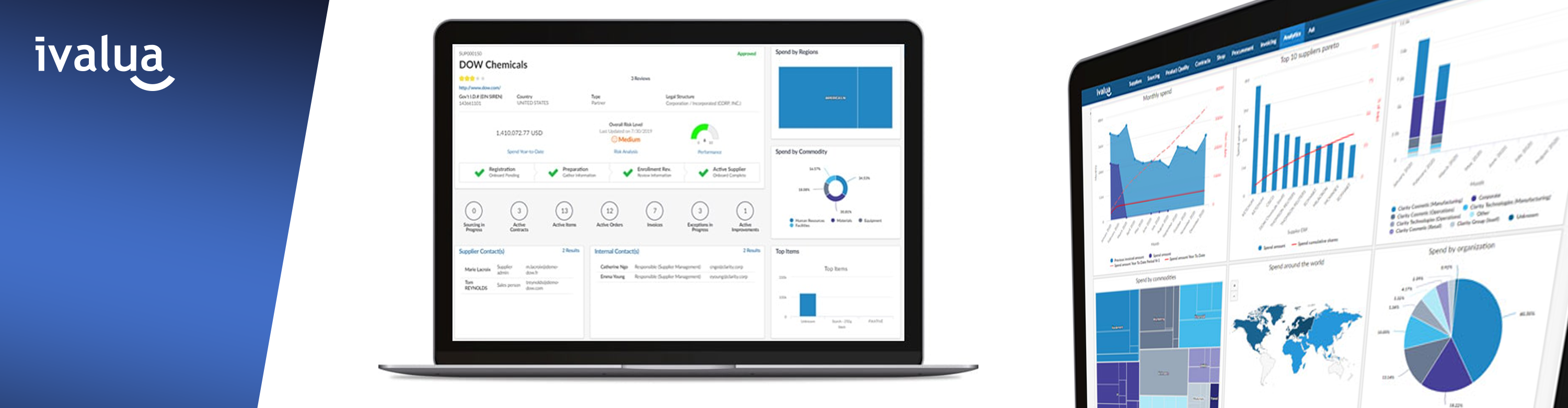
Platforms like Ivalua provide a unified foundation for supplier information, performance, risk, and collaboration, creating a single source of truth for consistent vendor decisions across sourcing and procurement.
The 3 Tool Categories Buyers Confuse (And How To Pick The Right One)
The term vendor management system (VMS) is used loosely across the market, often describing very different types of tools. As a result, organizations may invest in software that doesn’t meet their actual needs.
Choosing the right solution requires you to distinguish between procurement vendor management, contingent workforce VMS, and vendor risk monitoring tools.
Each of these types of tools serve a different purpose within broader third-party management and risk management strategies.
1) Procurement Vendor Management (Supplier Lifecycle & S2P Context)
When enterprises refer to a vendor management system (VMS), they really mean a Procurement Vendor Management platform that manages the entire Source-to-Pay lifecycle.
This means managing supplier relationships across onboarding, qualification, performance, risk, collaboration, and renewal.
A Procurement Vendor Management platform connects supplier data, contracts, performance metrics, and risk signals to sourcing decisions, contract enforcement, and ongoing relationship governance.
With a Procurement Vendor Management platform, the following systems are in place:
- Procurement, sourcing, or supplier management teams own the process
- Decisions include which suppliers to select, how to evaluate performance, and when to intervene or renegotiate
- Data spans supplier master data, contracts, risk signals, performance KPIs, and spend
Ivalua falls into this category. It embeds risk and performance directly into Source-to-Pay workflows, so that supplier decisions are informed and actionable. In this model, supplier risk and performance actively influence sourcing events and contract terms.
2) Contingent Workforce VMS (Labor & Staffing Focus)
A contingent workforce VMS is designed specifically to manage external labor (i.e. contractors, temporary staff, and staffing agencies). It is not designed to manage relationships with goods and services suppliers.
A contingent workforce VMS can be used to manage requisitions, time tracking, rate cards, vendor staffing agencies, and workforce compliance. Additionally, it:
- Is owned by HR, workforce management, or MSP (managed service provider) teams
- Informs decisions around hiring, staffing vendors, contractor utilization, and labor costs
- Includes data like worker profiles, timesheets, bill rates, and assignment durations
These systems are essential for workforce operations but they don’t address supplier performance or procurement-driven vendor governance.
3) Vendor Risk Monitoring Tools (Risk Signals Without Execution)
Vendor risk monitoring tools focus on identifying and scoring third-party risk across dimensions like cybersecurity, financial stability, ESG, and compliance. It aggregates external and internal risk signals to generate risk scores, alerts, and assessments.
A vendor risk monitoring tool is:
- Owned by risk, compliance, or security teams
- Makes decisions focus on risk exposure, compliance status, and escalation thresholds
- Maintains third-party risk feeds, financial scores, sanctions screening, and cyber ratings
While these tools are valuable for risk management, they’re not integrated into procurement workflows, so risk insights are disconnected from sourcing, contracting, and supplier management actions.
What Tool Is Right for You?
In modern third-party management, procurement supplier lifecycle management should act as an operating layer for making vendor decisions, risk and workforce tools providing inputs.
If your goal is to make better supplier decisions across sourcing, contracts, and ongoing relationships, your vendor management system should sit within the procurement and Source-to-Pay ecosystem rather than alongside it.

The Vendor Management Fit Model: How to Define Requirements Before You Compare Tools
Below is a simple 5-part Fit Model you can use when evaluating vendor management software to guide demos, align stakeholders, and pressure-test solutions before selection:
1) Scope Fit — Are You Solving the Right Problem?
Ask vendors to show how their platform supports your specific definition of “vendor management” (procurement lifecycle vs. risk-only vs. workforce).
Look for:
- Clear alignment with procurement-led vendor lifecycle management
- Ability to connect sourcing, contracting, and supplier management as a unified process
2) Lifecycle Fit — Can It Manage End-to-End Vendor Decisions?
Walk through a full lifecycle scenario, from onboarding to qualification, performance monitoring, issue resolution, and renewal or exit.
Look for:
- Continuous workflows across lifecycle stages (not disconnected modules)
- Ability to trigger actions (e.g., performance issue triggers a supplier improvement plan, which triggers a contract update)
3) Governance Fit — Are Decisions Controlled and Auditable?
Ask how the vendor handles approvals, role-based access, audit trails, and compliance evidence across decisions.
Look for:
- Configurable approval workflows tied to risk, spend, or category
- Full auditability of who approved what and why
- Embedded compliance checks within workflows
4) Data Fit — Is There a True Single Source of Supplier Truth?
Request a walkthrough of how supplier data is created, updated, and shared across systems.
Look for:
- A unified supplier record (no duplication across modules)
- Seamless integration with ERP, risk providers, and external data sources
- Reporting that combines performance, risk, and spend in one view
5) Value Fit — Does It Drive Measurable Outcomes?
Push beyond activity metrics (“number of suppliers onboarded”) and ask how the platform measures impact.
Look for:
- Clear linkage between vendor management and outcomes (cost savings, risk reduction, compliance improvements)
- Built-in analytics that track performance over time
- Ability to quantify ROI across sourcing, supplier performance, and risk mitigation
Why This Model Works
This Fit Model reframes the vendor selection process around decisions rather than the features of your supplier management solution, ensuring every requirement ties back to how your organization actually manages vendors.
Core Capabilities of a Vendor Management Solution
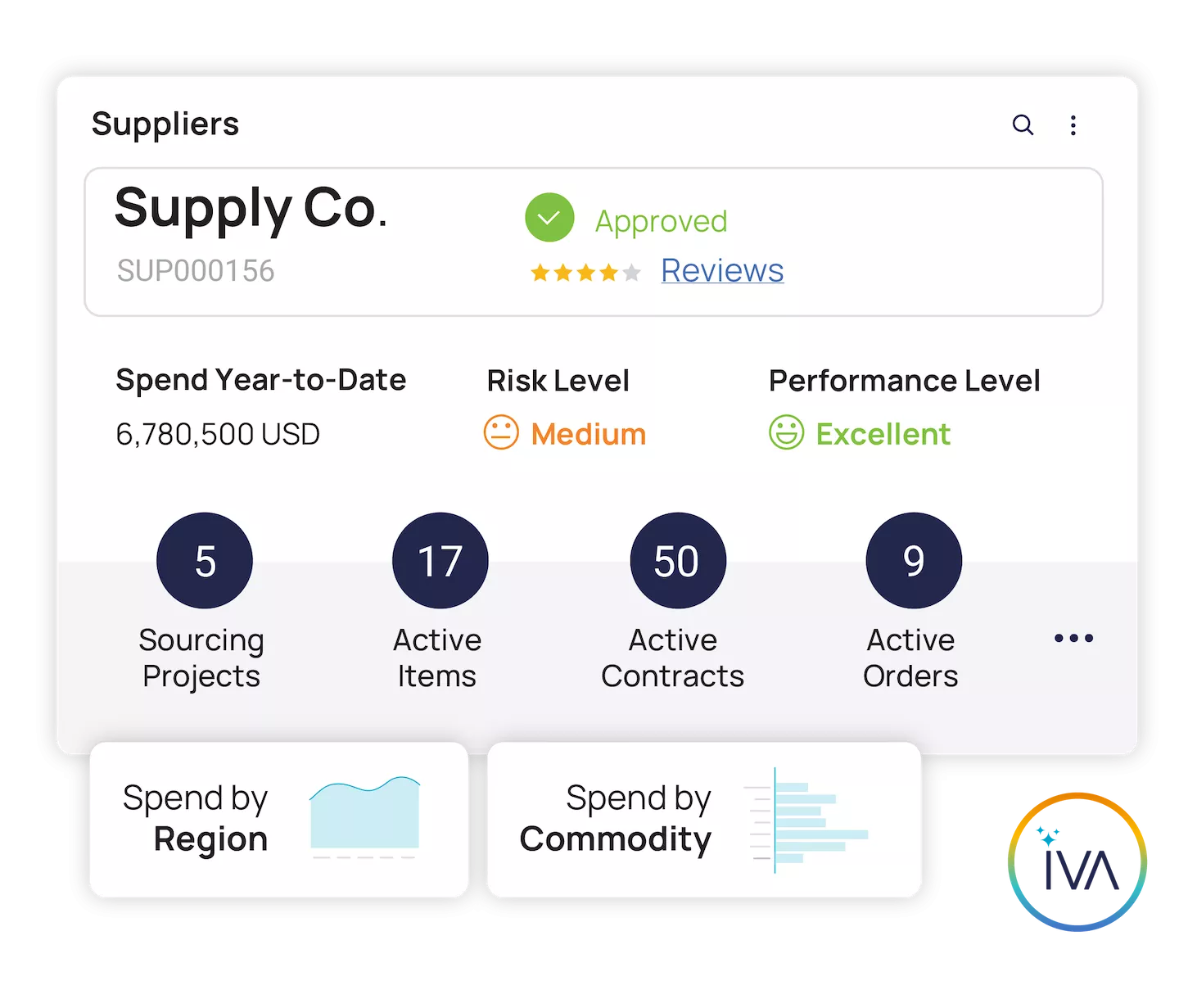
The features of vendor management software only matter if they support real vendor lifecycle decisions at scale and with consistent governance.
In a modern enterprise, core capabilities should not operate as isolated functions (e.g., onboarding, vendor performance, or compliance management), but as connected components of a single operating model.
In this section, each capability is broken down into three practical lenses: what it does, what outcome it enables, and what “good” looks like in an enterprise environment.
This approach ensures you’re evaluating not just whether a feature exists, but whether it drives measurable impact across the S2P lifecycle.
Supplier Onboarding and Vendor Qualification
What It Does
Supplier onboarding and vendor qualification capabilities manage how vendors are introduced, and approved within your ecosystem.
This includes structured onboarding workflows, standardized data capture (legal, financial, compliance), automated validation (e.g., tax IDs, sanctions screening), and segmentation triggers that classify suppliers by risk, category, or criticality. Role-based approvals ensure the right stakeholders are involved at the right stages.
Outcomes Enabled
Faster, more consistent supplier onboarding with reduced risk exposure and higher data quality from day one. Organizations can confidently approve vendors based on complete, validated information rather than fragmented inputs.
What ‘Good’ Looks Like
- Configurable onboarding workflows tied to supplier type, geography, and risk tier
- Automated validation and enrichment of supplier data at intake
- Dynamic segmentation that triggers downstream controls (e.g., due diligence, contract requirements)
- Role-based approvals with full auditability
Vendor Performance Management (Scorecards, KPIs, SLAs)
What It Does
Supplier performance management capabilities track and evaluate supplier performance using structured scorecards, KPIs, and SLA commitments. This includes defining performance metrics, governing how they are measured, aggregating data across systems, and producing reporting that supports operational reviews and executive decision-making.
Outcomes Enabled
Continuous visibility into supplier performance, enabling proactive intervention, stronger accountability, and better sourcing and renewal decisions.
What ‘Good’ Looks Like
- Standardized vendor scorecards aligned to category, risk, and strategic importance
- Governed KPIs with clear ownership and measurement logic
- SLA tracking tied to contractual commitments
- QBR-ready reporting with benchmarks and drill-down capabilities
- Closed-loop corrective action workflows that connect issues to resolution plans
Platforms like Ivalua embed vendor scorecards and Ivalua directly into workflows, eliminating reliance on spreadsheets and ensuring performance insights drive real actions across sourcing and supplier governance. For more detail, see Ivalua and Ivalua.
Vendor Risk, Compliance, and Audit Trails
What It Does
These capabilities manage vendor risk assessments, ingest third-party risk signals (financial, cybersecurity, ESG), collect and validate compliance evidence, and maintain audit-ready logs of all vendor-related decisions. They also enable escalation and mitigation workflows when there are risks or compliance gaps.
Outcomes Enabled
Continuous, operationalized oversight of supplier risk and compliance management, helping to identify issues early and address them in context, while providing full documentation for compliance purposes.
What ‘Good’ Looks Like
- Risk tiering that determines due diligence depth and monitoring frequency
- Integration with external risk intelligence providers
- Centralized compliance evidence (certifications, policies, attestations) tied to supplier records
- End-to-end audit trails capturing decisions, approvals, and changes
- Automated escalation and mitigation workflows linked to sourcing, contracts, and supplier management
The European Union Agency for Cybersecurity analyzed approximately 4,875 cybersecurity incidents between July 2024 and June 2025, finding that phishing accounts for about 60% of initial intrusion vectors, while vulnerability exploitation represents 21.3%. What’s more, nearly 70% of those cases resulted in actual intrusions.
The threat landscape also includes supply chain risks (10.6%) and OT threats (18.2%), underscoring the need for continuous vendor oversight, especially in industrial and critical infrastructure ecosystems.
Supplier Collaboration and Supplier Experience
What It Does
Supplier collaboration capabilities provide a centralized supplier portal where vendors can manage their profiles, submit required documents, respond to requests, and engage in ongoing communication. This includes self-service updates, issue management, and joint action plans between buyers and suppliers.
Outcomes Enabled
Higher supplier engagement, better data quality, and faster issue resolution reduces friction across the supplier lifecycle and improves overall supplier relationship management.
What ‘Good’ Looks Like
- Intuitive supplier portal with guided workflows and clear requirements
- Supplier self-service for profile updates and document management
- Integrated issue tracking and resolution workflows
- Joint action plans that align internal and supplier teams on performance improvements
- Consistent supplier experience across onboarding, performance, and risk processes
Supplier experience is no longer a “nice to have” in today’s complex procurement environments; It has a direct impact on adoption and data accuracy.
Poor UX leads to incomplete data and delayed actions, whereas strong UX and a supplier portal can transform vendor management and engagement.
These core capabilities define what a vendor management solution should do. However, leading analysts are reframing the conversation around the value these capabilities deliver.
For example, let’s examine how Ardent Partners defines Supplier Value Management platforms, and what that means for organizations evaluating vendor management solutions in 2026.
Ardent Spotlight: What “Supplier Value Management Platforms” Require in 2025
Ardent Partners evaluated eight enterprise supplier management providers in the 2025 Supplier Management Technology Advisor (April 2025) against the following criteria:
- Modern supplier management is the combination of supplier information management (SIM), supplier performance management (SPM), risk management, and supplier innovation/development. Buyers who evaluate only one of these areas often end up with fragmented tools that can’t support end-to-end supplier decisions.
- SIM is the foundation that makes the entire model work. Ardent emphasized that a single, governed supplier record must support both transactional processes and analytical needs spanning sourcing, compliance, performance, and risk. In practice, this means the same supplier data must reliably power onboarding workflows, risk assessments, contract decisions, and reporting.
- Performance depth should align with the complexity of the supplier relationship. Ardent highlighted that supplier relationship management and performance tracking are not one-size-fits-all: manufacturing and direct materials environments require highly granular KPIs tied to quality frameworks like APQP, while indirect procurement may prioritize flexibility and service-level tracking. For robust supplier performance management, platforms must support both ends of the spectrum.
- Shared platform capabilities are what transform these four components into a true system. According to Ardent’s framework, point solutions do not equal a platform. Without a shared data model and unified governance, SIM, performance, risk, and innovation remain disconnected. A supplier value management platform connects these capabilities so that insights in one area (e.g., risk signals) directly inform actions in another (e.g., sourcing decisions or supplier development plans).
In light of these criteria, Ardent named Ivalua a Market Leader, citing its unified platform and shared data model.
How to Choose Vendor Management Software: A 5-Step Shortlist and Demo Test Plan
Choosing the right platform requires structured vendor evaluation grounded in real workflows, and measurable outcomes. Use this 5-step, demo-ready plan to validate the benefits of vendor management software before you commit.
1) Confirm Your Category
Identify whether you need procurement vendor management, a contingent workforce VMS, or a risk-only monitoring solution, so you don’t buy a supplier management solution that can’t support your core workflows.
Ask vendors to walk through your primary use case (e.g., sourcing-led supplier onboarding, performance governance, or risk-driven decisioning). If they pivot to adjacent use cases, there is likely a category mismatch.
2) Validate Lifecycle Coverage
Test that the system supports the full supplier lifecycle, from onboarding and qualification, to performance and contract management, to renewal or exit – without breaking governance.
Run an end-to-end scenario: onboard a supplier, trigger a performance issue, initiate corrective action, and carry that context through to a contract renewal decision.
3) Prove Governance and Audit Readiness
Validate role-based access, approvals, audit trails, evidence capture, and policy enforcement using real scenarios you’ll face during audits. Ask the vendor to show:
- A compliance workflow with required documentation and approvals
- A complete audit trail of decisions and changes
- How policies are enforced automatically within workflows
This step is critical, because compliance is now a primary driver of investment. According to the European Union Agency for Cybersecurity, compliance drives 70% of cybersecurity investment, yet 30% of organizations ran no cybersecurity assessment in the past 12 months. Additionally, 28% take more than three months to patch critical vulnerabilities.
NIS2 implementation challenges such as patching (50%), business continuity (49%), and supply-chain risk (37%) underscore why it’s essential to embed audit readiness into day-to-day vendor governance.
4) Prove Data Unification and Integration
Confirm the platform maintains a single supplier record and reliably syncs master and transactional data across your ERPs and source systems.
Have the vendor demonstrate how supplier data flows across systems, for instance, from onboarding to ERP sync and contract linkage, to performance tracking and reporting. Ensure this can be done without manual intervention.
5) Validate Supplier Adoption
Run a supplier-side demo to verify portal usability, self-service updates, and collaboration workflows so data stays accurate without manual chasing.
Ask to see the supplier experience: how a vendor updates their profile, submits compliance documents, responds to issues, and collaborates on action plans.
6) Quantify Value Before You Sign
Use a value framework such as the one outlined in the Forrester Total Economic Impact™ study to define expected outcomes and demand proof during selection. It’s important to quantify:
- Efficiency gains from process automation (e.g., onboarding speed, reduced manual work)
- Improvements in invoice processing and cycle times
- Increased spend visibility through real-time reporting
- Risk reduction and compliance improvements
Ask vendors to show how their platform measures and reports these outcomes and how metrics tie back to capabilities like spend analysis and contract management. This will provide insight into how value tracks across the full Source-to-Pay ecosystem.
How ADAC Achieved Transparent, Risk-Aware Supplier Management Across Diverse Networks With Ivalua
Allgemeiner Deutscher Automobil-Club (ADAC) operates across automotive, financial services, and insurance industries, They were struggling with fragmented procurement processes spread across multiple systems. This lack of integration limited visibility and control, particularly across a diverse, multi-industry supplier base.
Without a formal risk management framework, teams were forced to handle sourcing documents such as certifications and compliance artifacts manually, increasing operational burden and risk exposure.
By unifying its Source-to-Pay processes on Ivalua, ADAC gained transparency and control across its supplier network while strengthening its overall buying power. The configurable system enabled standardized supplier onboarding and embedded risk management, significantly reducing manual effort and improving compliance.
“Ivalua is the prerequisite to unburden the team from the more operational P2P work, and actually be able to free capacity for real sourcing and strategic work.”
— Thomas Germer, CPO at ADAC
Read the full ADAC case study.
Choose a Vendor Management Solution That Improves Decisions, Not Just Data
A modern vendor management solution should improve how decisions are made across vendor performance and supplier lifecycle governance. Data alone can’t reduce risk or drive value; it’s the combination of governed data, embedded workflows, and actionable insights that enables high-quality decisions at scale.
Before you move forward, run the Fit Model and the 5-step shortlist against every vendor:
- Confirm category alignment
- Validate lifecycle coverage
- Prove governance and audit readiness
- Test data unification
- Verify supplier adoption
Demand evidence, not claims, using Ardent’s criteria and TEI-style quantified outcomes, and ensure the platform works for suppliers as well as internal teams. To see how this comes together in practice, explore Ivalua.
Explore How Ivalua Can Improve Vendor Management
FAQs
A vendor management solution is a platform that manages supplier lifecycle decisions using governed data and workflows. It acts as an operating layer that connects supplier information, compliance, and decision-making across procurement and supplier management processes.
A vendor management system focuses on operational control across the vendor lifecycle, while supplier relationship management (SRM) emphasizes strategic collaboration, performance improvement, and long-term value creation with key suppliers. In practice, modern platforms combine both, embedding SRM capabilities within broader vendor management workflows.
The most important features of vendor management software include unified supplier data, lifecycle workflow automation, performance tracking, risk and compliance management, and real-time reporting. What matters most is how these capabilities work together to drive decisions—not just whether they exist as standalone features.
Vendor performance is measured using structured vendor scorecards, KPIs, and SLA tracking tied to contractual and operational outcomes. Learn more about building effective scorecards in Ivalua.
A strong third-party risk program includes supplier risk and performance management, compliance validation, and mitigation workflows tied to supplier lifecycle decisions. For a deeper look at integrating risk and performance, see Ivalua.
To understand how to choose vendor management software, enterprises should validate lifecycle coverage, governance, data unification, supplier adoption, and measurable outcomes through structured demos. The goal is to ensure the platform supports real-world decision-making at scale.